
 •
Rating:
•
Rating:
THE REVIEW
Recently, I have firmly realized the place of Popol Vuh among my personal glories, as one of my all-time favorite bands.
I have also noticed that within the DeBasio circles not all their works have been explored, just a small portion; I think we all agree on what are the peaks of grandeur of Florian Fricke's creation, but if you dig among the forgotten albums, you find good (very good!) things indeed.
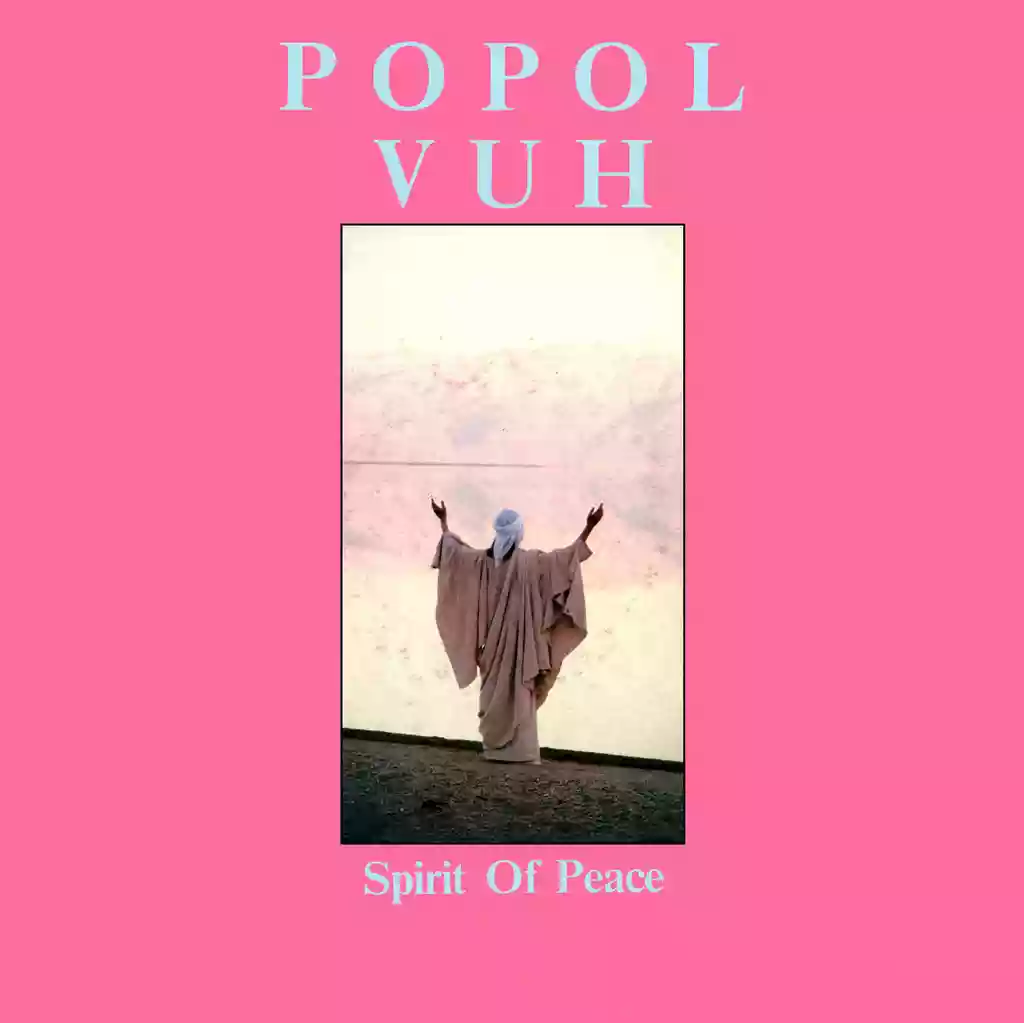
"Spirit Of Peace" cannot be labeled as a "minor" album; often forgotten perhaps, alas. It is the fifteenth chapter in the discography of the Germans, who had already come a long way and would continue for another fifteen years (albeit with some controversial releases in the '90s), until the death of Fricke.
We're in 1985, and Popol Vuh is fully immersed in the New Age musical world; however, we are faced with a product that is still pure and firmly attached to their roots, to the various sounds previously explored.
In my opinion, it is in this album that Popol Vuh manages to express 100% of their spirituality and their most transcendental character again, since the time of the thaumaturge "Hosianna Mantra", managing to create this mystical aura with a few essential elements. Choirs, guitars, piano.
As often happened on various occasions during their long career, they borrow melodies to rearrange them: in the initial "We Know About The Need" they create a sort of sequel to "Hand In Hand" (from the previous album "Agape-Agape - Love-Love", 1983), continuing the unanimous chorus as if it had been left suspended.
In the case of "Song Of Earth" we are talking about a total rearrangement of one of the simplest and most beautiful melodies I have ever heard, found in many tracks by our favorites in various musical layers (I am meticulous so here is the list: "Ja, sie sollen Gottes Kinder heißen" from "Seligpreisund"; in "Gutes Land" from "Einsjäger & Siebenjäger"; in "Agnus Dei" from "Aguirre"; in "...als lebten die Engel auf Erden" from "Sei still, wisse ICH BIN"). The soundtrack of the ascent into the skies marked by Popol Vuh; I say it here: should I die prematurely, I want this song during the scattering of my ashes in the river Ganges and the river Yamuna.
The title track is a pure piano piece, whose notes embody the sweetest wandering melancholy. In turn, the closing piece "Take The Tension High", in its long 17 minutes, is almost completely composed of a sea of mainly classical guitars, which marry with the religious choirs started with "We Know About The Need", thus closing a wonderful circle.
We should all remain silent.
Loading comments slowly
Summary by Bot
The review highlights Popol Vuh's 1985 album Spirit of Peace as an overlooked but essential work, showcasing the band's deep spirituality and New Age influences. It praises the album's minimal but powerful use of choir, guitar, and piano to create a mystical aura. Standout tracks include 'We Know About The Need' and 'Song of Earth,' known for their emotional depth and connection to the band's earlier work. The review considers it one of Popol Vuh's finest expressions of transcendental music.Tracklist Videos
Popol Vuh
Popol Vuh was a German music group led by Florian Fricke, formed around 1969. The group is known for early electronic work and later acoustic, spiritual compositions and several acclaimed film soundtracks for Werner Herzog. Florian Fricke died in 2001.31 Reviews
