
 •
Rating:
•
Rating:
THE REVIEW
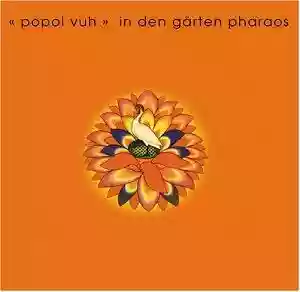
Before Brian Eno, before the term "ambient" was applied to a musical genre, before anything else, second only to the experiments of the Cologne School of Karlheinz Stockhausen, there were Popol Vuh.
Imagining a hypothetical paradise or nirvana halfway between the Buddhist, Christian, and Hindu, you can't imagine anyone better than them, as musical guests to delight those present for eternity. The mythological traditions of the Germanic Walhalla and Indo-Aryan, sublimated in a Parnassus without the slightest shadow of ideologies, with the sole desire to bring music back to a condition of primordial purity. Thus, drums become once again, thanks to a positive and white magic, tree trunks on which to strike branches and stones, synthesizers bend by the will of Florian Fricke to emit frequencies capable of dialoguing with nature.
Mystical ecstasy is reached together with the other two shamans of the group Holger Trulzsch and Frank Fiedler, with the wise use of sound mantras borrowed from ancient Tibetan and African music; the sweet or transverse flutes are played by the wind, the mellotron simulates first streams, then rivers that become oceans, before full spiritual enlightenment before the gates of infinity. All the music of the following decades owes a debt of gratitude to this "In den Gärten Pharaos" of 1971, the anthropological value of authentic musical expression becomes the heritage of humanity, recognized by few but great and true masters like Werner Herzog, who cannot do without the music of Popol Vuh in some of his cinematic masterpieces.
The departure from planet Earth of Fricke in 2001 should make us imagine him continuing what he started with a terrestrial body: giving the cosmos and the creator of non-time some of the most beautiful sounds ever produced on this small and insignificant planet on the extreme periphery of the known physical universe.
Franco De Biase
Loading comments slowly
Summary by Bot
This review celebrates Popol Vuh's 1971 album 'In Den Gärten Pharaos' as a pioneering milestone in ambient music. It highlights Florian Fricke's visionary use of natural sounds and synthesizers to create a spiritual, transcendent experience. The album's blending of mythologies and ancient musical mantras is praised for its purity and lasting impact. The review recognizes the band's influence on future artists and cinema, notably Werner Herzog. It honors Fricke's legacy as a master who connected music with cosmic and earthly realms.Tracklist Videos
Popol Vuh
Popol Vuh was a German music group led by Florian Fricke, formed around 1969. The group is known for early electronic work and later acoustic, spiritual compositions and several acclaimed film soundtracks for Werner Herzog. Florian Fricke died in 2001.31 Reviews
Other reviews
By Airone
No one before Fricke had created rock music as a means of spiritual ecstasy.
Popol Vuh have created something immense and unreachable, and it would be a shame if it were unknown.
By Battlegods
An excellent way to make the listener work with their own inner self, thus a true psychoanalysis.
The idea being conveyed is to create a solemn, liturgical drawing, which then materializes in an effective crescendo with an organ that captivates the ear.
By CosmicJocker
The human being is at least twofold; we are amphibians capable of wallowing in our waste or whispering to the stars.
On top of a cliff, we gaze petrified at a monstrous maelstrom below; inhuman beauty that pins us to the rock where we await, at any moment, the end of the world.
By kubik
Everything unfolds gently, no pin pricks, no psychic war.
They start a chat, hint at a smile.... Then we listen to this record...
