
 •
Rating:
•
Rating:
THE REVIEW
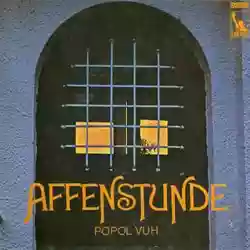
Not sound, but a semblance of sound. Perhaps not music, but an attempt to reach it. The debut album of Popol Vuh is singularly gray and nocturnal, a group that in the early '70s German kraut-rock scene would stand out for the mystical and esoteric nature of its inspiration. "Affenstunde," released in 1970, nowadays retains interest primarily for its documentary value, being the first European album based on the sounds of the Moog, the first commercial synthesizer, which at the time cost almost as much as an apartment. Two years earlier, American Wendy Carlos used it for her Bach reworkings, and in Europe, it was Florian Fricke (1944-2001) who popularized it, before turning to the mystical themes mentioned earlier and returning to "natural" and acoustic sounds, like the piano in "Hosianna Mantra" and subsequent albums. And what happened to the Moog? Sold to Klaus Schulze...
"Affenstunde" is therefore a work still in its embryonic stage, taking uncertain steps, but overall still manages to exert its subtle (albeit disturbing) charm, starting with the enigmatic title, "Ape Hour" (or the hour of drunks?). The album consists of two long tracks: "Ich mache einen Spiegel - Dream" is divided into three parts, with the first and third resting on a chilling backdrop created by the Moog, while the second is enlivened by a flurry of metallic percussion by Holger Trülzsch, giving the piece a tribal liveliness. The other lengthy track, which gives the album its title, is a dark cluster of sound on which the percussion rises at intervals, this time entrusted to bongos and timpani, along with some shrill electronic calls. Seven minutes into the piece, enter the arabesques drawn by Fricke's keyboards, which with a long solo accompany the track, and the entire album, to its conclusion.
More convincing efforts by Popol Vuh should be sought in their later works, where - as mentioned - they gradually abandon synthesizers and electronics for an acoustic approach more inclined towards melody. Nonetheless, "Affenstunde" remains an interesting first episode in the journey of this very unique group.
Loading comments slowly
Summary by Bot
Popol Vuh's 1970 debut album Affenstunde stands out as a pioneering effort in the European use of the Moog synthesizer amid the krautrock movement. The album is mystical, nocturnal, and experimental, featuring two long tracks that blend electronic and tribal percussion sounds. While embryonic and unsettling at times, it has historical and documentary value. Later Popol Vuh albums move toward more acoustic and melodic compositions.Tracklist Videos
Popol Vuh
Popol Vuh was a German music group led by Florian Fricke, formed around 1969. The group is known for early electronic work and later acoustic, spiritual compositions and several acclaimed film soundtracks for Werner Herzog. Florian Fricke died in 2001.31 Reviews
Other reviews
By Cervovolante
The Veil of Maya opens to the listener, revealing reality in its essence, freeing your personal demons and connecting you with your personal God.
Affenstunde is a rough diamond that continues to spread its transcendent light even today.
