
 •
Rating:
•
Rating:
THE REVIEW
How to define Popa Chubby? An iconic blues guitarist born from a laid-back New Yorker. Yes, I would say that's the most appropriate definition.
More than half of the DeBaseriani have no idea who I'm talking about (not because you're ignorant, but otherwise there would already be reviews on the subject), so I'll make a brief introduction. Frank Horovitz, aka Popa Chubby, is a New York bluesman who emerged on the music scene around the dawn of the '90s. Like most of his contemporary American colleagues, he enjoys great success at home but remains a deep niche outside of the States. However, for those like me who have had the fortune to know him (as an artist, of course), he has become a point of reference in the entire U.S. panorama, but always keep in mind that it's music for guitarists and since I'm biased, I can't offer a maximally objective judgment.
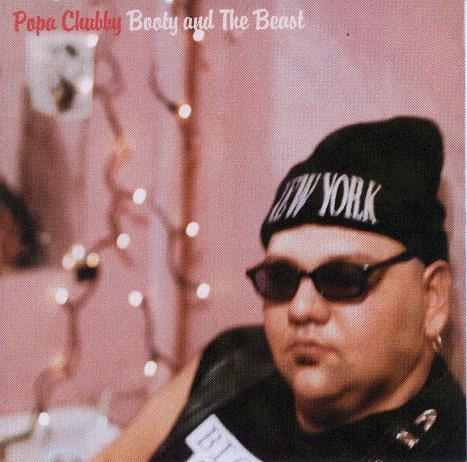
Anyway, his is a modern, aggressive blues, but not mean, and rich in syncopated rhythms sometimes streaked with hip hop. For this traditional and peculiar style at the same time, he is considered by some to be the founder of a real school, aptly named the New York School. Let's get to the album: I'm about to review the one I liked the most. From the cover, you immediately understand that our friend is not pretentious at all: rarely have I seen covers with fewer pretensions than this. The first track is dazzling: rock-blues riff as classic as it gets, a wild and rousing chorus, and solo. The music repeats in the next two tracks, but it's a pleasure and not at all boring. With the fourth track comes the first masterpiece of the album, "The Sweet Goddess Of Love And Beer", a great title and a great rock piece quite catchy, the music is devastatingly simple, and the solo thrills like few others.
From here to the eighth track, the classic "Same Old Blues" stands out, and a great rock'n'roll in ZZ Top style follows, perfect for shaking off the beautiful lethargy of the slow songs. After another heavy blues, we arrive at the most magnificent song on the album. It's titled "Angel On My Shoulder" and makes the soul vibrate with its blues dominated by an anthological guitar and the raspy voice of the chubby Manhattan guy. The album closes with a Chicago blues and a ballad, interspersed with an entertaining and refined improvisation on major scales that occupies a twenty-second track.
The simplicity is great and ephemeral, that's what blues is, take it or leave it.
Loading comments slowly
Summary by Bot
This review highlights Popa Chubby as a defining figure in modern New York blues. Booty And The Beast is praised for its raw and aggressive style with standout tracks like 'The Sweet Goddess Of Love And Beer' and 'Angel On My Shoulder.' The album balances simplicity and power, making it a must-listen for blues enthusiasts and guitar fans.Tracklist Lyrics Videos
Popa Chubby
Popa Chubby (born Ted Horowitz in 1960, New York City) is an American blues-rock guitarist, singer and songwriter known for high-octane electric blues and Hendrix-influenced playing.03 Reviews
