
 •
Rating:
•
Rating:
THE REVIEW
Creating a quality follow-up to a masterpiece like “Let England Shake” seemed like a daunting, perhaps impossible task. Not for Polly Jean, evidently.
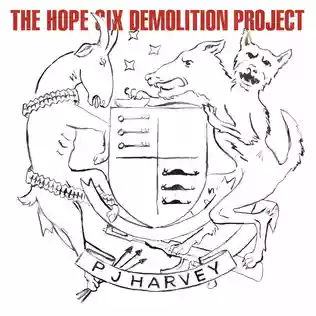
PJ Harvey returns after five years with this “The Hope Six Demolition Project,” the ninth studio album in a career that is poised to introduce her effortlessly into the upper echelons of the Albion rock scene. The album features faithful producers Flood and John Parish and was recorded inside a visual art installation, a soundproof transparent cube installed in London that allowed the public to witness the creative process.
To gather ideas, PJ embarked on a journey (together with photographer Seamus Murphy, with whom she also collaborated on the book “The Hollow Of The Hand”) that touched destinations like Kosovo, Afghanistan, and Washington D. C. The title of the work derives from a housing demolition project to make way for a large supermarket; it goes without saying that we are faced with another very angry, political album, especially at the level of the lyrics which are confirmed as sharp and abrasive.
Musically, on the other hand, Polly delights us once again by varying the menu, offering influences among the most disparate. The first single “The Wheel” perfectly presents the work with a straightforward Stones-like alt-rock that acts as a union link with the atmospheres of the previous work, embellished by a sax set within a frenetic and impatient rhythm. “The Community Of Hope” (not by chance the second single) is the most classic and perhaps radio-friendly track of the album and has the honor of opening the tracklist, then giving way to an acidic and irregular “The Ministry Of Defence,” vaguely reconciling with the beginnings of the beautiful English singer-songwriter (the same goes for “Chain Of Keys”). “Near The Memorials To Vietnam And Lincoln” is a punk-like piece done in her manner.
There are moments where the pace slows and the epic nature of the atmospheres takes over, as in “River Anacostia” or the closing “Dollar, Dollar” (also embellished by a beautiful sax solo), as well as pieces where Polly surprises and enchants by suddenly changing register (the falsetto singing over a world music background in “A Line In The Sand”).
It was difficult to come back with another great album, but Polly Jean succeeded, definitively repositioning herself and reaffirming a style ever more personal that, with its blend of blues, rock, and folk, has found an enviable balance and given a sense of continuity, without losing quality.
Best track: A Line In The Sand
Loading comments slowly
Summary by Bot
PJ Harvey returns after five years with The Hope Six Demolition Project, delivering a politically charged and musically diverse album. Recorded in a unique transparent cube, the work blends rock, blues, and folk influences. Sharp lyrics and varied song styles reaffirm her strong artistic identity. Highlights include singles like The Wheel and a standout track A Line In The Sand. Overall, the album is a bold and successful follow-up to her previous masterpiece.Tracklist Videos
PJ Harvey
Polly Jean "PJ" Harvey (born 1969) is an English singer-songwriter and musician who emerged in the early 1990s. She is known for a wide-ranging body of work that spans raw guitar albums, piano-led records and politically engaged projects.28 Reviews
