
 •
Rating:
•
Rating: THE REVIEW
I don't think I'm one of the few who have been enchanted by an artist-woman like Polly Jean Harvey. A difficult and irregular beauty, fragile and impetuous person. I admit it, as a listener, it's what I've waited for years, convinced that an independent, determined, refined girl like her would eventually arrive. Often compared to another illustrious predecessor, the seminal Patti Smith, PJ Harvey actually departs significantly from that valid model. She too is a pure female irreversibly devoted to rock, emerged as the leader of a powerful power-trio in her name and unanimously imposed herself with the last episode of an exhilarating trilogy of alternative rock (the bestseller "To Bring You My Love", 1995), but she has a personality that would be a pity of superficiality to underestimate as a - albeit illustrious - disciple. To Polly Jean, the godmother of "Horses" has left only the raven hair, the overflowing magnetism, and a strongly determined character. But it's a different talent, not necessarily superior or inferior. The voice is similar but more versatile, increasingly challenged over the years by tonal exhibitions, between whispers, gasping sighs, desperate cries, powerful vocals ready to support entire songs alone.
We must understand that we are not facing a secure, balanced, linear woman, perhaps respectful of more traditional rock and desirous of fitting into some musical trend or a significant era: there is no time to think about the world's problems, to the social sensitization of an audience. Inner problems overwhelm, absorb and rejuvenate the essence of this woman, consumed by love in all its forms. Sentiments command the will. And the song, the melody, the rhythm, everything is a reflection of the passions that stir at the heart's core. Polly is someone who lives her life completely, drinks it with incredible greed, without holding back. It's the vision of the universe as a continuous fluid, which alone makes life exist, that can flow irrationally more towards happiness or bitterness. But in these hard, explicit yet poetic tales, every aspect of reality presents two faces. There is never someone who can do good without hurting you or vice versa. It's a sadomasochistic torment, of those who let themselves be used, to then use with more strength. There is no ugly or beautiful, good or bad; everything is worth experiencing, even the most dangerous, with the risk of self-destruction (potentially becoming anorexic and a drug addict) always just around the corner.
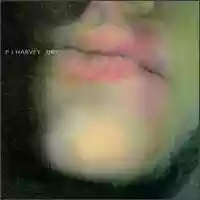
The first bang, the revelation, was "Dry", a gem that flies beyond the newborn grunge, beyond the future inflated and immediately compared Liz Phair or Alanis Morissette. A cycle of emotions outside the then-prevailing schemes. If we want, Dry is one of the first fruits of the 1991 revolution, almost the female response to "Nevermind". Dirty and sick acoustic ballads, with cellos and guitars as thick as in "Plants And Rags", mountain-splitting and overly sensual anthems like "Victory", post-new wave nightmares like "Fountain", almost a stripped-down Smithian "Lullaby," even more claustrophobic, spectral. The two-voice unleashed punk of "Sheela-Na-Gig", the delirium of a love triangle in the hard-blues of "Oh My Lover", each room becomes a surprise of lips drawing pleasures with ruby-colored lipsticks, feet to be licked in submission, broken nails, woods to spend entire nights of mysticism and pleasure. The roots of rock are indeed "dried" ("Dry"), sterilized, and filled again with humors, but belonging exclusively to the protagonist, ready to be opened and splashed on the cover almost like in the Bowiesque “Lodger”. The sound is very accurate, prepared to evoke tremors, annoying buzzes, while Polly confesses her fears to you, what drives her crazy in bed, the visions she perceives in states of wobbly panic trance, where she makes love to trees and dances with the sun, with witches, and sniffs blood, scents of men asked to be everything, and even more. And us? We have been waiting for nothing else.
Loading comments slowly
Summary by Bot
PJ Harvey's debut album 'Dry' is celebrated as a raw and passionate rock masterpiece that stands out in the 90s alternative scene. The review highlights Polly Jean Harvey’s distinct voice and emotional depth, setting her apart from peers like Patti Smith and contemporaries Liz Phair or Alanis Morissette. With a blend of punk, blues, and acoustic elements, 'Dry' delivers intense explorations of love, pain, and self-destruction. It is praised for its unique personality, strong character, and groundbreaking sound.Tracklist Lyrics Videos
PJ Harvey
Polly Jean "PJ" Harvey (born 1969) is an English singer-songwriter and musician who emerged in the early 1990s. She is known for a wide-ranging body of work that spans raw guitar albums, piano-led records and politically engaged projects.28 Reviews
