
 •
Rating:
•
Rating:
THE REVIEW
Formed in 1980 and active in the recording industry starting from the mid-'80s, Pizzicato Five became a phenomenon of Japanese pop of the era, despite never leaving the shores of their homeland.
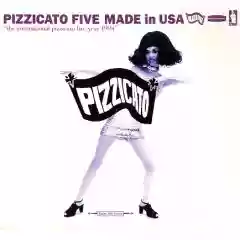
Only in 1994, with the release of the album under review, which serves as an anthology of tracks previously released exclusively for the Japanese market, did the group attempt to make themselves known to the international audience. The attempt, it must be acknowledged, was remarkably successful, and the album sold well, especially in Europe. However, the group's name was never associated with the mainstream or widely-consumed pop music, as it had been in Japan for over a decade. Less satisfactory was the success among the public in those USA to which the album was virtually dedicated, as they were less receptive to the music produced by the group, even though overseas critics showed appreciation for the product.
In fact, the style of Pizzicato Five is more suited to the ears and taste of Europeans, being music seemingly easy and catchy, capable of revealing unforeseen plots and rhythmic patterns, refined arrangements, and high-class citationism as listening increases.
In summary, it can be observed that in Pizzicato Five's music, moments of pure jazz (the opening “I”), more elaborate blends between pop, jazz, and soul (precisely in “Sweet Soul” and “Magic Carpet Ride”), pranks and revisitations—also through the use of samples—of soundtracks from vintage films (à la Lalo Schifrin, as evident in “Twiggy/Twiggy”), traits of disco music and funk not far from the mid-'80s Talking Heads (“Go Go Dancer”), genuinely pop moments (“Peace Music”, “Baby Love Child”), and others of minimal electronics (“This Years Girl # 2”) coexist with delicate balance.
Almost all the mentioned tracks are sung in Japanese, charmingly so, on one hand, disorienting the listener but contributing to the effective overall success of the individual songs, thanks to the undeniable musicality of the language.
The overall sensation from listening to the album is that of a self-ironic and cartoonish music, with ample references to the pop melodism of the '60s, the sonic immediacy of some advertising jingles, in an enchanting sound patchwork. Some criticize Pizzicato Five for a lack of originality and not always consistent inspiration, although such limits are, in the end, part of the game and are related to the very nature of the group.
As for me, I can only recommend listening to the work.
Loading comments slowly
Summary by Bot
Pizzicato Five's Made in USA is a 1994 anthology introducing the band's signature exotic Japanese pop-fusion to international audiences, especially Europeans. The album blends jazz, pop, soul, disco, and vintage soundtrack styles with playful, self-ironic charm. While not mainstream in the USA, the album received critical acclaim, showcasing catchy yet sophisticated arrangements sung mostly in Japanese. Despite some criticism about originality, the album remains an enchanting and recommended listen.Tracklist Lyrics Videos
Pizzicato Five
Japanese pop group associated with the Shibuya-kei movement, known for eclectic blends of pop, jazz, soul and electronic elements.01 Reviews
