
 •
Rating:
•
Rating:
THE REVIEW
It's not a commercial move. It's not a nostalgia operation. I said they were stuck in the '70s, but I was joking. I want to leave something for my children that represents me well. In short: more or less these were the statements of Pino Daniele when some journalist asked him the why and wherefore of this umpteenth "light reunion." To be fair, we must admit it's a reunion somewhat of a cult. Today, unfortunately, not many still listen to and love, as they did then, indisputable milestones like "Vai Mo'" or "Nero a Metà," and above all, not many have the necessary and sufficient critical sense to understand that "Vai Mo'" and, for example, "Iguana Café" now only have the protagonist's name in common.
Furthermore, speaking of the album, it's a half-reunion: of the many tracks on this triple album, only a few are re-played by the "new old" group; few and not bad are the new ones, and the rest is a good amount of original versions.
So, unfortunately, more than a half-black, a half-work. For heaven's sake...: Daniele has already made two albums of reinterpreted hits, excluding the three live ones (how many versions of "Napule è" are around, for example?).
However, an album with so many tracks, perhaps purged of some recent uselessness, all reinterpreted by the splendid "new old" band would certainly have been a more appreciable and appealing project.
But let's judge what we have, which, anyway - let's be clear - is not bad at all. We can certainly call it a "definitive collection" in the broadest and most complete sense of the term. In these over three hours, you hear an infinity of beautiful notes, played superbly, and the material, still new - in one way or another - perhaps justifies the purchase, certainly the download.
The discussion, if we really want to have it, revolves around two other axes, which we could define, more than axes, as two hopes/analyses/suppositions/angers.
First: what could Pino do, especially supported by such companions, if he put his heart into writing like he used to. In other words, beautiful music, never banal, beautiful dialectal lyrics (in Italian, he can't write; it's a bitter reality but undeniable that there's an Atlantic distance between the splendidly dialectal works and the banally Italian ones), all seasoned with masterful vocal and instrumental interpretations, of which he is still absolutely capable if he wants to.
Second: for those of my generation, there is a chasm between the works before what we could call the watershed, "Ferry Boat," and those after, especially those from "Mascalzone Latino" onwards. It's evident, I fear, that for the youngsters of later generations, the narrative is different. It would be wonderful, and could serve as an explicit invitation to the new listener, young and untouched by age, for the latter to tell us what it's like to listen to this comprehensive collection today, without interruption, without looking at the original publication dates. So, as Jannacci would say, to see the effect it produces.
To see if the young, untouched listener could discern a difference between "Lazzari Felici" and "Pigro," to take the first two examples that come to mind. If the young person has the critical sense to understand which is the beautiful text of the two, and which is the ugly one, which is an original melody and which has cloned an old overseas traditional track that Luis & Ella also loved to interpret.
Who knows...: would the young person understand which of the two is the real Pino Daniele?
Or is it us who have a cursed wall in our heads...?
Loading comments slowly
Summary by Bot
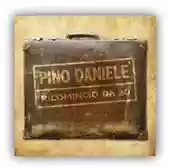
Ricomincio da 30 by Pino Daniele is a considerable triple album featuring a mix of original hits, new songs, and partial reunion performances. The review highlights Daniele's unique dialectal songwriting and questions how the newer and older generations perceive his evolving music. While the album is somewhat uneven, it remains a definitive and worthwhile collection for fans. The review calls for fresh listeners to explore it without biases tied to original release dates.Tracklist Lyrics
Pino Daniele
Italian singer-songwriter and guitarist from Naples, notable for blending Neapolitan tradition with blues, jazz and world-music influences. Debuted with Terra Mia (1977) and remained a prominent figure in Italian music until 2015.48 Reviews
