
 •
Rating:
•
Rating:
THE REVIEW
It is part of human history: white people have always underestimated black people; for this reason, black people have always been exploited and considered inferior by white people.
But why did this happen? I can't find an explanation. There is nothing that justifies this injustice; and yet even today equality has not been fully achieved.
African Americans even felt compelled to find a way to prove their equality, their humanity; to do so, they often chose the noblest human activity: art, particularly music.
Through music, they have amply and repeatedly demonstrated their incredible abilities; even if, often, white people have refused to decode such a different and complex language.
Music, therefore, became a way for black people to vent, to shout to the Universe the injustices they faced. All this served as a constant inspiration in black music par excellence: Jazz. If one makes a careful comparison between European classical music and Jazz, one notes how the former evolved very slowly and thanks to a few enlightened minds; in Jazz, instead, there is an incredibly fast musical progression and a very large number of exceptional artists: in less than a century, it has gone from tonal to atonal, from acoustic to electric, with contaminations from all other existing musical genres.
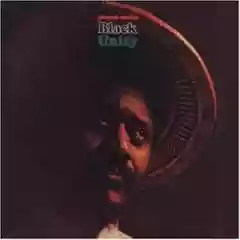
The social factor is therefore the common thread of all African American music and is also the theme of this memorable record. In this 1971 Impulse! album, music is presented as a lifestyle, a reason for pride and unity.
By entitling an album Black Unity Pharoah Sanders takes on the honor and the burden of "speaking" in the best possible way about an entire people, his people.
In fact, the musical result is nothing short of excellent; a single piece that nearly reaches forty minutes, in full crescendo from the beginning.
The protagonists of this great work are, along with the leader Sanders, Hannibal Marvin Peterson (trumpet), Carlos Garnett (tenor sax), Joe Bonner (piano), Cecil McBee and Stanley Clarke (double bass), Norman Connors and Billy Hart (drums), and Lawrence Killian (percussion).
It starts from the ostinato of the two double basses accompanied by African and oriental percussion, already you can feel that the rhythm is affecting the body of the listener, leaving them not indifferent; then the piano contributes to creating the right tension for the entry of the horns. After five minutes, one is already in full excitement; a great climax characterizes the entire work, reaching a peak thanks to the screams of Sanders' sax and Peterson's trumpet.
Black Unity is the ideal celebration of African American culture and creates a considerable sense of belonging; one feels part of the claim of the rights of these artists, because thanks to their music, an inexpressible state of excitement and then tranquility is reached.
...darn, I should have been born black!
Loading comments slowly
Summary by Bot
Pharoah Sanders' 1971 album Black Unity is a profound jazz masterpiece celebrating African American culture and unity. The single 40-minute track builds from rhythmic ostinatos to powerful crescendos, symbolizing the struggle and pride of black people. This record stands as both musical innovation and social statement, featuring notable musicians and rich instrumentation. It remains a timeless tribute to black identity and artistic excellence.Tracklist Videos
02 Black Unity, Part II ()
Pharoah Sanders
Pharoah Sanders (born 1940 in Little Rock, Arkansas; died 2022) was an American jazz saxophonist and a leading figure of spiritual and free jazz. After moving to New York in the 1960s, he worked with Sun Ra and joined John Coltrane’s groups, appearing on Ascension and Meditations, then released landmark albums on Impulse! Records.05 Reviews
