
 •
Rating:
•
Rating:
THE REVIEW
There is a scene in The Green Mile (a beautiful film based on a story by Stephen King) where a large black man with paranormal powers heals the prison warden's wife of an "incurable disease" simply by "sucking out" the illness to transfer it momentarily into himself and then, later in the film, into the body of a particularly "unpleasant" prison guard.
Now, let's pretend that something like this could also be done with two simple albums of songs and an imaginary healer could remove all the malaise from one, Fool's Mate, to pour it all into another, Pawn Heart, perhaps we might have an idea of what this album represents compared to the (almost unanimously considered) masterpiece of VDGG.
Fool's Mate is generally as serene (although often melancholic) as Pawn Heart is desperately torn and rebellious.
The songs are usually "normal", sometimes "naive" (Candle, Happy), other times "completely carefree", and to this category certainly belongs, both musically and lyrically, the Barrett-esque Sunshine (the worst of the bunch, even though it features the guitar of His Majesty Robert Fripp, who also showcases his frippertronics at the end of the album).
However, there are some significant exceptions. For example, I think of Birds, with its healthy dose of pantheism and dark movement, or Summer Song in the Autumn, with a part of the lyrics that reads:
You look out at the water
Calling you over the wind
Then you throw aside your handbag
and slowly walk right in
And tomorrow you will be
in yesterday's news
which may even recall the piano ballads and spoken words of Tom Waits from the Bone Machine era (try, to believe it, comparing the text above with that of The Ocean Doesn't Want Me Today).
There are tracks like Re-Awakening and Solitude (the first a pop-rock full of tempo changes with a beautiful piano intro/interlude and a final choral part involving all the "generators", Fripp, and even Paul Whitehead, the most famous cover artist for prog records; the second a folk piece, like Child, with singing reminiscent of Tim Buckley) with lyrics indebted to themes of escape from reality and self-indulgent and lyrical melancholy so dear to that great poet W. B Yeats.
And then there's Vision, also in the title, Yeats-inspired (The Vision is a work by the Irishman), perhaps Peter Hammill's most beautiful piano ballad (forgive me Man-erg and House With No Door).
In short, in my humble opinion, an underrated album (perhaps even by Hammill himself), with a very strong 70s sound.
Finally, a last note on the album's title. Until a few days ago, being the good superficial person I usually am, I was convinced that the title of this album meant "The Fool's Companion", a bit like playmate means play companion (or, more pleasantly, Playboy bunny), flatmate, apartment companion, etc, etc.
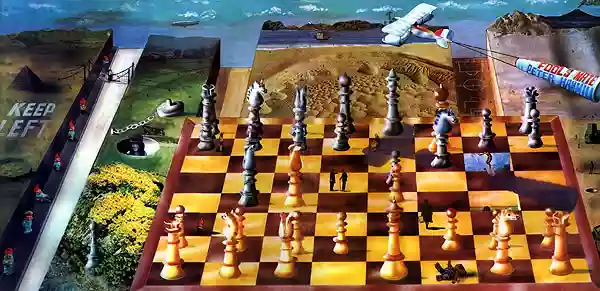
In truth, about half an hour ago, I discovered (thanks to Wikipedia) that a Fool's Mate is nothing but the fastest checkmate possible in the game of chess (the cover should perhaps have been a clue for a poor non-native English speaker...).
In short, "checkmate for the novice".
Who the novice might be is not known to me; I hope it's not myself.
Loading comments slowly
Summary by Bot
The review highlights Peter Hammill's album 'Fool's Mate' as a serene, melancholic, and often underrated 70s record. It contrasts the album's calm nature with the more intense 'Pawn Heart' by Van der Graaf Generator. The songs range from naive and carefree to deeply poetic, with notable contributions from Robert Fripp. The reviewer appreciates the poetic lyrics inspired by Yeats and Tom Waits and emphasizes the album's strong 70s sound and emotional depth.Tracklist Lyrics Videos
Peter Hammill
Peter Hammill is an English singer-songwriter and musician, known as the lead singer of the progressive rock band Van der Graaf Generator and for an extensive solo career spanning multiple decades.22 Reviews
