 •
Rating:
•
Rating:
THE REVIEW
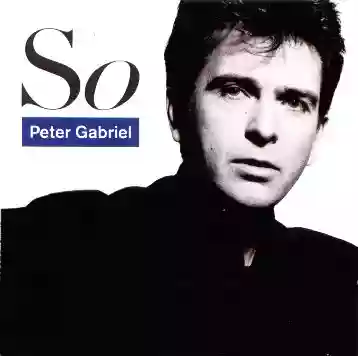
When his adventure with Genesis ended, Peter Gabriel hadn't lost any skill or style. He was still a great singer, capable of flawlessly ranging from pop sounds to rock ones, without forgetting the refined instrumental lesson that Genesis carried forward for almost a decade. As a solo artist, he was brilliant, capable of surprising everyone with a masterpiece like "Peter Gabriel" (1980) and astonishing, always in a slightly crazy way, with an intense live album like "Play Live." However, the great breakthrough that marked a turning point, explosively, came in 1986, titled simply "So." Gabriel was a raging river, he had a lot to say and tell, perhaps some irrelevant stories, but always curious. Fortunately, the desire to create never turned into a desire to overdo it, and, defying his old Genesis companions, he created a complete album, solemn, divided between pop and rock, with ethnic-planetary melodic fusions very similar to the futuristic ones of the earliest Pink Floyd. Commitment and lightness, style and cleverness, a perfect mix that made "So" one of the greatest recording successes of the entire 1980s. Melodious yet complex, Peter Gabriel ranges from the rock tinged with melodrama of "Red Rain" to the rhythmic delicacy of "Mercy Street," arriving at "In your eyes" (with help from his friend Youssou N'Dour) where he explores the fragility and complexity of the malaise of living in the African continent.
Always suspended between reality, fantasy, and legend, Peter Gabriel constructs a perfect album in which the (magnificent) music seems to smoothly envelop the sounds and thoughts typical of the Gabriel-pensiero: universe, cosmos, peoples, religions, futurism. And it's not a flaw to feel, almost in unison, typically African sounds with brazenly pop melodies. The rock is there, but it's a light rock: at times, one almost has the impression of being catapulted onto a distant and lost planet. Even though "So" is an album aimed at pure commercial sale, it never falls into any record trap: Gabriel writes what comes from his heart (and it’s a lot), but he never tries to wink at the masses: it could be defined as an elite album for its musical structure and the themes addressed, yet, cleverness and commercial and promotional skills, have sold "So" millions of copies worldwide (but it wasn't a record; with 50 million copies sold, "Thriller" is the most successful album of the 1980s). Gabriel's skill lies in composing an impressive series of high-quality tracks, without ever compromising on either musical or emotional grounds: there are the Stax reminiscences of "Sledgehammer" and "Big Time," the icy "This Is The Picture" (with the notable contribution of Laurie Anderson), the pure emotions of "Don't give up," an intense duet between Gabriel and Kate Bush (then at the peak of her glory) where they tell the dramatic reality of unemployment during the yuppie years of Margaret Thatcher's Britain.
"So" could be defined a kind of musical karma, a way to get closer to stellar realities by following the sweet poetry of sublime and fascinating notes, the creative pinnacle of Peter Gabriel who, after this album, would go on (commissioned by Martin Scorsese) to record the magnificent soundtrack for "The Last Temptation of Christ", and the excellent "Us" (1992), a little below "So," but still excellent. And, no matter what is said, even if a bit musically worn out, Peter Gabriel hasn't definitively set yet.
Loading comments slowly
Summary by Bot
Peter Gabriel's 1986 album 'So' represents a brilliant synthesis of pop, rock, and ethnic musical influences. The album balances sophistication and accessibility, featuring standout tracks like 'Sledgehammer' and 'Don't Give Up' (a duet with Kate Bush). Gabriel's artistic vision blends emotional depth and musical complexity, making 'So' a high-quality, commercially successful masterpiece of the 1980s. It remains a pivotal work in his solo career and a landmark album of its decade.Tracklist Lyrics
Peter Gabriel
English singer-songwriter and former Genesis frontman who launched a solo career in the 1970s. Known for fusing rock, world music and electronic production; founder of Real World and co-founder of WOMAD; notable for landmark albums and film soundtracks.46 Reviews
