
 •
Rating:
•
Rating:
THE REVIEW
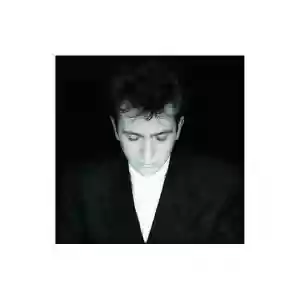
Published in 1990, "Shaking The Tree" is Gabriel's first greatest hits album. The compilation couldn't help but start with "Solbury Hill," the comeback track after the silence following his departure from Genesis, where Gabriel, having wiped the slate clean of Genesis' baroque style, exposed, in his own way, the reasons for his departure ("To keep silent, I resigned. My friends would have thought I was crazy. Turning water into wine, soon the open doors would have closed. So I went on day by day, even though my life was on a track. Until I thought about what to say and what relationship to sever. I felt part of the scene, so I left the system").
From the first LP (1977) also comes the apocalyptic "Here Comes the Flood," in a piano version similar to the one Peter presented in concerts at the time. The second LP is completely neglected, whose garage-hardcore sound represents a dead end in our subject's evolution (though a revival of "On The Air," maybe in an edited version, would have been fitting, at least for the sake of completeness), and then we arrive at the turning point of the third LP (1980). From this point on, Gabriel sets the rhythmic pattern as the backbone of his music. For example, "Intruder," entirely built on the hammering "gated reverb" on friend Phil's drum, could have been included, but, as this is a greatest hits collection, we find instead "Games Without Frontier" (where Gabriel also iconizes the lamented "Juegos sin fronteras"), "I Don't Remember" (one of the last appearances of Fripp's maniacal guitar), and the anti-apartheid anthem "Biko" (complete with samples of African chants). Quite surprisingly, there's also "Family Snapshot," a musical-literary masterpiece inspired by the memoirs of Arthur Bremner, the man who planned to kill Nixon (played by Sean Penn in a recent movie), driven by the frustrations of an unhappy life. The fourth LP (1982), which sees the culmination of the musical exploration of the previous albums, is represented by three songs: the two dance hits "Shock the Monkey" and "I Have the Touch" (two more paranoias: blinding jealousy and the "compulsion to touch"), and "San Jacinto," inspired by the encounter with a Native American tribe in Palm Springs (here, however, I must criticize the exclusion of the splendid "The Rhythm of the Heat," a key track in Gabriel's discography). The main contribution comes from the bestseller "So" (1986) with no less than 5 tracks: "Red Rain" is the memory of a nightmare: the red rain ambiguously bringing a painful relief ("let the red rain wash over you, let it fall on your skin"); the smoky "Mercy Street," although inspired by a collection of poems by Anne Sexton, is one of the singer's most personal songs; "Sledgehammer" and "Big Time" are two glittering tributes to Motown soul. The instrumental "Zaar" from the fundamental "Passion" (1989) and the inevitable (almost) new track "Shaking The Tree" sung together with Youssou N'Dour complete the collection.
Loading comments slowly
Summary by Bot
Peter Gabriel's 1990 greatest hits album Shaking The Tree offers a comprehensive look at his career, featuring iconic songs like 'Solbury Hill' and 'Biko.' The review praises the compilation while noting some notable omissions, such as tracks from his second album and 'The Rhythm of the Heat.' Highlighting Gabriel's rhythmic and thematic depth, the album reflects his artistic growth from Genesis to his solo career.Tracklist Lyrics Videos
Peter Gabriel
English singer-songwriter and former Genesis frontman who launched a solo career in the 1970s. Known for fusing rock, world music and electronic production; founder of Real World and co-founder of WOMAD; notable for landmark albums and film soundtracks.46 Reviews
