
 •
Rating:
•
Rating:
THE REVIEW
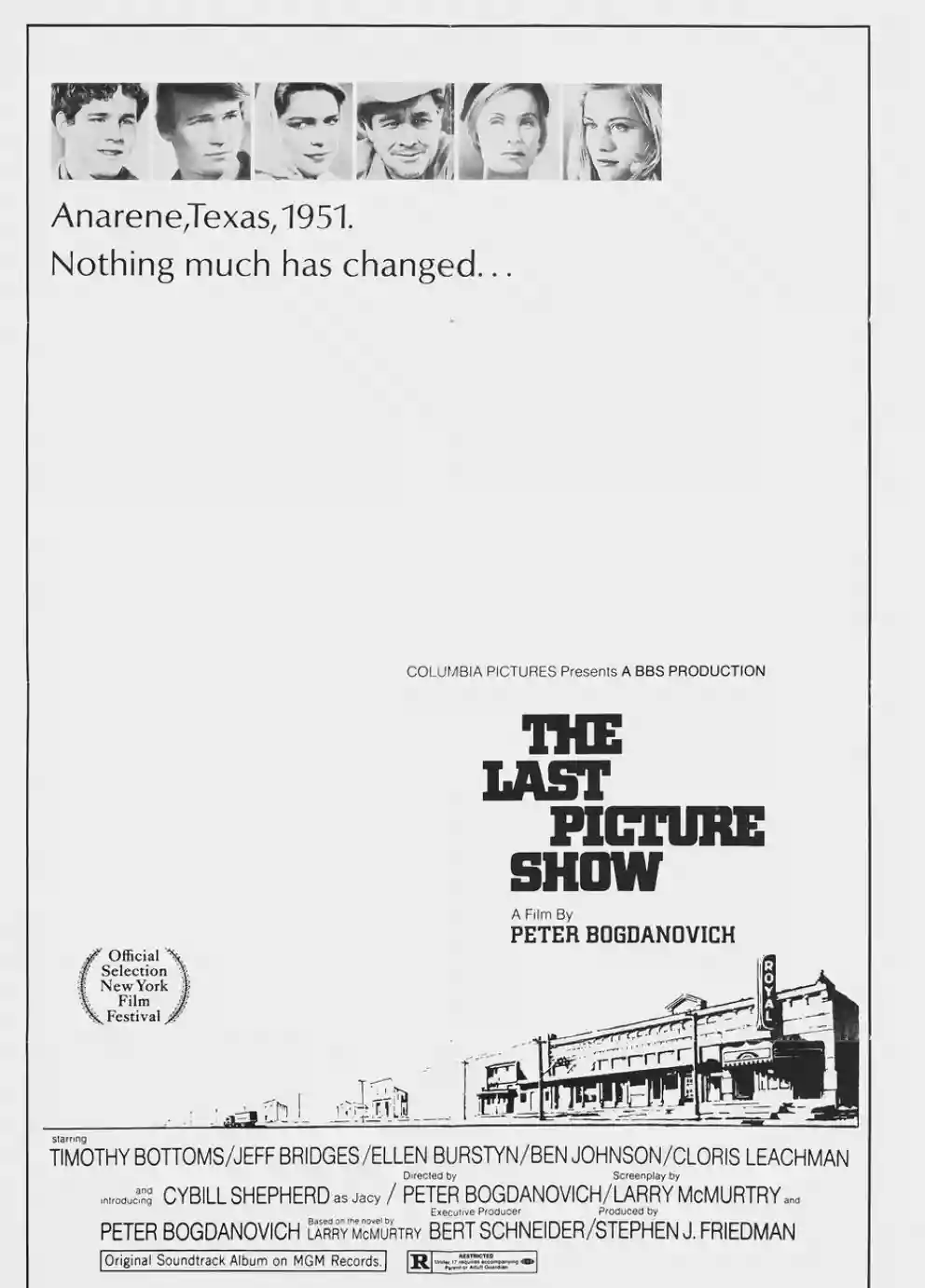
The Last Picture Show suffers from a severe case of cognitive dissonance. Celebrated as a “nostalgic classic” about the end of a certain type of cinema and the difficulties of growing up, it seems rather like an endless walk through the monotony of a bleak Texas - 118 minutes, but they feel like at least double - with a splash of sexual misery for those who love to wallow in the good old days – assuming they ever existed.
The diegetic soundtrack, the only technically interesting gimmick, isn't enough to elevate the film, nor is the black and white, which was reportedly suggested to Bogdanovich by Orson Welles. The film drags us to Anarene, a Texan town so depressing that the most entertaining pastime seems to be watching the dust stirred up by the wind. Here we find Sonny (Timothy Bottoms – remember what his face looks like?) and Duane (a very young Jeff Bridges, who at least managed to build a career), two dull teenagers, whose only interest is inevitably sex. The adults follow closely, equally dull, but with the same limited interests. Then there's Jacy Farrow, a Cybill Shepherd as radiant as she is unbearable, the perfect embodiment of the attractive yet detestable girl, the focus of all male attention with pathetic outcomes.
Sonny engages with the coach's wife, while Jacy manipulates anyone she encounters, aiming for a wealthy boyfriend. And between one triangle and another, there's Billy, the “tender” friend with a mental disability. In a scene shot with poorly misplaced comedic intent, Billy kidnaps a little girl, takes her in a car, and removes her panties. The implication - chilling even for the most ardent enemies of political correctness - is that being “retarded,” Billy couldn't move on to more reprehensible actions.
The plot drags on with the energy of a day in Anarene. Sonny “betrays” Duane by attempting to seduce Jacy, and when their farcical marriage is annulled, one hopes for the end of the film. But no, there's still time for Duane’s enlistment, departure, and return to town, and Billy's accident that is supposed to be tragic but seems just another excuse to prolong the viewer's suffering. In the end, we're literally given the final show in Anarene's only decrepit cinema, and finally, it's over.
Bogdanovich is responsible for this agony, which worked to launch him – described as the “best young director of the time” – and also his then-girlfriend, the young Cybill Shepherd – who, like her mentor, had an uneven career – and to earn Oscars for the two supporting actors, because it is known that Hollywood often rewards underdogs and enfant prodiges, only to regret it quickly.
Loading comments slowly
Summary by Bot
This review critiques The Last Picture Show as a slow and bleak portrayal of 1950s Texas life masked as nostalgic. The film's black-and-white aesthetic and soundtrack fail to overcome its dull characters and dragging plot. The depiction of sensitive scenes evokes discomfort rather than empathy. Despite its classic status, the reviewer finds the film tedious and flawed. It also highlights how the film launched careers despite its shortcomings.
Peter Bogdanovic
American film director, writer, actor, and critic associated with the New Hollywood movement, known for The Last Picture Show, What’s Up, Doc?, and Paper Moon.03 Reviews
