
 •
Rating:
•
Rating:
THE REVIEW
Off with the costumes! And down with the masks.
Let me explain: the promo videos of the singles that accompanied the previous album, “Very”, the year of grace 1993, saw Neil and Chris dressed like Lego figures in a bright orange-blue, pink, and 3D sunglasses. As for the wigs, better not to mention.
The context, even cyber, worked: the album was well-received, went to number one, the related tour in Latin America ("Discovery", ed) was a hit.
Ctrl+Alt+Del? Yes. Or rather, not really.
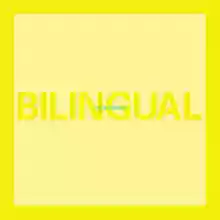
“Bilingual”, an album for which the author of this review holds a sinister, evergreen, authentic respect, arrived in 1996 preceded by two singles, “Before” and “Se A Vida E”, which only broke through with the core fan base. Like the album, after all.
The idea of making a bilingual album (which only is in certain very rarefied moments) was born in 1994, when the PSB, between dates of the aforementioned tour, spent evenings in Brazilian clubs, rather than Chilean or Argentine.
Completely unfamiliar with the Spanish language, Neil, who is essentially the lyricist of the duo, sent Dainton (RIP), at the time the band’s PA, to buy an English/Spanish dictionary.
Done and done: the snippets we find in “Discoteca”, “Single” and “Se A Vida E” are taken verbatim from demo phrases that in an elementary sense serve those who are just starting to learn the language.
A few examples? ‘Cuanto tiempo tengo que esperar’ (‘How long must I wait?’), Neil recounts, comes from possible phrases to say in a doctor’s waiting room.
Furthermore, in the rush, the singer only later realized that “That’s The Way Life Is” translates to “Essa Vida E” and not “Se A Vida E”, an error remedied in the track's fade-out.
Stylistically, the work slows the frantic pace of “Very”.
The highest point of the record, in the opinion of the writer, is “Discoteca”, whose rhythm section, played in the studio by SheBoom, shines in the bridge that connects “Discoteca” to the subsequent “Single”.
Pleasant is the outing recounted in “Metamorphosis” as well as the filler “Electricity” that features a Drag Queen opening up to a young boy.
“It Always Comes As A Surprise”, which the PETS wanted as the lead single, shines with its own light. Because it has everything: sadness, melancholy, regret.
The second part of the album takes us back to the past. “A Red Letter Day”, “The Survivors” and “Saturday Night Forever” inevitably nod to the recent past, whereas “Up Against It” (supported by the guitar of the ever-present Johnny Marr) and “Before” explore other territories with mixed success.
“Bilingual” also has another peculiarity, unusual yet pleasant. It spawned an exorbitant number of b-sides: an average of two for each single from four extracted singles, plus those of “Somewhere” aggregated in the reissue of the following year, the count is quickly done. B-sides that veer into experimentation or simply enrich the path taken with the album, reinforcing its karma.
In short, an album that fits in the Pet Shop Boys discography, indeed. A thoroughly crafted work, perhaps overly developed, as Neil himself would admit a few years later: “Maybe 12 tracks are too many.” I disagree. It's fine as it is.
“Bilingual” remains a cut above the works that would follow, from “Nightlife” onwards, through “Fundamental”.
There is an underlying uncertainty that does not escape those who know the group viscerally. At times, it tries to leap or look forward without succeeding. Initially, it tries to absorb Latin atmospheres but almost immediately gives up. Eventually, it reluctantly turns back to find certainties.
A fragility that makes it credible, stylistically pure, at times surprising.
Loading comments slowly
Summary by Bot
Bilingual, Pet Shop Boys' 1996 album, blends synth-pop with Latin influences and language experimentation. While slower than its predecessor Very, it features standout tracks like Discoteca and It Always Comes As A Surprise. The album is praised for its craftsmanship despite minor uncertainties in direction. It holds a special place in their discography with rich b-sides and emotional depth.Tracklist Lyrics Videos
Pet Shop Boys
Pet Shop Boys are an English synth-pop duo formed in 1981, consisting of Neil Tennant and Chris Lowe, known for blending electronic dance-pop with irony, social observation, and meticulously crafted production.15 Reviews
