
 •
Rating:
•
Rating: THE REVIEW
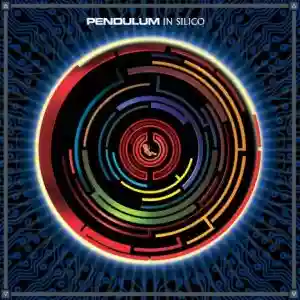
If the previous "Hold Your Color" had been a breath of fresh air for the Drum & Bass scene, bringing into the spotlight a genre in slight decline, this "In Silico" highlights the elements of the group's music that the genre purists criticized at their debut. In fact, since the first album, it was evident that the electronic sounds proposed by the sextet were alternated with a punk attitude and rock inserts, making the group's musical offering syncretic and original.
"In Silico", from the very first listen, surprises the listener; those who expected mechanical Drum & Bass or technical and complex Electronics (how can one not remember "Another Planet") from the debut will be disoriented. The guitar plays a decisively more important role compared to the previous album, and the sound is generally more varied.
The first two tracks, "Showdown" and "Different", have a similar structure: melodic vocals, strangely "acoustic" beats, and Techno Punk instrumental tails with vague hints of sound terrorism. It is immediately noticeable that the use of the rhythmic section leans more towards Rock than Electronics; the drums are rarely syncopated, there are many snares, and generally the same pattern is used throughout the flow of the song. Instead, the bass, always distorted, takes on the role of a real instrument, filling gaps and defining the structure and rhythm of the track. The sound is very complex, and many samples alternate almost interchangeably within the relentless melody. It ranges from more easy listening tracks like "Propane Nightmares", where the keyboard dominates, to more intimate tracks, which therefore require more dedication in listening, such as "Visions", characterized by the use of the vocoder and remarkable effects, and "9'000 Miles", where guitar arpeggios and '70s synth accompany a sweet, vaguely psychedelic progression. "Midnight Runner", certainly more ambient in approach and slightly repetitive, showcases a great variety of electronic sounds that vaguely resemble those of video games. The Drum & Bass progressions of the debut are not missing, though confined to just a few moments in almost all tracks. A paradigmatic example of the band's sound syncretism is the excellent "Mutiny", where, following a typically D&B rhythmic structure, comes a Rock-based guitar solo, promptly effected and integrated into the syncopated flow of the track.
The voice is always melodic, especially when using the vocoder, but allows for some angrier moments; the guitar adapts perfectly to the group's sound, and a great example of this is in the opener "Showdown", when a harmonic progression governed by the guitar, with a clear Rock matrix, is supported by a typically electronic rhythmic section.
A couple of uninspired tracks ("The Other Side" and "Granite") and one somewhat tedious, "The Tempest" - a failed attempt to make the group's sound harder - do not, however, compromise an excellent performance by Rob Swire & Co., one of the most original bands of recent years, at least in the electronic field.
Loading comments slowly
Summary by Bot
Pendulum's second album 'In Silico' marks a departure from pure drum & bass to a complex fusion with rock and electronic elements. The guitar takes a central role, blending with melodic vocals and techno punk influences. Key tracks like 'Showdown' and 'Propane Nightmares' demonstrate the band's innovative syncretism. Despite a few weaker songs, the album overall is praised for originality and musical depth.Tracklist Lyrics Videos
Pendulum
Pendulum are an Australian drum’n’bass group formed in Perth in 2002 by Rob Swire, Gareth McGrillen, and Paul “El Hornet” Harding. They fused DnB with rock and big-room electronics, breaking through with Hold Your Colour (2005) and evolving on In Silico (2008) and Immersion (2010). Collaborations highlighted in reviews include Liam Howlett, In Flames, and Steven Wilson.06 Reviews
