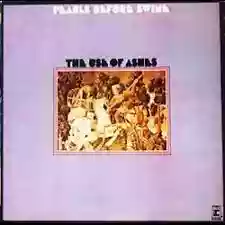

 •
Rating:
•
Rating:
THE REVIEW
The first time I listened to "The Jeweller," I was stunned; the second time, I felt like a child; and the third time, I sang while butchering the words, partly because I didn't know the lyrics and partly because it felt like a magical spell.
Well, I don't know how to tell you, "The Jeweller" is very sad, but its chorus is like the smile of the muse, and the muse's smile reaches even the most remote corners. Then, of course, to discover certain places, you need a special kind of lantern, like the hermit from tarot cards or like Tom Rapp, a hero who is half-mystic and half-ragged.
Or what you need is a sort of skewed zoom that first tightens and then widens toward the sky. The small, the large... and then the large and the small together…
...
"The Jeweller" is a story of solitude and devotion, imagine a guy who spends his nights cleaning old coins, knowing he can make them shine but also that he can't remove their scratches. Well, those coins are like the songs on this album, luminous and full of scars. Tears, after all, resemble certain stars.
Then, after so much beauty, you have to pause for a turn in the cheap enchantment of track 2. Well, it's money well spent; this is the ragged rest stop before continuing the journey or, even, the garden of miracles where those few coins double or turn into gold dust. Bye-bye, cat and fox.
...
"Rocket man," a suspended start, then the heart-wrenching melody sneaks in, a sort of ethereal delicacy, something that seeps under your skin and brings you right here, right now. You don't always have to travel far.
Of "Song about a rose," a song about a rose, or perhaps its shadow, the title might suffice. What else could we say? That it's yet another impossible melody for an uncertain voice? That you have to be born with it to impart that impression of purity and innocence?
...
Let's stop with the track-by-track. The whole album fits within the coordinates of a haunted and sometimes graceful chamber folk, with all its "serious" instrumentation (harpsichord, oboe, flute) that still doesn't give itself the slightest importance.
A naive beauty, a little sweet and a little hoarse, in the vein of those early masterpieces, but in a more singer-songwriter and folk guise.
Indeed, back then, everything used to get stuck and remained, somehow, mid-air, and thus you would immediately feel the crazy note, the bizarre and mad quid of those unrepeatable years. Then, of course, there was also melancholy, but it came later, anticipated as it was by that magical wonder.
Not here, here the melancholy comes immediately. And, if before it took half a liter of ambrosia, now just a drop is enough.
Oh, it seems that "Rocket man" inspired Bernie Taupin and Elton John for their song of the same name. It wasn't the same league, I think... not even the same damn playing field…
Trallallà…
Loading comments slowly
Summary by Bot
The review praises Pearls Before Swine's album The Use of Ashes as a haunting and graceful chamber folk masterpiece full of melancholic beauty. It highlights key tracks like 'The Jeweller' and 'Rocket Man' for their emotional depth and lyrical poetry. The music's delicate instrumentation and Tom Rapp's mystic presence create a powerful, timeless atmosphere. The review captures the album's naive charm while acknowledging its poignant sadness.Tracklist Videos
Pearls Before Swine
American psychedelic/acid-folk group formed in 1965 in Melbourne, Florida, led by singer-songwriter Tom Rapp. Debuted on ESP-Disk with One Nation Underground (1967) and Balaklava (1968), then moved to Reprise for later albums. Known for pacifist themes, surreal folk textures, and iconic art. Rapp later worked as a civil rights attorney.07 Reviews
