
 •
Rating:
•
Rating:
THE REVIEW
After the earthquake caused by the release of the epochal "The K&D Sessions," the path taken by Richard Dorfmeister and Peter Kruder seems to split into two halves: the first dives completely into the creation of the second album of the side-project Tosca, managed with Rupert Huber, while the second decisively launches into his first solo effort, which soon appears on record store shelves.
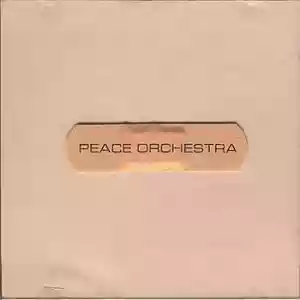
After a period of "forced" seclusion in the studio, the first chapter of the Peace Orchestra adventure comes to light (the second is "Reset," from 2002), with the self-titled album released at the end of '99, almost representing a personal farewell to a century that is coming to an end. What strikes immediately about the album (at least regarding its "physical" support) is the minimal and evocative artwork, where a matte pink color predominates, while a real plaster (!!) is applied on the front cover, hiding a wound reproduced on the booklet.
The allusion to the soothing character of the musical content is confirmed upon listening: Peter Kruder reveals himself to be an inspired producer, probably more gifted than his colleague Dorfmeister, and, by ranging among different sounds like Downtempo, Dub, Trip-Hop, and refined Drum'n'Bass, manages to create a mature work completely flawless.
The album unfolds in nine tracks, for fifty-seven minutes or slightly more of total duration, and a careful mixing work joins them all, almost forming a long suite in several movements, ensuring great compactness and cohesion. Once the CD is out of the case and inserted into the player, one surrenders to the disorienting mix of voids, soft sounds, and slow-motion drums of "The Man Part One", aware that the Peace Orchestra spell does not take long to take effect. Track after track, one encounters the syncopated beats (decidedly DnB-oriented) of the magnificent "Double Drums", the engaging kaleidoscope of sounds of "Domination", until reaching the "trippy" atmospheres, in the style of Massive Attack, of the nocturnal "Who Am I", which makes one shout masterpiece when Nina Simone's sampled voice appears, echoing the song title, almost like a light in the dark. There's still time for the hypnotic single "Shining", featuring beautiful female vocals, and "The Man Part Two", which concludes the album amidst echoes, silences, and acid Ambient-Noise distortions. The album ends with a seemingly never-ending fade-out, and as one acknowledges the inexorable stop of the playback, the desire to start the journey over is strong.
Although eight years have passed since its appearance, Peter Kruder's solo debut still sounds incredibly fresh and current, and it would truly be a pity if many inattentive listeners continued to ignore it: Peace Orchestra exudes originality and solidity, it's an extraordinary experience that every good music enthusiast should allow themselves, to taste, at least once, the effects of its magic.
Loading comments slowly
Summary by Bot
Peace Orchestra's debut album, released in 1999 by Peter Kruder, is a mature and flawless mix of Downtempo, Dub, Trip-Hop, and Drum'n'Bass. The album's evocative minimal artwork reflects its soothing and immersive sonic atmosphere. With nine cohesive tracks, it delivers a captivating journey full of hypnotic rhythms and memorable samples, including Nina Simone's voice. Even after years, the album remains fresh and original, a must-listen experience for electronic music fans.Tracklist Videos
Peace Orchestra
Peace Orchestra is the solo project of Austrian producer Peter Kruder. The self-titled debut was released in 1999; the follow-up Reset appeared in 2002.01 Reviews
