
 •
Rating:
•
Rating:
THE REVIEW
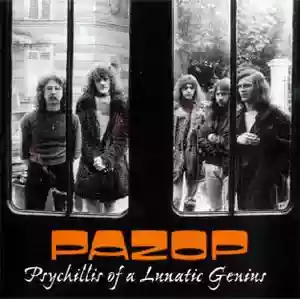
The Pazop are a Belgian band that, despite having only one album, have managed to demonstrate what it means to combine expressions of unpredictable avant-garde, through a very personal interpretation, with elements already known and revisited with intelligence and playful mischief.
The album, released in 1972 and reissued by Musea in 2000, is an incredible whirl of excellent musical moments, with references to Frank Zappa and Canterbury music. Do not be misled by the "references" as the cited themes are skillfully mixed with classically flavored scores, with authors of the caliber of Tchaikovsky or Dvorak being worthy of mention. The tracks on the album, sixteen in total, are quick sketches where dadaism meets metaphysics and while some details appear to be in soft and romantic watercolor, others seem squared and imposing. The Mellotron and keyboards in the more symphonic parts form elaborate textures upon which the violin (the phenomenal Polish Kuba Szczepanski) and the rhythm section can also perform granite jazz-rock fugues. On the contrary, there are vocal or flute moments that lead us by hand into a blooming garden of bucolic attractions where serenity, which like in life lasts only a moment, is cut to make way for another sonic madness, perhaps in honor of Kevin Ayers or Matching Mole.
In 1973, the band attempted a second work, but due to problems with the label, the composition was halted, leading to the total disbanding of Pazop. However, the completed tracks are added to the Musea CD, which I believe I can recommend without fear to friends of the derived genres.
Loading comments slowly
Summary by Bot
Pazop’s only album, 'Psychillis Of A Lunatic Genius,' is a unique blend of avant-garde unpredictability and jazz-rock with classical overtones. Released in 1972 and reissued in 2000 by Musea, it showcases imaginative compositions and virtuosic performances, particularly from violinist Kuba Szczepanski. The album references Frank Zappa and Canterbury music while incorporating classical influences. Despite the band’s breakup after a failed second project, the album remains highly recommended for fans of progressive and experimental genres.Tracklist
01 Le La Loo Loo Le La (02:29)
02 Harlequin Of Love (Second Version) (03:08)
03 Can It Be Sin (06:54)
04 And The Hermit Will Be The Master (05:18)
05 M.M.M. (05:50)
06 In The Army (Devil Likes Smoke) (01:37)
07 Airport Formalities And Taking Off / Stewardess And Breakfast (06:18)
08 It's The End (00:44)
09 Harlequin Of Love (02:50)
10 Crying For Disaster's Hand (04:08)
11 What Is The Further Purpose (03:10)
12 Swaying Fire (03:32)
13 Mirela (02:10)
14 Freedom Dance (03:28)
15 Lovelight (04:06)
16 Bami, Lychee, Si (05:26)
Pazop
Belgian band that released the album Psychillis Of A Lunatic Genius in 1972 (reissued by Musea in 2000). The record blends avant‑garde, Canterbury and symphonic references across sixteen short tracks; an attempted follow‑up in 1973 was halted by label problems and the group disbanded.01 Reviews
