 •
Rating:
•
Rating:
THE REVIEW
Uh-oh! We are told that this review appears (in whole or in part) also on blackdiamondbay.it and on capital.it
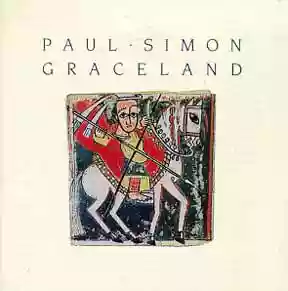
And now it's time for this real milestone, strangely absent from DeBaser: "Graceland" by Paul Simon represents a true musical-cultural event destined to "weigh" in the music of the years to come (yes, including these). Recorded between New York and South Africa, this album sold 14 million copies and won the 1986 Grammy Award for Album of the Year. Third in the American charts, the album topped the UK and South African charts for many weeks and had among its many merits a great and immense one: bringing the sound of South Africa and a certain taste for ethnic contamination to the whole world (those were the "good" years and the signals were already given, including the amazing album "Cruze de Ma" by De André which in its small way helped the cause).
As Paul Simon recounts: "Graceland was the result of an extraordinary ability to understand one another among people who had just met". With this masterpiece, the musical world of Paul Simon, until now "relegated" to sweet pop songs and almost classical ballads, yet unforgettable, is filled with sounds, lights, and colors of a multi-ethnic celebration. These are the colors of South Africa, to which Paul refers in an original, sincere, open way. In direct contrast with the prevailing UN boycott directives of those years, Paul hired local musicians who significantly contributed to bringing the issues of apartheid, which had reached the peak of socio-political tension, to the forefront of a purely musical stage. As you can hear, the result is astonishing for Simon's creative flair and the remarkable cohesion of the whole: a true festive kaleidoscope of sounds, rhythms, and colors with the bewildered Paul almost acting "as a guest" on an album that exudes "little Americanness".
The songs on the album are almost all memorable, sometimes oblique and uncoordinated, with Paul's suave voice swallowed by tribal timbres, pulsating instruments, and pounding rhythms that enhance its peculiarity in a contrast that enchants quite a bit. In the strange amalgam of American and African artists (the sound quality and arrangements are perfectly curated), alongside the colorful and unknown Ladysmith Black Mambazo (later signed by Simon), who are the choreographic and vocal architects of the unforgettable "Diamonds On The Soles Of Her Shoes" and "Homeless", we find Los Lobos in "All Around The World...", Steve Gadd, Adrian Belew, but also the Everly Brothers, Youssou N'Dour and the splendid delicate cameo of Linda Ronstadt in the counterpoint of "Under African Skies". Perhaps it might be worth lingering on the lyrics, full of apparent frivolities and exemplary stories, but frankly, it's the least evident and enjoyable thing about this album. Above all, "Graceland", a beautiful dreamlike march to which to direct the wandering of our hopes, our dreams, musical and otherwise, and the unforgettable "Homeless" with its beautiful a cappella intro (a goosebump-inducing performance!).
Simon later tried to repeat the concept, going to Brazil to record "The Rhythm of the Saints": while the latter is still an excellent album with equally splendid music, the compositional peak and happy insights of "Graceland" remained unmatched.
Loading comments slowly
Summary by Bot
Paul Simon’s Graceland is a landmark album that blends South African rhythms with American pop, breaking new ground in world music. Released amid apartheid tensions, it helped bring these sounds to a global audience. The album boasts memorable collaborations and won the 1986 Grammy for Album of the Year. Its artistic innovation and cultural resonance continue to inspire.Tracklist Lyrics Videos
Paul Simon
Paul Simon is an American singer-songwriter best known for his work in Simon & Garfunkel and for a long solo career that moved from folk and pop songwriting into wide-ranging cross-cultural and rhythmic experimentation.15 Reviews
