
 •
Rating:
•
Rating:
THE REVIEW
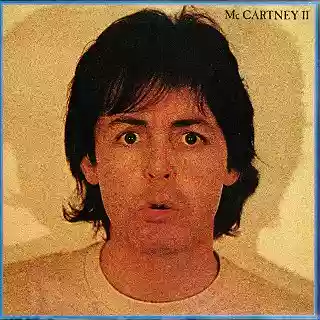
And ten years later, Paul does it again, recording a solo album in his home studio. A lot has happened in the meantime since the release of "Back To The Egg," the 1980 Japanese tour was canceled, as Paul was busy personally trying out the Japanese prison system, "No More Lonely Nights" he will write in memory, while Laine will soon shed "Japanese Tears," Lennon has not yet been killed by the idiot of the moment. To recover, Paul decides to revisit a tape he had recorded to keep in his car, working on a piece already brought on tour the previous year, "Coming Up," and other bizarre synthetic compositions, mostly harsh to the ears of purists but interesting. There is a lot of material, so much so that McCartney wants to release a double album, but EMI balks, considers the work heavy and unappealing, and the album is cut in an obscene way, losing much of the experimental side but retaining some very high moments. This is the album where Paul records a song even more poignant than "Yesterday," "Waterfalls" is a composition boasting beautiful music, just acoustic guitar and keyboards, with a voice that best interprets the melancholy of the lyrics "Don't go jumping waterfalls / Please keep to the lake / People who jump waterfalls / Sometimes can make mistakes / ... And I need love ... / Like a second needs an hour / Like a raindrop needs a shower", this song is a high point, perhaps the highest, of McCartney's entire career from the Beatles to today. "Coming Up" is a pleasant little song, with immediate appeal, dictated by unoppressive electronics, even Lennon will be amazed when he finds himself singing it in the car, the following "Temporary Secretary," is a heavy nursery rhyme, too repetitive and confusing in its monotonous progression. The album also includes pleasant rock-blues diversions, like "Nobody Knows" and "On The Way," but electronics take center stage in the beautiful melody of "Front Parlour" or support Paul's fragile voice in "Summer's Day Song." "Frozen Jap" is pure experimentation, between synths and drums played in a bathroom to impressively amplify the echo of the skins, high cymbal sounds are removed (Gabriel will do the same for his third work), for a hypnotic and cold instrumental; a heavy and almost irritating track is "Bogey Music" while "Darkroom" opens another window on Paul the experimenter, a song with a good bass and drum rhythm over which Paul overlays sounds from various sources and a monotonous singing where McCartney's counter-vocals are curious vocalizations. The closure is entrusted to another poignant song, "One Of Those Days," acoustic, with good filtered singing by Paul and Linda's counter-vocals, one of her very few contributions on the album. Those interested in the complete version, it exists on Bootleg, but it is very harsh, just listen to "Check My Machine" or the ten-minute electronic lullaby of "Secret Friend" on the remastered version to get an idea of what Paul recorded. A work therefore very experimental, but resized by imposed cuts, an album boasting excellent compositions, but it is not ideal for starting to explore McCartney's solo career.
Loading comments slowly
Summary by Bot
McCartney II is Paul McCartney's 1980 solo album marked by experimental synth work and poignant songwriting. Though EMI forced cuts, standout tracks like 'Waterfalls' and 'Coming Up' highlight the album’s unique charm. The mix of electronic experimentation and acoustic moments offers an intriguing listen, though it's not recommended as the starting point in McCartney’s solo catalog. The remastered and bootleg versions reveal even more daring sonic explorations.Tracklist Lyrics Videos
Paul McCartney
English singer-songwriter and multi-instrumentalist, co-lead vocalist and bassist of the Beatles, later leader of Wings and a prolific solo artist with a decades-long career and numerous acclaimed albums and live shows.65 Reviews
Other reviews
By masturbatio
The album is special to me, I don’t deny it’s embarrassing, possibly the worst of the Albion Paul, but it contains magic that only a fab four could secrete.
Maybe Ringo composed this album and Paul put his face on it, or maybe the real Paul who had been replaced composed it. I don’t care, I put it on today and it made me want to cry.
