
 •
Rating:
•
Rating:
THE REVIEW
Hello Paul,
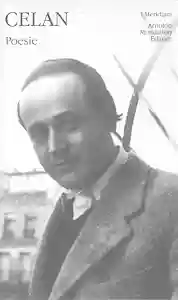
I finally find the courage to write to you. For some years now you have been speaking to me through that grate of words[1] which over the years has been for you the only true window to the world. It hasn't been easy, I admit, maneuvering through the fragments, among the ruins of your desperate existence. However, I have tried my best to pay attention, not to step where I shouldn't, to follow, when I recognized it, the turn of breath[2]. The one that, as your voice says, is capable of revealing the True nature of human beings. I know it's not easy to grasp the meaning of the Word, of Yours: weighed, never explicitly said. Maybe I understood a third of what you have been and lived, but I, as you know, sit among the lucky ones. You, on the other hand, do not. You are a survivor. And like so many survivors, until your tragic disappearance, you felt guilty. Guilty for not being able to warn your parents of the arrival of the Nazi squads. Guilty because it was your duty to save them, to find them shelter, just as you did for yourself. Guilty because you HAD to arrive on time. Guilty because you were just a boy. I don't know how one might feel. There's no need to even say that it wasn't your fault. We don't know each other.
But how much I would have liked to, Paul! I could have told you something!
I could have told you that I completely understand the distressing swing between memory and oblivion[3], between wanting to forget and wanting to remember, to move on. I believe it's right, in the end, to want to keep a bit of both halves. Because they represent us, for better or worse. And it was admirable and courageous on your part, if I may say so, to have chosen to maintain German as a lyrical language even though it wasn't your mother tongue. It honors you to have wanted to start anew, to create a family, supporting the passions of your beloved wife. And although even in times of great recognition you were hurt, you didn't lose the desire to cast a forced light[4] on the dullness of your brief life. I would like to remember your life and work through that splendid message that shines through the few lines of one of your lyrics dear to me. I have to thank you for the strength with which you managed, in a few words, to represent with a significant vertical progression, the necessity to rise, to transcend every exorcism, every belief, and to continue to cultivate at all costs the cult of Hope.
Thank you again Paul
Filaments of sun[5],
above the grey-black squalor.
A thought at tree
Height claims the tone
That is of the light: still
There are melodies to sing
Beyond men.
[1] Grate of words "Sprachgitter", 1959
[2] Turn of breath "Atemwende", 1967
[3] Poppy and memory "Mohn und Gedächtnis", 1952
[4] Forced light "Lichtzwang", 1970
[5] Filaments of sun "Fadensonnen", 1968
Loading comments slowly
Summary by Bot
The review is a deeply personal and emotional reflection on Paul Celan's poetry and life as a Holocaust survivor. It appreciates his courage in using German as a poetic medium and explores themes of memory, guilt, and hope. The reviewer expresses empathy for Celan's inner conflicts and highlights the enduring power and significance of his lyrical work.
Paul Celan
Paul Celan (1920–1970), born in Cernăuți (Czernowitz), was a Romanian-born, German-language poet of Jewish descent, a Holocaust survivor and author of widely known poems such as "Todesfuge". He lived in France and died in Paris in 1970.02 Reviews
