
 •
Rating:
•
Rating:
THE REVIEW
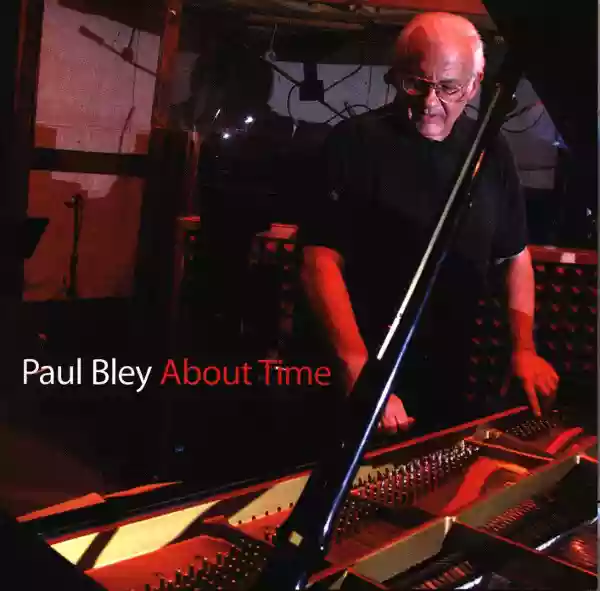
In 2007, Paul Bley entered a New York studio to gift us the latest in an endless series of recordings (we're talking about over 120 albums in about sixty years), once again in solo piano.
When I wonder what drove Bley to record and release music so compulsively for all those years, in the most diverse contexts and formations, I find the answer right in this last album. You'll find it too in the very first ten seconds of the opening track: a handful of notes tossed there, like a dirty rag, just to welcome us. Many of Bley's improvisations start this way: it's a sort of big bang, a small explosion of pure entropy on the piano from which everything draws nourishment and foundation, because, after all, one must start somewhere.
And indeed, right after, we find the most lyrical and piercing Bley, who, with a couple of well-sharpened notes, grabs us and doesn't let go. Thus begins a journey of over half an hour into the creative and genius mind of one of the greatest jazz pianists ever (the greatest?), a journey made of harmonies that stand on two or three notes and that continually transform, melodic impulses that drag the left hand along as if on a leash, with citations and structures borrowed here and there (the skeleton of All the Things You Are often appears) with which he plays around for a bit and then tires, of great irony and intense proclamations.
When approaching Bley's solo piano works, one must be ready for anything, and above all, one must accept boredom and sometimes getting lost: because Bley accepts to play only what is pure, what can only emerge in the true here and now of improvisation, and therefore, he is forced to give up any parachute and any prefabricated solution. Sometimes you have to wait for him, wait for him to find that insight, that sprout that only the mastery and care of a great can bring to bloom.
The second and last track is a free exploration of one of the pieces he played most often, namely Pent Up House by Sonny Rollins, a very short theme that, recording after recording, Bley increasingly dehydrates (twenty years have passed since that delightful and decidedly more orthodox version in duo with Chet Baker in Diane). Only the harmonic skeleton and a spit-out melody remain, which Bley enjoys mocking, yet it is a version that has something melancholic and twilight (a pair that also well summarizes Bley's style and aesthetic).
In conclusion, it is undoubtedly the last album I would recommend to someone wanting to approach a complex and kaleidoscopic artist like Paul Bley (for solo piano, however, I point out the masterpiece Open, to Love from 1972, of truly overwhelming intensity); it is simply the shy and sly farewell of a giant who left such an indelible mark on the art of solo piano and subsequent generations of pianists (for information, ask Keith Jarrett) and so evanescent in the record collections of jazz enthusiasts, who have often preferred more logical and polished improvisers like Mehldau, Corea, or Jarrett himself. Yet none of them reconciles me to pure improvisation like Bley, understood as total liberation from schemes and constraints, but above all as a sincere and artisanal pursuit of amazement and beauty.
Loading comments slowly
Summary by Bot
Paul Bley’s 2007 album 'About Time' showcases his lifetime commitment to pure, spontaneous jazz improvisation through solo piano performances. The record presents a lyrical yet challenging journey that embodies Bley’s unique style, combining irony, melancholy, and creative freedom. It highlights his refusal to rely on conventional structures, offering a raw and honest musical experience. Though not the easiest entry point to his work, it stands as a poignant farewell from one of jazz’s greatest pianists.
Paul Bley
Paul Bley (1932–2016) was a Canadian jazz pianist central to free and avant‑garde jazz. Across more than six decades he recorded extensively, led key solo piano albums on ECM, and collaborated with figures including Charles Mingus, Ornette Coleman, Jimmy Giuffrè, Sonny Rollins, and Chet Baker.06 Reviews
