 •
Rating:
•
Rating:
THE REVIEW
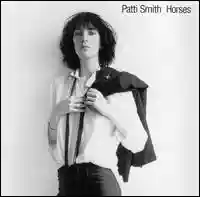
"Horses" is not just what many have called "the sword that cut the destiny of rock in two"
. Or at least not just this. It is the embrace that desperately holds together two opposing eras. If albums like "Pet Sounds" or "Surrealistic Pillow" had taken away the generation of children from that of the fathers, "Horses" prepares the field for the grandchildren's supremacy. It is the act of courage that someone in the rock world had to take. The awareness of what is necessary to forget or safeguard from that wonderful creative fire burned between the sixties and seventies, of which at that time only a very fertile ember remained.
It's 1975, the forefront musical scene is still of great depth (to name two, Led Zeppelin, Who, Roxy Music, Steely Dan, the revived Bob Dylan, Lynyrd Skynyrd, etc.), but we are in the shadow of what the previous years have been, many heroes have fallen more or less painfully, and many of those still standing will have to fall before the beginning of the next decade.
Patti Smith is just a wayward pseudo-poetess from Chicago, dragging herself for years through the more intellectual New York, from Greenwich Village to Warhol's Factory, without substantial successes; until one day she washes her face and decides to put to use years and years of cursed life and the right acquaintances. She soon finds the necessary clarity to shape her suggestive ideas. It is precisely this indomitable artist, with a dangerously anarchic spirit, who unconsciously sets the goal (perhaps then with the only parallel of Bruce Springsteen) of ferrying rock out of the swamp in which it was sinking, to save it by letting it breathe new air. And in the simplest way, by making it hers.
Patti Smith's greatness lies precisely in having operated within the tradition but according to her own – very personal – schemes. First of all, she courageously eludes the female imagery that had so far dominated the music world, fighting not only with the pin-up caricature style Marilyn or the charming diva like Billie Holiday, but also with "transgressives" like Joan Baez or Janis Joplin. Yes, because here we go beyond a mere question of clothing or attitude. This is the first "poetess of rock", no ifs or buts, without mascara or affectations, here it's serious.
The album immediately opens with a programmatic cover, that "Gloria" which by now is more a passing of the baton than a simple story of an exciting infatuation: the Them's song, already made delirious in its time by the Doors, is here violently sucked in and enriched in a wonderful hallucinogenic journey where unsuspected climaxes are reached, an involvement that Van Morrison’s version did not even dream of. The rest is history, visionary gallops of energetic pianos and guitars (by the legendary Lenny Kaye, yes yes, the same one from Nuggets!) sharp, cruel, essential. Evocative. Both in lyrics and music, an exceptional alchemy between simplicity and emotion, between lovable classicism and unheard-of extremes (just think of the masterpiece "Land", a suite of over nine minutes between the ghosts of Wilson Pickett and the shadowy densities of ironic confessions like "La Mer(de)"). It could be the worthy backdrop of Pietro Manzoni's homonymous work.
Among bellicose verses that are the offspring of the most Ginsbergian beat generation, thrilling proto-new wave experiments, and furious proto-punk, we are shaken, protected, burned, and exalted over the course of seven indelible tracks (which if you permit, I refrain from dissecting to not spoil the surprises for newcomers) until the damp and possessed lullaby of "Elegie".
Patti Smith's unique quality does not reside so much in her voice, her stage poses, her sensuality for the few, but in the messages she has written within herself. She was just waiting to find a visionary producer like John Cale, a great adventure companion like Tom Verlaine (listen to "Break It Up"), and especially four other free spirits (as well as great musicians) who could amplify her feelings. Here unfolds as never before the wild passion with which a young woman can see, love, and hate the world.
The soul of "Horses" is this, the race of unripe horses finally free, still not knowing well from what (this they will discover after a few months with the likes of the Rotten and the Ramones), but with a visceral need to deploy their beauty, their sense of life.
P.S.: reissued from 1996 with the addition of an unmissable homage to the mod uncles, the punky cover of "My Generation" by the Who. Historia magistra vitae...
Loading comments slowly
Summary by Bot
Horses by Patti Smith is a landmark 1975 album that bridges rock eras, blending poetic lyrics with raw punk energy. Smith redefined female rock artistry beyond stereotypes through powerful messages and collaborations with John Cale and Tom Verlaine. The album’s bold reinterpretations and experimental spirit carved a new path for future generations and remains an essential piece of music history.Tracklist Lyrics Videos
Patti Smith
Patti Smith is an American singer-songwriter, poet, and writer, widely associated with punk and new wave and celebrated for merging rock performance with literary, spoken-word intensity.12 Reviews
Other reviews
By cacchione
Can a voice be at the same time irreverent, irreverent, biting, melancholic, and persuasive? Listen to Horses and the answer will be obvious.
Ms. Smith devours for breakfast and lines up all the pseudo-award-winning singers who sell millions of records worldwide (sigh!).
