 •
Rating:
•
Rating:
THE REVIEW
Wide cliffs crossed by northern skies, white cottages speckled in the green countryside at the mercy of the elements, restless spirits in search of something. Above all: freedom. An endless desire for freedom. The desire of the wanderer, the traveler who seeks freedom but simultaneously dreams of the refuge where to stay. Patrick Wolf shares with few others the ability to evoke convincingly an entire imaginary, a world of images and words that allows one to savor more deeply the purely musical aspect of his work. When listening to Morrissey in the '80s, one dreamed of conversations about Keats and Yeats at the gates of the cemetery, went back to reread Oscar Wilde, discovered old black and white films, and came into contact with a different idea of homosexuality. Similarly, listening to Nick Cave projected you into a universe of biblical characters, murderers and wicked men, prodigal sons, and a thousand other anti-heroes and societal outcasts. Wolf envelops instead his works in a romantic mythology (romanticism in the sense of a literary/cultural movement) made of Nordic landscapes, melancholy/spleen, Tristans and Jacob's ladders, and above all a desire to escape that often leads to a departure from the city towards the desolate yet welcoming lands of Northern Europe where Nature still speaks and seduces with its play of light/shadow.
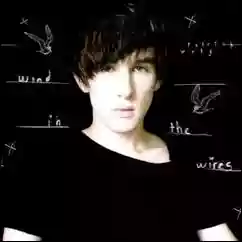
"Wind In The Wires" is the second work of a young man with a great personality who has lived, at little more than twenty, three times the experiences of the average European teenager (having fled from home very young, he wandered homeless across France, stayed in Paris, and now lives between London and Cornwall). The album expertly takes advantage of this wealth of experience, showing a surprising compositional maturity and balance for the second effort of such a young man. Wolf manages to distill his compositional references (a certain doomed singer-songwriter tradition in the Cave/PJ Harvey lineage, the Central European atmospheres, those of Celtic folk) with a remarkable dose of personality until he creates a truly original work, a thematic and linguistic universe with its own laws and semantics. From the first notes of "The Libertine", the opening track, there is a clear perception of a compact, unified listening experience. The arrangements are complex and sophisticated (viola, cello, ukulele, etc.) and are enriched by a constant background of noises and electronic sounds that further expand their dimension. The songs have their individuality, but the uniformity of a unique vision prevails, even in the difference of styles (from the cursed rock of Tristan to the folk of Eulogy to the pop of the concluding Landsend). It is definitely another point in favor of "Wind In The Wires". Patrick Wolf is an enormous talent. One on whom I would bet. We'll see what he accomplishes in the future; in the meantime, we can only enjoy this excellent work.
Loading comments slowly
Summary by Bot
Patrick Wolf's 'Wind In The Wires' masterfully evokes a romantic Nordic mythology filled with longing and freedom. The album exhibits impressive compositional maturity and a unique musical identity drawing from folk and indie rock traditions. Its sophisticated arrangements and thematic coherence create a compelling listening experience. Wolf's personal journey enriches the album’s emotional depth, making it a standout work from a promising young talent.Tracklist Lyrics Videos
Patrick Wolf
Patrick Wolf is an English singer-songwriter and multi-instrumentalist, born in 1983, known for theatrical vocals and a distinctive blend of folk instrumentation (notably strings) with electronic elements.11 Reviews
Other reviews
By Danny The Kid
Wind In The Wires is a theatrical spectacle detailed to the smallest particulars; a show with one single actor, protagonist and antagonist at the same time.
Metaphors, vivid and fascinating images to describe his torments and moods… discomfort, alienation, pain for the crudeness and pettiness of 'real life' is clearly felt.
