
 •
Rating:
•
Rating:
THE REVIEW
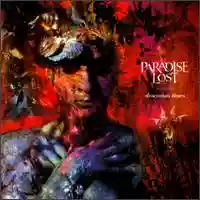
How many who have loved this album madly, and still love it, could describe its thousands of positive and negative sensations and musings in just two words?
I believe no one. And rightly so.
We are talking about a work that for many, countless people, has represented the highest point and the pinnacle of the career of the band from Halifax, and, although released at the time for a market that was not yet mainstream, but rather "niche", it achieved such success as to inevitably project Paradise Lost into the Olympus of established and unapproachable stars of the "Gothic" genre.
And gothic is the whole atmosphere that permeates this album: from the first piano note of "Enchantment", to the last guitar chord of "Jaded".
Great and small upheavals of the soul accompany the slow and fast, furious and desperate, tragic and decadent steps of the twelve songs on this work. Nothing more than enormously cruel portraits of vacuous existences, without meaning, without precise direction, with all the necessary consequences and all the tedious realizations generated by them.
Every step is an atrocious stab to the side of the human person, here considered as a ravaged and decadent beauty, subdued and weeping, murdered of its youth, lost in beautiful, and therefore more painful, memories of the existence that was.
"Enchantment" is the exact and precise prelude to what "Draconian Times" represents: the evanescent and forgotten sweetness that moves in the immediate and present world of abuses, oppressions, and violence. In its masterful and at times almost epic progression, it then broadens into visions of a harsh and vibrant tone, with Nick Holmes obsessively repeating: "All I need is a simple reminder...".
As the abyssal world of Paradise Lost materializes, closing your eyes, absorbing the negative and grotesque energies of the opera's first subterranean groans, you find yourself lifted high, towards barren and unreachable peaks with "Hallowed Land", which demonstrates more than anything else, the talent of the members of this band, starting from Holmes' aggressive voice, to the incessant and varied drumming, to the scraped and slithering guitars, albeit extremely powerful, to the suspended solos of a piano that seems to come and go in the gusts of cold and intangible wind of the lyrics.
It is a constant disentangling in sulfurous and ancestral fears this album. Never a moment in which one can sincerely perceive a glimpse of relief or light: nothing. "The Last Time", which at the time was released as the first single, is perhaps the most driven and powerful track on the CD. Staggered and with a bass line clearly heard, almost stomping on the strings, it acquires what is called "awareness"; that, don't be fooled, of human misery and its impotence, and with a rabid approach, Paradise Lost make it clear that there is no other path to follow, no other purpose to imply, other than living in grief over one's pains and one's idiocy.
The traits, the profiles, then, of all this turmoil of objective pessimism, are well explained and exceptionally given in the cornerstone track of "Draconian Times": "Forever Failure" (which stirred much controversy, given the overdubs, at the beginning, middle, and end, of a phrase by serial killer Charles Manson, instigator among others, on the evening of August 7, 1969, of the heinous and abominable murder of Sharon Tate, wife of director Roman Polanski, then eight months pregnant, and of three of her guests at the actress's villa on Cielo Drive, Los Angeles) is the most caustic and desperate track that the Lost at that time ever composed; in it, as usual, there is nothing that refers to "normalcy", but rather an acidic rain steeped in the taste of dead or dying things, almost wishing to be an impossible catharsis towards distant and unimaginable shores of completed senses and no longer restrictions of any form.
The beauty of the track, which could alone represent as an example "Gothic" as a genre, is so great and disheartening that one feels uncomfortable trying to describe it, and only those who will listen to it, or have already listened to it, will be able to describe the immense pains it manages to communicate.
If I exaggerate, don't hold it against me, I certainly speak in a biased manner, but I have nothing else to say about how immense and dramatic this album is that, for me, marked the beginning of one of the most troubled periods of my life, that gave me the will, if not the desire, to achieve being who I was, and am, at this moment. As a seal of how much I am attached to Paradise Lost and this album in particular, some years ago I tattooed the famous crown of thorns with the band's logo on my arm, a sign that something, in the scratches and hidden and putrescible crevices of the Lost, was the same for me, and the connections matter a great deal. Continuing, one could make observations and launch probes into dozens of varied aspects for the subsequent tracks. I will not do it as I don't want to bore anyone.
I would just like that whoever, even with a distracted eye, reads these lines, manages to understand the sense, would wish to listen to this masterpiece and make it their own, just because, it's clear, it sends negative and leaden signals, albeit affected and modernist, to awaken everyone's consciousness, and to make us understand that the meanders of life are never, or almost never, roses and flowers, but rather thorns and chains, and no one can prove otherwise.
If the tracks I have mentioned do not seem to meet the height of what I have written, then, continue with "Shades of God", with "I See Your Face", with "Jaded"; it will make no difference: it will always be the voice of an abyss, near yet deep, that envelops you, but instead of from the arms or legs, it will grab you by the head and heart, and you will have no escape.
Loading comments slowly
Summary by Bot
This review praises Paradise Lost's Draconian Times as a definitive gothic metal album, highlighting its bleak themes, powerful melodies, and emotional depth. The reviewer reflects on the album's personal significance and its role in elevating the band's status within the gothic genre. Key tracks such as "Enchantment," "The Last Time," and "Forever Failure" are noted for their intensity and atmospheric mastery. The album is described as a raw and haunting journey reflecting human despair and decay.Tracklist Lyrics Videos
Paradise Lost
Paradise Lost are an English band from Halifax, formed in 1988, widely associated with early death/doom and the development of gothic metal. Reviews highlight their shifts from extreme doom/death to more melodic gothic metal, a prominent late-’90s electronic/synth-rock phase (notably One Second and Host), and later returns to heavier gothic/doom.24 Reviews
Other reviews
By Rooster
The album does not bore; it manages to drag the listener through its melodies, at times dark and obsessive, over which Nick Holmes’ powerful voice hovers.
A constant characteristic of every track is an ethereal yet perceptible sadness, typical of Paradise Lost.
