
 •
Rating:
•
Rating:
THE REVIEW
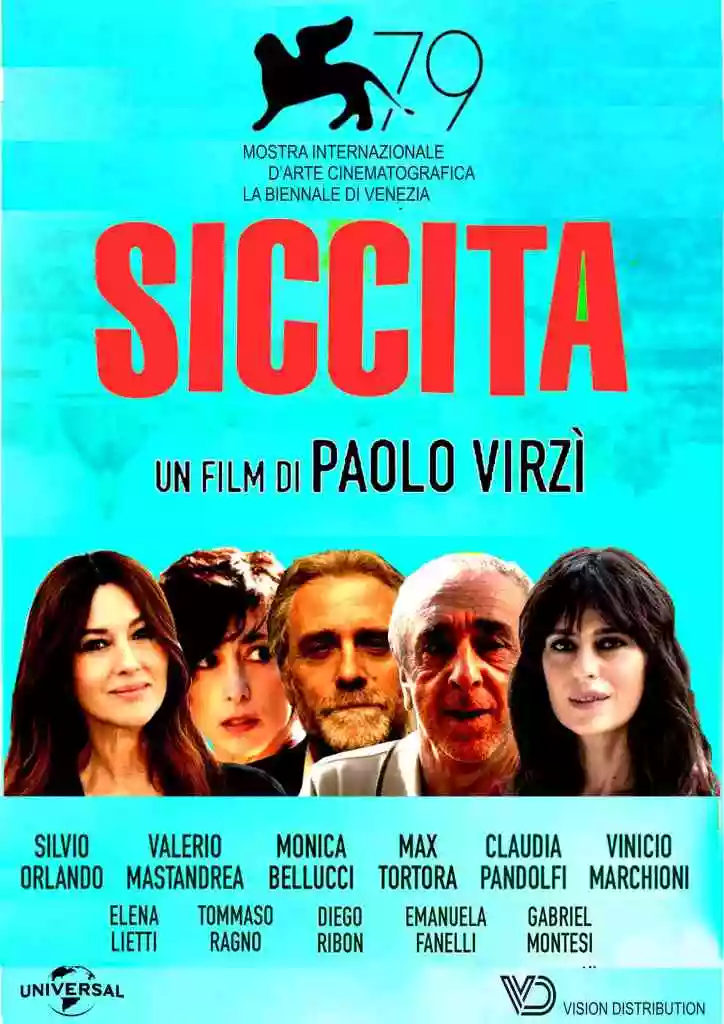
When it comes to dystopian genre films, it's easy to think of an auteur like Cronenberg. The same cannot be said for Paolo Virzì, a director whose name is tied to various titles ("Ovosodo" and many others) characterized by a neo-realist style attentive to current social issues. And his latest film, titled "Siccità," is in line with said stylistic approach.
Let's start with the title. It's stark and not at all futuristic, given that we are just coming out of the hottest summer recorded in decades (and, moreover, it is likely to be the coolest compared to summers in the coming years). It's no wonder, then, that in this film we see the city of Rome weakened by a lack of rain for over three years, with the Tiber River dried up. Nor is it unbelievable, in such a chaotic and filthy metropolis (see cockroaches everywhere instead of the current rats and wild boars), to discover an 'epidemic of lethargy (or sleeping sickness) affecting many people bitten by unspecified insects. How can one not think, in view of this narrative twist, of the ongoing Covid pandemic in our modern times?
No, the futuristic and dystopian dimension is not the salient feature of Virzì's latest work. Rather, the strength lies in the ensemble nature of the plot crowded with many interconnected characters (just like in Robert Altman's films). What unites them is the malaise of living in hard times, afflicted by a high level of unhappiness both in work relationships and in private life. Immersed in the stress of daily life, unable to interact outside of social media platforms, they are a bunch of damned souls, greedy, petty, internally withered like the parched earth devoid of water. One might think that, even when faced with an unexpectedly positive outcome, they would still fail to learn a valid lesson from what they have experienced.
In this gallery of characters, not all adequately focused, some stand out even for the great acting performances. This is the case, in my opinion, of Silvio Orlando who effectively plays a prisoner who finds himself fortuitously outside of jail, a bewildered wanderer through the maze of streets and districts of a wretched and hallucinatory Rome. Similarly, Valerio Mastandrea is noteworthy for his convincing portrayal of Loris, the taxi driver so embittered by life and work that he ends up talking to acquaintances and his now-deceased parents, confirming his very confused mental state, before ending up in the hospital after also contracting the widespread sleeping sickness.
Essentially, it is a very disorienting film, although not always well resolved and with an undeservedly consolatory ending. But the fact remains that, not being a true science fiction film, it offers a merciless and original portrait of our world increasingly caught in a spiral of decay and barbarism.
Loading comments slowly
Summary by Bot
Paolo Virzì's Siccità is a serious dystopian film set in a drought-stricken Rome, blending neo-realism with a thought-provoking social allegory. The story revolves around interconnected characters grappling with despair and societal collapse. Strong performances by Silvio Orlando and Valerio Mastandrea stand out in this complex narrative. Despite some unresolved aspects and a slightly consolatory ending, the film offers an original, unsettling view of contemporary decay.
Paolo Virzì
Paolo Virzì is an Italian film director and screenwriter from Livorno, known for humane, socially attuned comedy-dramas. He debuted with La bella vita (1994) and gained wide acclaim with Ovosodo, Il capitale umano, La pazza gioia, and the English-language Ella & John.10 Reviews
