
 •
Rating:
•
Rating:
THE REVIEW
The Boogieman
Paolo Conte is a fundamental figure in Italian music of all time. A singer-songwriter who knows how to play with words, with a unique and unmistakable lyrical style, just like his voice, which may seem nasal and hoarse at times, but you soon realize it is the only one that can masterfully interpret the texts of the musician from Asti. His career has spanned forty years now, and his world is jazz and "cultured" pop music. Cultured because, as illogical or senseless as Paolo Conte's lyrics may appear, they hide allegories and metaphors of life, dreamlike visions, and fantastic illusions. And even today, at 73, he takes the stages of Italy and Europe, full of energy and a desire to never stop.
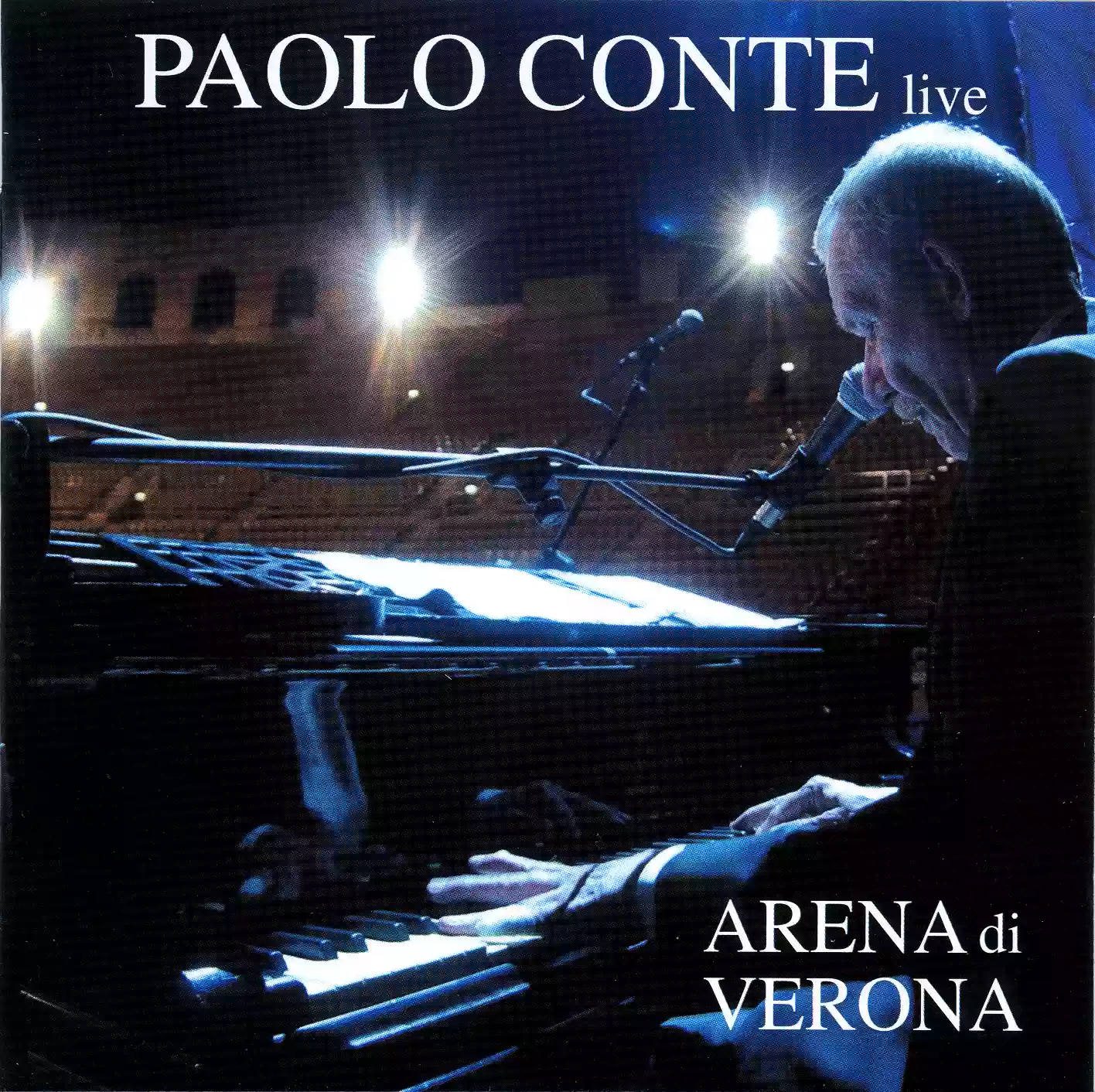
In 2005 he returns to the Arena of Verona. He had already been there in 1976, and on that occasion, he held his first concert in front of a sparse audience. This time, over twelve thousand people are there to listen to him, enchanted by the jazzy melodies, in a swing of rhythms and rhapsodies. And Conte never tires: he performs, together with his orchestra (Daniele di Gregorio, Jino Touche, Daniele dall’Omo, Massimo “Max Pitz” Pitzianti, Claudio Chiara, Luca Velotti, and Lucio Caliendo), no less than 22 songs, for nearly 2 hours of concert. It is not, of course, an evening where the audience goes wild, shouts, moshes, or where Paolo Conte breaks any instruments, but a splendid evening of Music. An evening of exquisite Art, where it is easy to lose oneself in the sounds and remain enchanted by the performance.
The album opens, however, first with an unreleased track: "Cuanta Pasiòn", also made famous for being used as the theme song of Vincenzo Mollica's segment of Tg1. After this brief parenthesis, the concert can finally begin, opening with "La donna d'inverno" (contained in the album "Un gelato al limon" from 1979, the first major success of the singer-songwriter), and continues with the majority of the artist's great classics, all perfectly arranged by the jazz orchestra collaborating with Paolo Conte. Songs like "Alle prese con una verde milonga", "Bartali", and "Via con me" are performed, which may even be better than their studio versions. Furthermore, the concert features ample space for a fundamental element of jazz, which is improvisation; but one should not think, however, that it is a "One man show"; on the contrary, this concert is not just Paolo Conte, but also a demonstration of the skill of his collaborators (especially the wind players: Pitzianti, Chiara, Velotti, and Caliendo), who showcase their ability. Most of the concert proceeds on measured rhythms, but there are pleasantly lively songs as well (in terms of rhythm). Above all "Lo zio", famous for Conte's kazoo solo, and especially the gallop "Diavolo rosso", with its arcane lyrics and driving rhythm, is a real tour de force for all musicians (especially for guitarist Daniele dall'Olmo) and is a perfect example of jazz improvisation.
The concert ends with "La vecchia giacca nuova", but the audience does not want to leave and loudly calls the musicians for an encore, which Conte and his fellows do not refuse, and they reprise the most famous song of the man from Asti: "Via con me".
Then, the concert really ends, leaving the memory of a musical evening to be framed. According to me, the great achievement of Paolo Conte is to play a jazz that does not close in on itself, but instead decides to show itself to the general public and to fascinate even listeners who are not fans of the genre. In short, a jazz enjoyable for everyone and accessible to everyone. Is it a good thing? A bad thing? It's up to the audience to decide.
Loading comments slowly
Summary by Bot
Paolo Conte delivers a masterful live jazz performance at Arena di Verona in 2005, performing 22 songs with his skilled orchestra. The concert elegantly blends poetic lyrics and jazz improvisation, enchanting over twelve thousand listeners. Conte’s unique voice and jazz style make the music accessible to a broad audience. Highlights include classic hits like 'Via con me' and the lively 'Diavolo rosso'. This album captures a timeless musical experience full of artful expression and energy.Tracklist Lyrics
Paolo Conte
Paolo Conte (born January 6, 1937) is an Italian singer-songwriter and pianist from Asti, known for jazz- and chanson-inflected songs, cinematic lyrics and a smoky baritone. He began his career as a songwriter in the 1960s and released his first solo albums in the 1970s; his best-known records include Paris Milonga and Aguaplano.44 Reviews
