
 •
Rating:
•
Rating:
THE REVIEW
Joining the vast "world of reviews" with a work by Paolo Conte is certainly not the most straightforward choice. This is because the lawyer from Asti represents, in the Italian music scene, an exceptional case, one might even say unique, in terms of type, musicality, and expressiveness.
If today, after so much time, I am once again equipped with paper and pen (or monitor and keyboard for the more technologically inclined) to jot down a few lines, it is largely thanks to him.
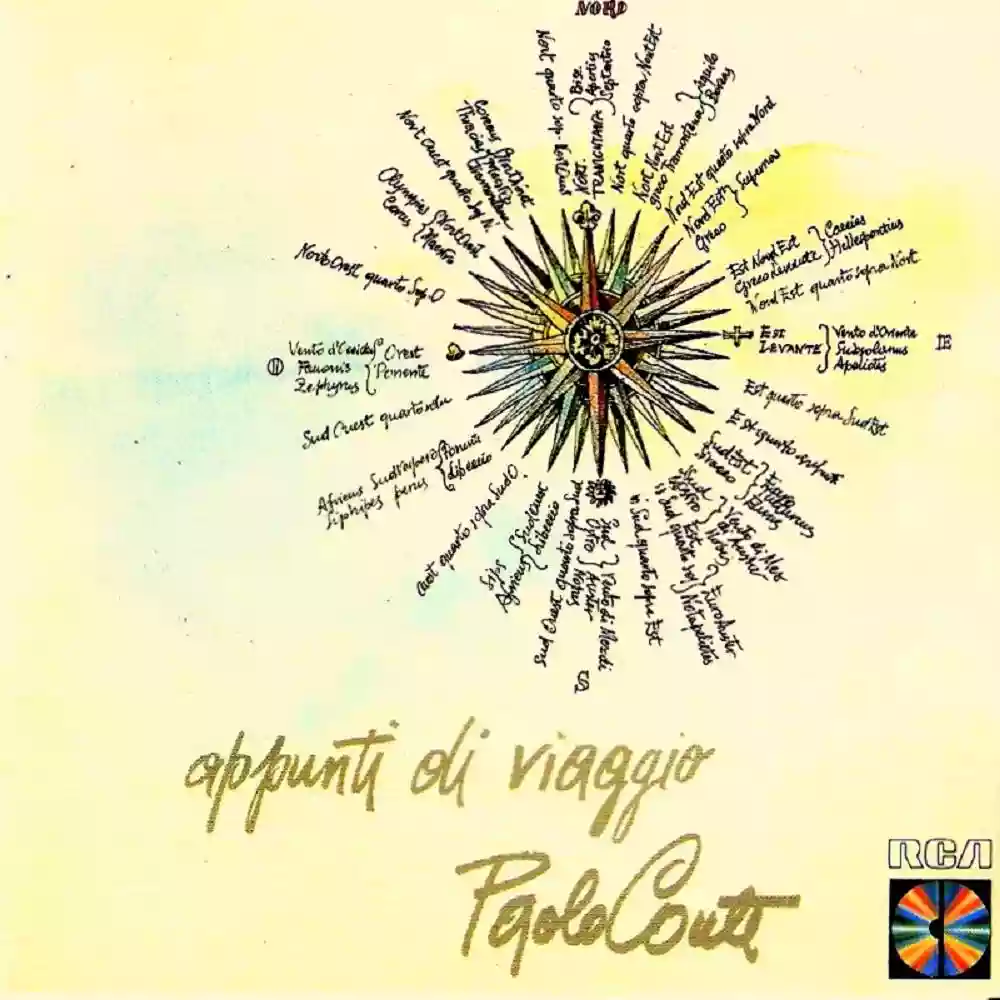
In front of me is the album "Appunti di viaggio," year 1982. A few days ago, this album made me fall in love with the esteemed artist in question. Indeed, it is my first album by Paolo Conte, and it is precisely for this reason that I chose it as the protagonist of my first review, in an attempt to channel into my debut text all the excellent feelings born from the fateful encounter between me and a musical genre waiting to be explored. The keyword, therefore, is novelty. Novelty which we do not find in the first track of the album, "Fuga all'inglese." In its place, however, there is a splendid trumpet intro that welcomes one of the most interesting lyrics of the entire work. A small jewel, where themes always dear to the human being are treated with impeccable musical lightness, such as escape (understood as escape from one's own life, seen almost as a rebirth, from habits, from a certain conception of morality not necessarily negative), the relentless passage of time that inevitably touches everything and everyone, the insignificant presence of two men compared to the immensity, unpredictability, and frenzy of that flood known as Life.
Next is "Dancing," a song with a captivating rhythm, delicately contrasted by Conte's languid voice. It is a rumba that frames, like a soundtrack, a picture of two slightly awkward dancers who, metaphorically, represent two lovers whose love story actually identifies more with a rumba than with a tango.
The album continues with "Gioco d'azzardo," a track with a melancholy and wistful tone where the theme of troubled love returns, seen almost as a lost bet. It seems only right to highlight, furthermore, the magnificent instrumental interlude where the author seems to want to channel all the passion that escaped from the narrated relationship.
"Lo zio" is a fun, captivating song that invites replay. However, it risks being quickly forgotten as it precedes, in my opinion, the true masterpiece of the entire work, "Hemingway." The title, the lyrics, the music allude to the name of the album with considerable style. All the verses walk a path, the path of travel, emotions, life. With small but delightful captions, Conte impresses, like a painter, feelings and images that recall past adventures; these and those to come will be part of a long, beautiful journey, nostalgic and free, to travel on the most important Road. The wonderful instrumental piece that follows only serves to accompany our thoughts in the depiction of these images. In short, a diamond that alone justifies the purchase of the album.
The sixth track "Diavolo Rosso" presents itself as a good piece with an interesting rhythm focusing on a real cyclist unknown to most, Giovanni Gerbi, nicknamed, indeed, Diavolo Rosso. Nothing transcendental.
The same discourse applies to "La frase," a song with unconvincing lyrics and music. In my view, it represents the weak point of the album.
The album concludes with the eighth track "Nord." This last track will not leave you awestruck, but it will still be able, through its evocative scenes, to leave you with the sweet aftertaste of a journey northward.
"Appunti di viaggio" is an album to be listened to attentively, a small masterpiece built on the piano notes of Conte, who knows how to balance emotions and technical skills well. This is just a simple review written by a "layman," the most intimate sensations are up to you. I encourage you to start this journey and to take notes in your heart, your mind, your soul.
...Monsieur Hemingway, ça va?...
Loading comments slowly
Summary by Bot
This review explores Paolo Conte's 1982 album Appunti di viaggio, highlighting its poetic lyrics and musical depth. Key tracks like "Hemingway" and "Fuga all'inglese" demonstrate Conte's unique style blending nostalgia, life’s passage, and emotional storytelling. The album balances technical skill and heartfelt themes, with some tracks standing out more than others. Overall, it is a rich, attentive listening experience recommended to newcomers and longtime fans alike.Tracklist Lyrics Videos
Paolo Conte
Paolo Conte (born January 6, 1937) is an Italian singer-songwriter and pianist from Asti, known for jazz- and chanson-inflected songs, cinematic lyrics and a smoky baritone. He began his career as a songwriter in the 1960s and released his first solo albums in the 1970s; his best-known records include Paris Milonga and Aguaplano.44 Reviews
Other reviews
By Grasshopper
These places seem like the daydreams of a lazy dreamer who has never left that incredible place called Mocambo.
The real gem of the album is 'Hemingway,' whose music marvelously represents immense nostalgia for Hemingway’s world and time.
By ChaosA.D.
Paolo Conte with his "Appunti di viaggio" touched my soul more than I ever imagined a record could.
With "Appunti di viaggio," I found a small treasure, a chest with eight gems capable of dragging me so far away that it becomes increasingly difficult, every time, to return.
