
 •
Rating:
•
Rating:
THE REVIEW
"The symbiosis
Of murder and lies
What do I see looking through your disguise?
Fourth reich dementia
Subversion ideals
God only knows what your secret conceals
Who'll be the first offender?
Who will be victimized?
In your perverse agenda
My jekyll doesn't hide"
(Ozzy Osbourne - My Jekyll Doesn't Hide)
In the relentless becoming of time, man spends his days chasing a purpose, a fluttering of wings in the hectic flow of a maddened life, a disoriented compass that in vain seeks a reference, a hold, that still gives meaning to the feeble vanity of everything.
Lost amongst a thousand trivial stimuli and enticing paths, he surrounds himself with icons, pliable figures of fragile human will, placing in them the reconstruction of his Ego, the fortification of his desires, the illusory justification of his actions, a useful lure for lost souls.
In the identity of the Myth, man synthesizes his identity as a Man, peppering his journey with multiple symbols and images, a distorted mirror of reality, which he compulsively feels the need for, the urgent necessity.
Immersed in a universe of multifaceted but predictable sounds and ideas, the subversive dimension of Rock acknowledges, towards the end of the 1960s, its most sincere and genuine archetype: the free expression of the soul's darkness, embodied in the laconic figures of four boys from Birmingham, whose blood pact called Black Sabbath revealed for the first time never-before-played cards, black truths of the absurdity of living, in a world of dandy notes drenched in false benevolence and superficial rhetoric. An innate tension towards inner torment and the tragic perception of existence characterizes, in fact, the early extraordinary albums of Black Sabbath, the most credible and honest acknowledgment of a dark and unhappy reality, which annihilates life and demeans man, who just in those years measured, with maddened pride, the intangibility of a progress-driven society that was quickly shattering.
Brilliant bard of anguish, death, and mystery, the Sabbath diadem recognized in the man John Michael Osbourne, the group's singer, the iconic support of these dreaded values, within a complex, deeply disturbed, profoundly insecure, and alienated personality, in whose past sad memories of poverty and violence, never truly understood, reside. But senseless pain consumes the flesh, devours the spirit, and in the excesses of vice, drugs, and luxury, disintegration takes shape, and annihilation becomes evident, which will lead the man to the glory of the Myth (Ozzy), but that will distance reason from that raw carnal inspiration that had found comfort and sensitive emotional participation in the black art of Black Sabbath. Only oblivion remains, the terrifying solitude companion to the end; when at the end of the 1970s, the man disguised as a myth, Ozzy Osbourne, expelled from that musical group in which he had laboriously reconstructed his very identity as a better man, once again discovers the sense of a forgotten failure. The indissoluble certainty of a wasted life.
But within destiny exist incomprehensible rules that weave secret threads, dismantling certainties and rebuilding castles of hope, and before the abyss consumes everything, Ozzy the man rises again and participates in a choir that at that time seems to honorably pay him tribute (Heavy Metal). The first discs of our protagonist ("Blizzard Of Ozz" and "Diary Of A Madman"), still mindful of that much-feared "discomfort," but never so much artistically inspirational, have forged in splendor a Hard Rock born of melancholy and heartfelt human visceralness, thanks also (and above all) to the unexpected genius of guitarist Randy Rhoads, who more than anyone knew how to give concreteness to the existential paranoias of the Ozzy man-myth. But soon the great castle of hopes and blinding dreams crumbles, in the hands of that mysterious and mocking fate that had shaped its foundations, and which now vanishes like ash before the cold breath of Death, which in the violence of disaster and fire tears away its most important pillar, the lamented friend Randy.
To Ozzy the man, only the Myth he disguised himself with remains, to continue serving a meal made of increasingly self-celebratory and sensationalistic dishes (still excellent in quality, thanks especially to the great expressive potential of guitarist Jake'E'Lee), but unfortunately not as genuine in the emotional sincerity that those first two albums had so indelibly marked in their nature. A taste for horror and the grotesque (never banal or predictable, nevertheless) invades the aesthetic-conceptual imagery of Ozzy ("Bark At The Moon," "The Ultimate Sin," "No Rest For The Wicked"), a creature of spectacle now increasingly Myth and less Man, at the mercy of a "costume" thus forced that overrides his excellent (at times outstanding) compositional vein, at least until the "character" finds himself tired and perhaps aged but consciously mature, intelligently adult.
"No More Tears" marks a colossal turning point, a perilous reversal (but wonderfully welcomed) towards the recovered identity of a Man, and much less of a Myth, by virtue of a lyrically-musical concreteness pragmatically human and profoundly interior (thanks also to the contribution of the feral and inspired guitarist Zakk Wilde), free from those horror-spectacular manifestos that had cemented his fortune (but also fueled so much dissent). However, a new radiant sun seems overshadowed by the terrible news of a deadly and demoralizing illness: Alzheimer's disease diagnosed to him (erroneously, but he would know this much later...) immediately after recording the album, and from that moment, nothing would be the same again. What many think was a shrewd commercial move, namely "No More Tours" (the last concert season meant to announce the end of his career), was actually more a courageous stance of a Man who did not want to spend his final years away from the sacredness of family affection, of which he now felt the need more than ever.
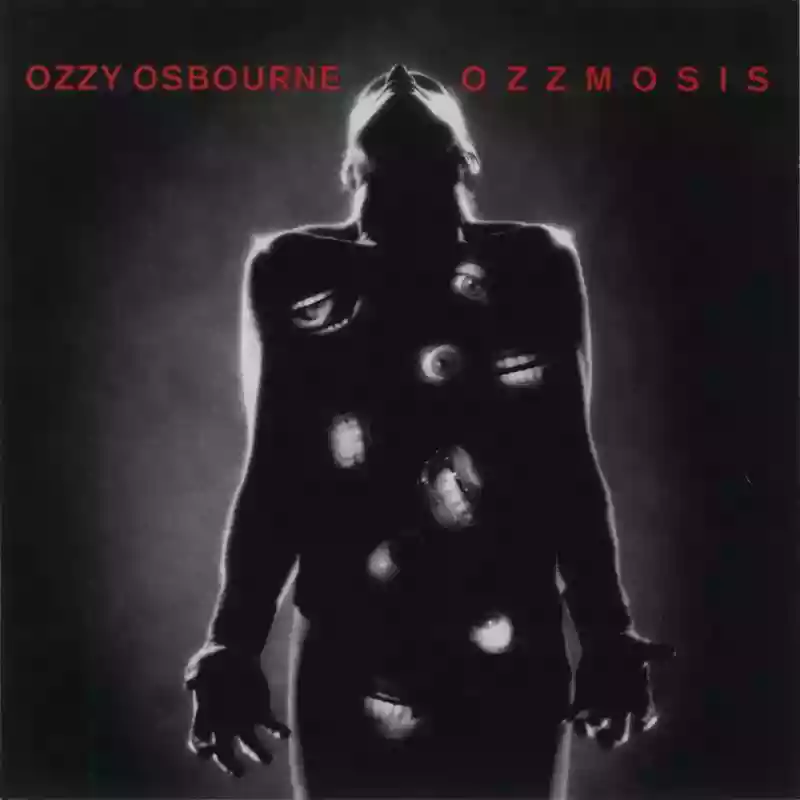
But the tedium of a domestic existence, though comfortable but forced, in whose spirals the final toll of the end was not yet visible, forced him to reconsider his actual expressive and human possibilities. One certainty had by then taken shape, the awareness of wanting to die "living" by music, consuming himself in it. The real "osmosis" between Man and Myth will definitively materialize in the full revelation of the self, in the most intimate nakedness of the soul that rediscovers itself fragile and perishable, in that beautiful diary of profoundly "human" emotions, so full of enveloping carnal sensations and poetic spiritual dissertations, which is the album "Ozzmosis" (a fusion of the words Ozzy and Osmosis).
An entire work dominated by turmoil, the deep melancholy of a man who has glimpsed his limit and bears the consequences, but still casts one last angry glance at the increasingly sad world around him, revealing its innermost hypocrisies and inconsistencies ("Perry Mason", "Thunder Underground", "Tomorrow", "My Jekyll Doesn't Hide"), enveloping it all in a vortex of broken emotions, desperate cries of multiple increasingly isolated facets of the soul, that in the poignant embrace of an ancient love ("I Just Want You", "Ghost Behind My Eyes", "Old L.A. Tonight"), and in the passionate, heart-rending "testament" of a father ("Denial", "My Little Man", but also the spectacular bonus track "Aimee"), rediscover that primordial freshness and genuine emotionality that only his best works contained within them. Above all, there hovers the terrible sensation of the imminent fall, the unconscious fear of the precipice, the thin boundary line that separates everything, but which in the most extraordinary feeling that exists finds the way, revives hope, and rediscovers peace ("See You On The Other Side").
A dirty and dark Hard Rock language, delineated by trusted masters Zakk Wilde (guitar) and Geezer Butler (bass), plus other excellent companions in the venture like Deen Castronovo (drums), underscores a universe made of heavy, raw sounds, but also tender and passionate, a sincere and credible mirror of a man no longer myth who unknowingly writes some of the most obscure and touching pages of his own life.
When it then becomes apparent that the end will not be so near, the strange mechanisms of inertia will take over the remnants of the flesh and the consumed spirit, when that fortifying love in which he had always believed deems it appropriate to "exploit" the dark image and ancient nature to the core, perhaps to stoke a "mythology" now lost and vanished in the labyrinths of youth who do not know, and the less young who forget too quickly.
Loading comments slowly
Summary by Bot
The review explores Ozzy Osbourne's album Ozzmosis as a profound expression of the artist's struggle between his mythic stage persona and his vulnerable human self. It contextualizes Ozzy's musical journey from Black Sabbath through his solo career, highlighting emotional sincerity and artistic maturity in Ozzmosis. The album is praised for its raw, melancholic, and sincere hard rock sound shaped by key collaborators. Overall, it is seen as a powerful, introspective work capturing the complexity of Ozzy's life and art.Tracklist Lyrics Videos
Ozzy Osbourne
John Michael "Ozzy" Osbourne (born 3 December 1948) is an English singer and songwriter, known as the lead vocalist of Black Sabbath and for a long solo career.41 Reviews
Other reviews
By aniel
It was the first (and I emphasize first) metal album I ever listened to.
Decent work by Ozzy, not excellent, but certainly worthy of nods and a hint of modernity in his sound.
By CRAZY TRAIN
I believe Ozzy... has matured, a more reflective and less impulsive man, always attentive though to the stylistic precision.
I think this album is quite underrated... a more sophisticated work, a work where the search for reflection and introspection by the artist emerges.
By Salv79
Ozzy’s vocal color, his power, passion, and the emotion in his voice have marked the history of hard rock and heavy metal.
'Perry Mason' is a track for the annals, a piece that fantastically opens the album with one of Zakk Wylde’s best riffs.
