
 •
Rating:
•
Rating:
THE REVIEW
Published in 1988, “No Rest For The Wicked” is yet another success brought home by Mr. John Michael Osbourne.
After a dark period following his expulsion from Black Sabbath, it was clear from the start that the 1980s would smile upon the “madman” from Birmingham, with albums selling millions of copies and top-notch musicians joining his ranks. The previous “The Ultimate Sin”, another multi-platinum giant from two years prior, saw Ozzy and company veering towards an “American” sound that many didn't appreciate, with songs seemingly crafted to cater to the glitzy glam scene of Sunset Boulevard. The end result was still enjoyable, but for the next LP, many were hoping for a return to the roots.
“No Rest For The Wicked” partially tried to cater to the more discerning tastes, while acknowledging that it was now 1988, and much water had flowed under the bridge since “Blizzard Of Ozz.” New album, new lineup: cutting ties with Jake E. Lee, who had the honor and burden of filling Randy Rhoads' shoes, Ozzy set his sights on a twenty-year-old who seemed to know his way around a six-string, Zakk Wylde, who from here would kickstart a long and prolific career with a bang. On drums, Randy Castillo remained, already behind the kit for the previous LP, while on bass, Bob Daisley returned, a respected composer with a past in Uriah Heep, Rainbow, and Black Sabbath. The keyboards were entrusted to new recruit John Sinclair, also a former Heep member.
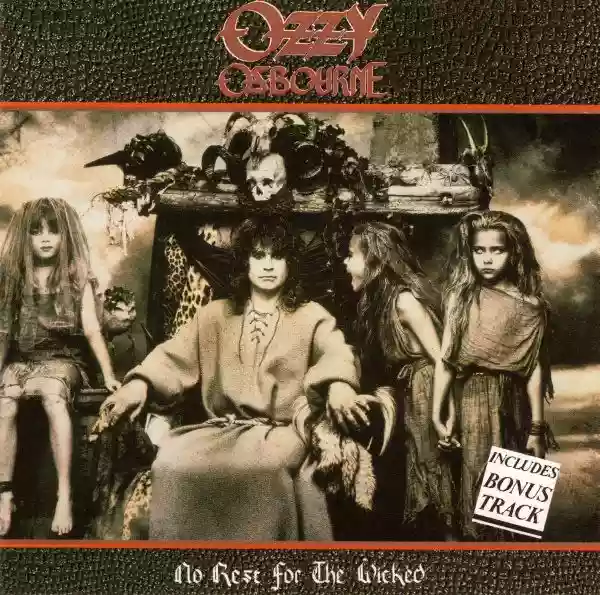
Accompanied by a striking cover, with an image of Ozzy reminiscent of a pagan god, the album kicks off with “Miracle Man,” a driving track that shows a band in great form, precise and cohesive. The same goes for the following “Devil's Daughter,” perhaps not a classic, but nonetheless enhanced by excellent solos by Wylde, who over the years would represent a real added value for Ozzy’s band. “Crazy Babies,” for which a video was shot inspired by the LP’s cover, is one of the more commercial tracks of the lot, certainly catchy, but ultimately leaves little impact. A different story for “Breaking All The Rules,” a melodic yet well-structured and played track, with Castillo pounding away like a madman behind the drums and Wylde letting loose on the six-strings, excellently closing out the first side of the album. Side B opens with “Bloodbath In Paradise,” inspired by the Charles Manson murders, and with dark keyboard passages and reverse-recorded voices, it plays with the more “damned” side of Osbourne, succeeding brilliantly: the song works well and deserved more recognition, as few remember it today. The following “Fire In The Sky” is excellent too, graced by a chorus seemingly written to be belted out at full volume in a packed arena, recalling Ozzy’s solo moments at their finest. These two are undoubtedly the best tracks on the entire album. “Tatooed Dancer” has a fast-paced rhythm, with Daisley and Castillo showcasing a precise and firm rhythm section, but it doesn't add much to the final outcome, just like the closing “Demon Alcohol,” which would have been an excellent B-side for a 45, but on a full album reveals its limitations. Paradoxically, “Hero,” a bonus track present in various editions of the album, is much better: it’s not miraculous, but it's a far more complete and interesting track.
“No Rest For The Wicked” was a commercial success, selling over four million copies, but from an artistic standpoint, it is considered an intermediary work. The songs are well written, especially with strong writers like Bob Daisley on board, but with the exception of a couple of instances, it seems to lack the spark that differentiates a good track from a classic. The album is nevertheless enjoyable, and Wylde’s solos remain a treat for the ears over the years, but the impression is that albums like “Bark At The Moon,” excellent yet incomparable to the debut, remain on a different level. However, Ozzy and crew would soon deliver yet another masterstroke: the team from “No Rest For The Wicked” would indeed produce “No More Tears” three years later, a much more mature and complex album, considered by many as Ozzy’s last great solo classic. The “madman’s” career was far from over.
- Miracle Man
- Devil's Daughter
- Crazy Babies
- Breaking All The Rules
- Hero (bonus)
- Bloodbath In Paradise
- Fire In The Sky
- Tatooed Dancer
- Demon Alcohol
- Ozzy Osbourne, vocals
- Zakk Wylde, guitars
- Bob Daisley, bass
- John Sinclair, keyboards
- Randy Castillo, drums
Loading comments slowly
Summary by Bot
Released in 1988, No Rest for the Wicked marks a transitional Ozzy Osbourne album with new guitarist Zakk Wylde debuting. The record balances commercial appeal with heavier, darker themes. While not reaching classic status, it includes memorable tracks like Bloodbath in Paradise and Fire in the Sky and sold over four million copies. Seen as an intermediary work, it paved the way for later Ozzy classics.Tracklist Lyrics Videos
Ozzy Osbourne
John Michael "Ozzy" Osbourne (born 3 December 1948) is an English singer and songwriter, known as the lead vocalist of Black Sabbath and for a long solo career.41 Reviews
Other reviews
By aniel
This album was a true rebirth for Ozzy, and their chemistry was immediately apparent.
Tracks like 'Crazy Babes,' 'Devil Daughter,' and 'Miracle Man' immediately strike you with their melody and intriguing riffs.
By MaZo1
Ozzy sings really badly, and we might define his voice as transitioning between the 80s and 90s.
Score 3 for the dullness of this album that includes cliché songs arranged somewhat hastily by Ozzy.
