
 •
Rating:
•
Rating:
THE REVIEW
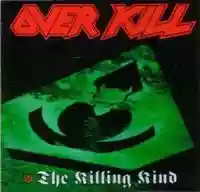
Maybe it's because "The Killing Kind" is the first album I purchased by Overkill, enticed by a beautiful cover of the Priest's "Tyrant" on "Legends Of Metal," probably one of the best tribute albums ever; maybe it's because, overall, I was still a kid discovering metal (but when did I stop being one?) and because, in the year of its release, the album was the most modern thing for those who remained faithful to the "good old metal," as opposed to the rampant nu metal-crossover trends; it may be for all this and more, but I'm particularly attached to TKK.
This is one of the most aggressive albums by the American band, with fast, hysterical, obsessive, and technical tracks. The tenth release (considering the beautiful "Wrecking Your Neck", the best live album by the band) does not suffer at all from the decade-long career of these young but not so young thrashers. In fact, the album is fresh, faithful to the style yet modern, sufficiently varied never to be boring, and offering many emotions, spiced with some nice surprises. The opener, as per Overkill tradition, is a battle cry: "Battle" hits hard under the percussion skillfully handled by the excellent Tim Mallare. It's immediately apparent that this era has a different sound: the production outshines all previous albums, especially in terms of sound clarity, and the change of both guitarists is hard to ignore. Sure, a bit of rawness is lost; the initial punk influences are gone, and even the Ozzy-esque blues vein is often set aside. Because "Killing Kind" is finally a mature, aware album that knows exactly where it wants to take the listener. Indeed, the introductory triptych ("Battle", "God-Like", "Certifiable") is as powerful and frenetic as ever; you can sense it in the dark atmospheres of "Burn You Down/The Ashes", truly fascinating, and it immediately kicks off again with "Let Me Shut That For You". "Bold Face Pagan Stomp" harks back more to the style expressed in "I Hear Black", but the context gives it a completely different meaning. "Feeding Frenzy" is the usual instrumental intro, designed to showcase the powerful bass of D. D. Verni and flaunt a bit of the technical qualities of the "new" band. "The Cleansing", the third-to-last track of the album, brings us back to more traditional Overkill history tracks; "The Morning After/Private Bleeding" is, however, an unexpected commercial ballad, penalized mainly by the use of sounds that Overkill, let's be honest, just don't know how to present; an introductory piano accompanied by a disgraceful synth convinces us to move on to the last piece. And here we return to the Overkill we know well, those of the fast and heavy, technical, and fun tracks, with a Bobby Blitz Ellsworth who confirms he's in great shape, closing a worthy and accomplished album.
A test passed successfully, then, for Overkill with yet another lineup change (upheaval?). If there is a characteristic that distinguishes the Overkill brand, it is undoubtedly their ability to reinvent themselves, album after album, maintaining stylistic and thematic consistency that so many bands with far fewer lineup problems have never been able to retain, attracted by the desire for fame and economic fortune. A great reason to continue buying their records and listening to them with pleasure, don't you think?
Loading comments slowly
Summary by Bot
The review praises Overkill's tenth studio album, 'The Killing Kind,' for its aggressive yet mature thrash metal sound. Noted for its excellent production and technical execution, the album successfully balances freshness with the band’s traditional style. Despite lineup changes, Overkill maintains stylistic consistency and delivers emotional, varied tracks. Highlights include dynamic openers and a few surprising moments, making this a worthy addition to the band's discography.Tracklist Lyrics
Overkill
Overkill is an American thrash metal band from New Jersey, commonly associated with the New York/New Jersey thrash scene and known for long-running consistency, Bobby “Blitz” Ellsworth’s distinctive vocals, and D.D. Verni’s prominent bass work.16 Reviews
Other reviews
By wardrobeOFdeath
The venomous voice of the legendary Blitz is as sharply acidic as ever.
No missteps then, in this album that, along with Horrorscope, crowns Overkill as one of the best thrash-metal bands of the movement.
