
 •
Rating:
•
Rating:
THE REVIEW
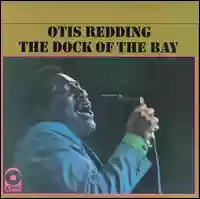
A few months before his tragic death on December 10, 1967, at just twenty-six years old, Redding had recorded tons of songs, which found their place on more or less successful posthumous albums. A handful of these tracks, probably the most charismatic, were released on this album, undoubtedly one of the best of his prolific (albeit very short) career. An album that truly borders on (if not reaches) formal and stylistic perfection.
The aspect that most strikes the listener is undoubtedly the great variety of material offered; it goes indeed from polished and impactful ballads such as the splendid song that gives the album its title, or the intense “The Glory Of Love,” to tracks in pure New Orleans Barrelhouse blues style like in the classic “The Huckle Buck,” where Redding shows he has perfectly assimilated and made his own the lesson of illustrious blues names like Champion Jack Dupree or Roosevelt Sykes.
A Redding therefore decidedly more mature compared to his beginnings, not only in form (his tense and anguished way of singing reaches here one of its absolute peaks), but also in content; the duet with Carla Thomas “Tramp” is definitely one of the most successful episodes of the album, with the two splendid voices alternating on melodic counterpoints of great impact. Truly remarkable. One honestly doesn’t understand the reason for the presence of the classic “Ole Man Trouble,” very beautiful nevertheless, already present in “Otis Blue” (1965) in the exact same version presented here; a truly unnecessary filler considering the huge amount of recordings still unreleased, suffice it to say that after his death, in just 2 years (1968 – 1970), no less than four posthumous albums of completely unreleased material were compiled.
The feel with which Redding interprets each track hits straight at the heart, “Don’t Mess With Cupid,” “I’m Coming Home,” “Open The Door” ooze pure Rhythm & Blues and the work of the guitarist Steve Cropper is in this case more precious than ever, with the clean and crystalline melodic lines of his Fender Telecaster intent on weaving a very effective sonic carpet as a base for the prodigious vocal performances of an Otis, as already extensively said, in great form. Even the horns, always one of the strong points of his albums, seem here even more incisive and effective than usual.
Among the echoes of the grooves of such a lyrical and inspired album, arises a regret… the regret of those who would have liked to hear more recordings of this kind, so imbued with passion and musical talent, which even forty years later sound fresher and more current than anything the current music scene offers; he could have gifted us many more pearls like this, but, without wanting to indulge in unnecessary and well-known rhetoric, we are consoled by the fact that Otis continues to live through albums like this and also thanks to (unfortunately or fortunately) the succession of countless commercial operations that have always followed the disappearance of an artist of such stature. C’est la vie…
Loading comments slowly
Summary by Bot
This review highlights Otis Redding's posthumous album 'The Dock of the Bay' as a peak of his short yet prolific career. It praises the album's diversity, from soulful ballads to bluesy roots and stellar collaborations. Redding's mature vocal delivery and Steve Cropper's guitar work stand out. The review expresses a bittersweet regret over the loss of future works but celebrates the album's enduring freshness and emotional power.Tracklist Lyrics Videos
Otis Redding
American soul singer-songwriter and performer known as the King of Soul. A central figure at Stax/Volt in the 1960s, he authored and interpreted classics including Respect, Try a Little Tenderness, and (Sittin’ On) The Dock of the Bay. He died in a plane crash in 1967 at age 26.03 Reviews
