
 •
Rating:
•
Rating:
THE REVIEW
Hello everyone, after a bit of inactivity due to summer commitments, I'm back on Debaser this time presenting you a CD that kept me occupied throughout the holidays.
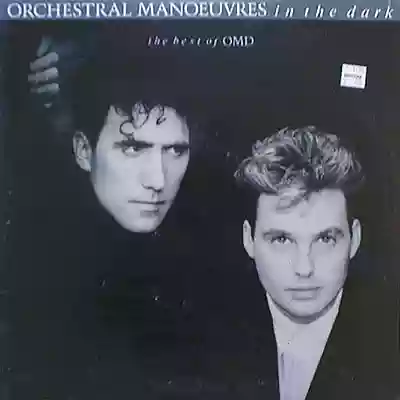
I'm talking about the compilation of the best hits of OMD, the so-called "The Best of", which I now listen to infinite times a day and consider one of the best "best of" in my collection. We're talking about "Orchestral Manoeuvres in the Dark" a hugely successful group in the 80s. The Sex Pistols, Bauhaus, and others in the 70s elevated punk as a highly rebellious genre full of meanings ranging from social struggles to the rejection of society. Was punk coming to an end? Although it is still easy to find current punk bands today, it can be said that in the long historical line of music, a genre called "New Wave" aimed to capture punk and transport it towards pop standards, through electronics, with the aim of generating a new evolution of punk in the 80s, which although lasted very little, was an important period because it was first of all full of bands, and then because it was the so-called post-punk. New Wave is therefore electronic punk, and keyboards, which somehow symbolize the event of inserting music towards futuristic realms, become a necessary instrument, just think of the famous Depeche Mode who were once just synthesizer players, or rather synth-rockers.
These very considerations led New Wave as a musical current to completely detach from its objective of reviving punk, becoming a genre in its own right, self-contained and comprising all those musicians who made electronic, digital, futuristic, and innovative music. In a period between '81 and '84, MTV broadcast hours and hours of this music, almost to promote its development and consistency. However, the New Wave is still considered today as an intermediary current, never well established, but only comprised between punk and the underground rock that formed when artists achieved different musical results, turning their style towards a more sustained rock, as in the case of the Smiths. Within the New Wave period, various artists like Ultravox, the aforementioned DM, and not least our OMD created synth-pop, which subgenre was experimental already many years before, as the creation of digital pop/rock music and during this period had the greatest chance to develop and establish itself.
Today, we somewhat superficially label all 80s music as SynthPop, in which pop was synthesized and danceable, a project generated by Kraftwerk but partially revived by Duran Duran, who invented the term New Romantic. Today we know OMD mainly for one song, "Enola Gay", the bestselling single in 1981 and still widely played on the radio. The Enola Gay was the name of the B-29 Superfortress bomber that dropped the first atomic bomb on the Japanese city of Hiroshima, christened by the pilot after his mother's name, and it's surprising how such a famous song for its danceable and playful melody, with its disco and psychedelic rhythms, still played by tourist animators, can actually describe a monstrous psychological condition in an ironic tone. "Enola Gay, you are a mother's pride for her son, today, Oh, this kiss you gave will never fade away. ".
The fundamental style, not to mention fascinating and absolute of OMD, was that of inserting melancholic adventures within digital games, it is indeed recognizable in every song a certain amount of sadness woven into the danceable melody, and this is what I love about OMD, they create a spiritual, psychedelic music in a certain sense, music that is not at all trivial like much of today's House, but at the same time danceable and energetic. With OMD in your ears, you embark on journeys, dives into human feelings and emotions, with clean and brilliant sounds, despite being produced in the 80s. We therefore deal with melodic and sentimental ballads, refined and expressive of pure existential decadence. McCluskey and Paul Humphreys, just two people birthing a fascinating and mystical musical genre, here summarized in a fantastic compilation that I never stop listening to. Another big hit by OMD was Electricity, the first track of the eighteen proposed here, famous especially for its strong dance-driven rhythm.
Every song is a small gem, every song has its rhythm that captivates and makes you dream, among all I recommend "Souvenir" with its mysterious and spiritual sound and the slow and cadenced rhythm, "Maid Of Orleans" which is perhaps the most dramatic of all, "Telegraph" with its excellent fluid and typical futurist pop sounds, "So in Love" for its captivating melody and the same goes for "Secret" among my favorites.
I open a small awareness campaign about synth-pop, a genre today anything but commercial, and I would dare to say increasingly unknown, pointing you to this wonderful website: http://spazioinwind.libero.it/electropolis/index.html
Loading comments slowly
Summary by Bot
This review praises 'The Best Of' compilation by Orchestral Manoeuvres in the Dark (OMD) as one of the finest synth-pop collections from the 80s. It highlights OMD’s unique blend of melancholic yet danceable melodies that evoke deep emotions within electronic and futuristic sounds. The review explores the band's role in the New Wave and post-punk era, emphasizing key tracks like 'Enola Gay' and 'Electricity'. Overall, the review highly recommends the album for both nostalgic listeners and synth-pop enthusiasts.Tracklist Lyrics Videos
Orchestral Manoeuvres in the Dark
Orchestral Manoeuvres in the Dark are a British synth-pop group formed in 1978 by Andy McCluskey and Paul Humphreys. They became widely known for the hit Enola Gay and influential albums like Architecture & Morality, blending electronic textures with melodic melancholy. After a 1990s hiatus, they reunited in 2006 and have continued releasing albums, including Bauhaus Staircase.05 Reviews
