
 •
Rating:
•
Rating:
THE REVIEW
It's not at all simple to categorize a band like Opeth; their sound is anything but uniform. In their works, you can find influences from various musical genres. Their underlying genre is undoubtedly Death metal, a genre to which the group's first singer, David Isberg, was devoted. However, with his departure in '92 and Michael Akerfeldt taking over as leader, the music changed drastically. Akerfeldt steered the group towards the creation of a new musical style that includes not only death metal but also progressive shades reminiscent of Pink Floyd or Camel, blues and jazz elements, and especially gothic. It's safe to say that Opeth has given birth to their very own personal genre, making them unique and recognizable in every listen.
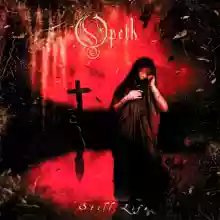
Now let's move on to the description of the album at the heart of this review, which is "Still Life." Conceived in 1999, "Still Life" is the band's fourth studio album and the first to feature bassist Martin Mendez in the lineup. "Still Life" is a concept album that tells the story of a man who, after a long exile, returns to his beloved Melinda.
A slow and repetitive riff introduces the world of Still Life and marks the first notes of "The Moor," the first track of the album. The brief initial arpeggio is merely the calm before the storm, which reaches the peak of its fury with the entrance of one of the most powerful and robust growls in the entire metal scene, that of Mr. M. Akerfeldt. The singer will prove himself not only an excellent exponent of growl but, during this "small" 11-minute feat and throughout the rest of the album, he will also show his capability with clean vocals.
"The Moor" immediately makes it clear that Opeth doesn't like to play it simple. The Swedes enjoy disorienting the listener by offering a constant alternation of raw and evil moments with melodic and reflective parts. This prerogative represents a genuine trademark of the Scandinavian band.
The beginning of "Godhead's lament" is overwhelming and allows no room for second thoughts. The group once again highlights its exceptional capabilities. Besides the already mentioned singer, the other members also deliver a praiseworthy performance. Lopez's drumming is as good as it gets. The guy has disarming precision and dynamism, playing the instrument with class, accompanying and supporting every track without ever overdoing it with stylistic exaggerations that would otherwise devalue the piece. The rhythm section is completed by Mendez (also Uruguayan by origin like Lopez), a less eclectic bassist than the previous Johan De Farfalla but still endowed with great skills. As for the guitars, it is the skillful hands of Peter Lindgren and Akerfeldt himself that create and shape riffs that, in Still Life, are among the most successful in the entire Opeth discography.
The third track "Benighted" deserves a more profound discussion. Unfortunately, most people associate elements like Satan, violence, malice, etc., with the figure of the metalhead, painting those who listen to a certain genre of music as brutish and heartless. Now, no one denies that Heavy metal and its derivatives are "angry" genres, but this does not necessarily mean there isn't anyone in the vast cauldron of heavy capable of touching your most sensitive side with music. It is to narrow-minded people that I address myself when I speak of "Benighted", a splendid acoustic piece that demonstrates how even bands devoted to extreme genres can create melodic songs of excellent quality. Do not let prejudice guide you; try to explore thoroughly what intimidates you only based on hearsay. It might surprise you.
Midway through the CD, we find "Moonlapse Vertigo", another 9-minute suite in which Opeth demonstrates once again their incredible state of grace. Following it is "Face of Melinda", which describes the moment when the concept's protagonist and his beloved Melinda reunite after a long separation. Here, Akerfeldt's voice is a sigh that brushes the soul. The song is a whisper that finds body and substance in the final part, where guitars assertively come in and gradually dissolve, taking us to the next "Serenity Painted Death". When I previously spoke of some of the most successful riffs, among them must undoubtedly be that of Serenity Painted Death, one of the most famous, if not the most famous, guitar lines of the Swedish group. But this piece doesn't live on a great riff alone; it contains all of Opeth's mastery. Akerfeldt's growl aggressively attacks the ears, dark and malevolent. Lopez is solid as a rock behind the drums, with double-bass drum inserts that add even more volume and completeness to the song, and the rest of the band follows suit, never dropping in tone.
"White Cluster" is the closing track, another gem of over 10 minutes. Here too, the singer alternates growl and clean vocals with surprising ease, and the band tirelessly follows his continuous vocal line changes, yet another confirmation.
What more is there to say? With "Still Life," Opeth collect one of their best albums ever. Those who love them must already have it; those who do not know them should hurry to do so. If you hate extreme metal, it's a pity; you're missing out on a great album.
Loading comments slowly
Summary by Bot
Opeth's Still Life stands out as a unique blend of death metal with progressive, gothic, blues, and jazz influences, anchored by Mikael Akerfeldt's versatile vocals. This concept album tells a poignant story with powerful growls and melodic passages. Each band member delivers exceptional performances, especially in iconic tracks like "The Moor" and "Serenity Painted Death." The album is highly recommended for fans of extreme metal and newcomers alike.Tracklist Lyrics Videos
Other reviews
By cliffburton86
"The complexity of the sound, never trivial, is accompanied by Mikael Akerfeldt’s wonderful voice, ready to implode within my heart with dark and powerful growls."
"Opeth is a unique band, guilty of inventing a genre that guarantees extraordinary imagination, absurd technique, and fascinating melody."
