
 •
Rating:
•
Rating:
THE REVIEW
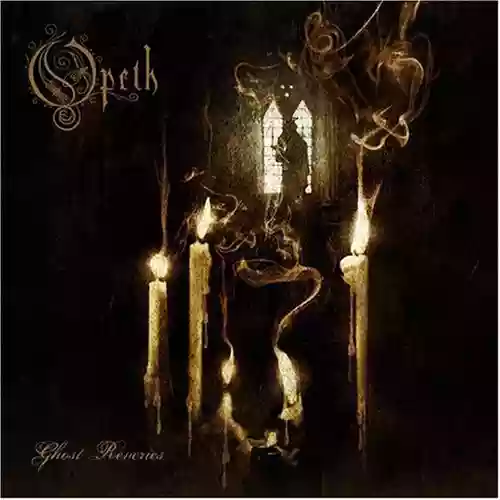
Where can I start to review this new album by the Swedish geniuses Opeth? I would certainly begin by clarifying the 3 out of 5 rating that appears. Much can be said about Opeth, who are undisputed masters and professional musicians who have (fortunately) managed to move away from technique for technique's sake, focusing more on increasingly emotional music.
You could say they are perhaps the band that has best captured Canterbury's progressive essence and incorporated it into a death metal framework without clashing or offending either genre. For me, with this "Ghost Reveries," Opeth have finished climbing the peak and are now on a slight downward slope. I can say they are among my favorite bands, achieving that status with just a couple of albums that stick in your mind for a lifetime like "Morningrise" and "Still Life," followed by the excellent "Blackwater Park" and the more than good "experimental" pair Deliverance-Damnation. This is perhaps why the rating... they have already achieved the sublime for me.
From the very first notes of "Ghost Of Perdition," it seems like a vague "The Moor." The idea of incorporating flutes clearly reminiscent of masters like King Crimson, Camel, and Caravan is great, but it feels all too much like the song seems to hail from the shores of "Deliverance." Even in the following songs, the album leaves the impression that our musicians during the songwriting stage may have often said: "let's try to stop the song because I wouldn’t know how to continue it best; let's try to insert a syncopated break like "The Drapery Falls" or "Deliverance"". And if they didn't say that, it's what I fully grasped from listening to the entire album. The following "Beneath The Mire" too much has the air of being a mix of "Moonlapse Vertigo" and "Night Of The Silent Water" even though the game played by the keyboard slightly "hides" the self-plagiarism.
But is the album this much of a flop? Then why was it rated 3 and not 0? I would wonder that too. The fact is, the album starts off really badly for me but rises sharply with the last songs. "Atonement" and "Reverie/Harlequin Forest" are excellent examples of what the band should have pursued, in my opinion. "Atonement" seems like the song that was supposed to give a positive turn to the perhaps overly nebulous "Damnation." The following "Harlequin Forest" is perhaps the song that was missing in "Blackwater Park" to make it one of the most beautiful prog albums ever; this song even if it drops a bit around 10 minutes because of those "famous syncopated times to catch the song again" is one of the most beautiful songs of the album and continues entirely in pure "Blackwater Park-Still Life" atmosphere.
We come to the first of two songs that make the entire album purchase worthwhile. "Hours of Wealth" steals the first minute from "Talk To The Wind" by King Crimson before landing in one of the most beautiful arpeggios written by Opeth in their entire discography, and perhaps the entrance of the keyboard, which I so criticized the first time, enhances the song even more; a great Michael sings with bluesy vocalizations and excellent guitar phrasing truly noteworthy. And unfortunately how it pains me to hear such a beautiful song at the beginning of a song that for me clashes a lot with the previous one and the next. "The Grand Conjuration," apart from having a bad title, starts off badly and recovers not very well as it progresses. Fortunately after 10 plus interminable minutes of a "mediocre" song follows the last song on the album, the second that along with "Hours Of Wealth" makes the album worthwhile. Again King Crimson reign supreme, but obviously if you're making progressive how can you not bring with you the influences of that wonderful band that set the standard for everyone? "Isolation Years" is a dream, a song that cradles you, an excellent lullaby; the most atmospheric song made by Opeth that, however, doesn't stray at all from their past productions.
In conclusion, the record in question is not a bad album, it's on a par with the yearly releases and notably above the average of metal releases. Simply, Opeth have lost themselves a bit along the way and tried to look back and remember the masterpieces they penned years ago. For me, the album starts off terribly, rises significantly in the middle, then falls again at the end to leave a closing hope. For Opeth fans, it will be a masterpiece, for an Opeth and prog fan like me, it is simply an album that could have been better.
Loading comments slowly
Summary by Bot
This review discusses Opeth's album Ghost Reveries as a mix of brilliance and repetition. While Opeth’s musicianship is praised, the album is seen as recycling past ideas. Highlights include 'Atonement' and 'Isolation Years,' but some tracks lack originality. Overall, a solid album that may disappoint longtime progressive fans expecting more innovation.Tracklist Lyrics Videos
Other reviews
By HenryChinaski1
Opeth’s new emanation stands as one of their absolute best releases, and perhaps as THE album of the year 2005.
Make it yours, whatever your musical background may be. You will not regret it.
By malamela
The tributes Opeth made on this CD to Tool and early Dream Theater works is too much, and not justified.
To define it in a few words: Predictable, already heard, nothing new.
By dying_sun
Paradoxically, after only two songs, your skin already starts to quiver: you look around, search for glances that aren’t there, hear footsteps among the gray shadows.
It is undoubtedly heterogeneous yet profoundly logical, it’s a haunted cell after an hour of freedom, a spectral moon after a sunny day.
By fjelltronen
The sparkling melancholy burns in the sounds of guitars with dark distortions, the caresses of keyboards in the darkness of November nights.
The singer is alone, cries with piercing rage but simultaneously delights with notes of never forgotten purity.
