
 •
Rating:
•
Rating:
THE REVIEW
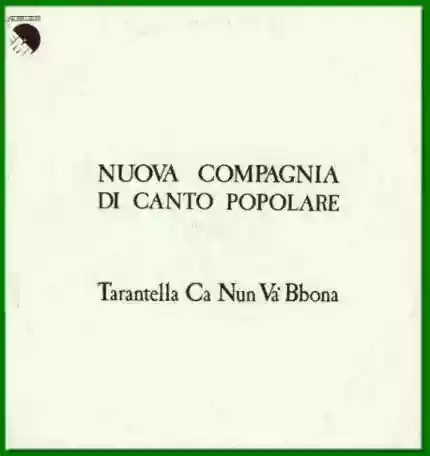
Anyone who thinks that Neapolitan folk music belongs only to the capital of Campania is making a colossal mistake. It was precisely for these people that in 1975 the Nuova Compagnia di Canto Popolare released the album "Tarantella ca nun va bbona".
In this album, they present the fruits of meticulous and painstaking research conducted especially in the various areas of Campania, steering away, for the moment, from the dynamic city of Naples.
If while traveling, you find yourself in some mountainous village in the province of Avellino, you might chance upon a patronal feast and hear a tarantella "Alla Montemaranese", a masterpiece of technique and virtuosity, yet always following the stylistic pattern typical of this song, propelled by the voice of Fausta Vetere.
The white and simple cover of the album hides an explosion of colors, shapes, and music inside. There are various genre changes: from the calm and dreamy "Si te credisse", moving to the "Moresca d'Orlando", up to the captivating and delightful "Tu sai che la cornacchia", dedicated to the "bird of ill omen", because in this area superstition is an integral part of southern culture and life, among its dogmas, illusions, and daily gestures it compels us to make.
Among the Campanian traditions are the famous bagpipers playing Christmas songs, which cover the sacred theme of the nativity, as in "La Santa Allegrezza" contained in this album.
The hierarchy of nature is recounted through "Rancio e Mosca", with verses that may remind one of the same natural scale sung in "Alla Fiera dell'Est" by Angelo Branduardi.
The song that impressed me the most is certainly "Trapenarella": a harsh attack, in a satirical form (but not too veiled), on hypocrisy and corruption, qualities inherent in the human soul. With humor and, at the same time, wit, the NCCP, addressing San Gennaro, paints a successful picture of Italian life. The following verses are the most significant for understanding the song:
"'E mbruogliamestiere so' ll'ingegnere
'e 'mbruogliamalate so' ll'avvocate
'e prievete songhe 'e zucalanterne
'e cchiù mariuole stann''o guverno"
Closing the album is the colossal "Ue Femmene Femmene". This track, lasting over 12 minutes, is a sort of summa of Neapolitan musical tradition, beginning with a vocal intro dedicated to the Femmena. An introduction that flows into a danceable tammorriata, where Fausta Vetere's female voice alternates with the male voices of Giovanni Mauriello and Peppe Barra. The song concludes as the album begins, with an electrifying tarantella in the Montemaranese style. A Dionysian crescendo between accordions, guitars, and flutes, which despite narrating the problems that perpetually afflict us, at the same time give us that vital impulse to fight and survive that characterizes the spirit of the Southerner.
Loading comments slowly
Summary by Bot
Nuova Compagnia di Canto Popolare’s album 'Tarantella ca nun va bbona' showcases authentic Campania folk music beyond Naples. It features skillful tarantellas and songs reflecting local traditions, superstition, and social critique. The album blends dreamy, playful, and powerful elements driven by expert vocals and rich instrumentation. Standout tracks include a satirical attack on corruption and a 12-minute spirited tribute to Neapolitan musical heritage.
Nuova Compagnia di Canto Popolare
Nuova Compagnia di Canto Popolare (NCCP) is a Neapolitan folk ensemble founded in Naples in 1969. Under the artistic direction of Roberto De Simone and with key members including Eugenio Bennato, Giovanni Mauriello, Peppe Barra, Fausta Vetere, Nunzio Areni and Patrizio Trampetti, the group revives Southern Italian traditions through ethnomusicological research and theatrical performance. They rose to national prominence after the Festival di Spoleto in the early 1970s and remain active.04 Reviews
