 •
Rating:
•
Rating:
THE REVIEW
Too often, people (myself included) lavish praise on albums, calling them masterpieces, that while enjoyable, don't really touch the heart: instead, there exists a very small circle of works that, in one way or another, turn out to be of fundamental importance in a person's life, accompanying them for several years or, in even rarer cases, for the entirety of their life.
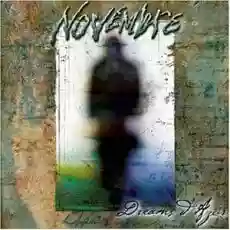
"Dreams D'Azur" represents for me one of the works belonging to this latter category. I can't quite explain why I feel this wonderful album by the Roman band Novembre is so important to me; maybe it's the melancholy, the "greyness," the hope, that this album makes me perceive with each listen. Again, I don't know, but the masterpiece I'm speaking of (and for me, yes, this is a TRUE masterpiece) is of fundamental importance to me.
The refined minds that brought this hub of emotions to life are Carmelo Orlando (vocals and guitar), Giuseppe Orlando (drums), Antonio Poletti (guitars, in the role of session-man, called back because he was already present on the original album Wish I Could Dream It Again), and Thomas Negrini (keyboards, same discussion as for colleague Poletti), while Fabio Vignati is also on keyboards.
This complex and fascinating platter presents itself as a mix of different musical genres, starting from death (the band's true starting point), moving on to doom rhythms, progressive parts, and plenty of black metal, all united in perfect balance.
Describing the songs would almost be reductive given the complexity (not just instrumental, but passionate) of the pieces, and I wouldn't be able to describe just one (although I want to say a few more words about "The White Eyed") since each title has something striking, starting from the melancholy of tracks like "The Dream Of The Old Boats", to the lyricism of songs such as "Novembre" or "Nottetempo" (on the previous album this latter called Night/At Once) or even the blind violence of "Let Me Hate", "Old Lighthouse Tale", or "Sirens In Filth"; but what struck me the most is the presence of all the aforementioned characteristics in the piece "The White Eyed", opened by a very delicate acoustic guitar arpeggio, supporting Carmelo's excellent clean voice who finds himself reciting with an almost subdued voice a text that truly approaches the concept of melancholic poetry: a few seconds later, this almost peaceful atmosphere dissolves to make way for very intense parts which are counterbalanced by others more melancholic, less oppressive, and cutting.
The album is a great work, beyond everything (except tastes, which are personal and therefore indisputable), and I find it difficult for someone to claim to be faced with a bad album without providing a logical explanation (naturally :D); maybe not everyone will feel it as I do, but I know many will appreciate it and that some, like myself, will love it in the truest sense of the word.
Tracklist:
- The Dream Of The Old Boats
- Novembre
- Nottetempo
- Let Me Hate
- Sirens In Filth
- Swim Seagull In The Sky
- The Music
- Marea
- Old Lighthouse Tale
- The White Eyed
- Neanderthal Sands
- Christal
Loading comments slowly
Summary by Bot
The review deeply praises Novembre's album Dreams D'Azur as a life-important masterpiece rich in melancholy and emotional complexity. It highlights the band's refined musicianship blending death, doom, progressive, and black metal elements. The reviewer acknowledges the album's profound impact on them personally and appreciates key tracks like "The White Eyed" for their poetic and intense qualities. Despite being personal, the review encourages others to experience and possibly love this album.Tracklist Lyrics Videos
Novembre
Novembre are an Italian metal band frequently described in reviews as difficult to categorize, blending death/doom/gothic/progressive elements with melancholic, atmospheric songwriting. Reviews highlight the Orlando brothers (Carmelo and Giuseppe) as central members and emphasize the group’s technical musicianship and emotional, Mediterranean-tinged imagery.17 Reviews
