
 •
Rating:
•
Rating:
THE REVIEW
The life of Noah Howard, tall saxophonist of free jazz extraction born in 1943 and passed away in 2010, could easily represent the metaphor of the jazz epic: firstly, he was born in New Orleans, historically considered the cradle where various experiences converged to create what has gone down in history as jazz. Secondly, just like jazz, he followed his nomadic spirit, wandering around the world, favoring old Europe (including a recorded testimony of a live performance at the historic Swing Club in Turin); moreover, as a son of the city of tradition and a cult pioneer of the free movement, probably placing the conceptual bar the highest in the jazz landscape, for what was a beautiful paradox, both evolutionary and essential.
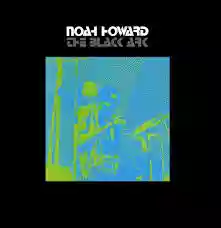
In his career, he had the opportunity to cross paths with other eminent figures of the movement, first among them Archie Shepp in that 1969, a crucial year for Howard himself, for the surrounding world, and which saw the release of his "The Black Ark" for the aptly named Freedom Records. The title itself is a strong presage, a tumult of Pan-Africanism, and the set of four tracks that make up the album is no less, starting from the superb "Domiabra," obviously named after a village in Ghana, leading him, due to the seductive modal accents with a free inside/outside style and with two other winds lined up: Arthur Doyle on tenor and Earl Cross on trumpet, to the call of the wild of his ancestral roots.
This world tour in four pieces certainly does not lack other surprises, with the second piece, a sophisticated "Ole Negro" with sharp and expressive timbral embroideries, modal-Spanish echoes of Leslie Waldron’s piano, acting as the counterbalance to the fiery doublet inaugurated with "Domiabra." The Land of the Rising Sun will also be touched by this journey, and "Mount Fuji," with its "quiet" theme as per Japanese tradition, will evolve into a very dark free ride and, wanting to extend into China, almost embraces the Yin and Yang concept; certainly more daring stuff than the still beautifully diverse "Jazz Impression of Japan" by good old Dave Brubeck. As the last stop, "Queen Anne," with decidedly more relaxed, introspective tones, almost as if to take a breather, will close this splendid Journey undertaken by this obscure traveler with a sax, who started from New Orleans and arrived, with this black ark, in the most cramped and fascinating ports in the world. Unmissable.
Loading comments slowly
Summary by Bot
Noah Howard’s 1969 album The Black Ark is a landmark free jazz work mixing modal styles with deep Pan-African roots. The four tracks highlight a global journey through sound, featuring prominent collaborators and rich cultural references. The album is praised for both its adventurous spirit and musical sophistication. This review celebrates Howard as a pioneering figure in jazz whose music bridges tradition and innovation.
Noah Howard
Noah Howard (1943–2010) was an American alto saxophonist from New Orleans associated with free jazz. He recorded albums including At Judson Hall and The Black Ark and performed both in the U.S. and in Europe.02 Reviews
