
 •
Rating:
•
Rating:
THE REVIEW
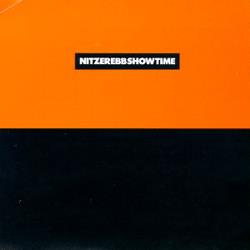
Aggressiveness released in small doses (but constant) and winks to the dance floor (but of an alternative club) are equally distributed in this third album by Nitzer Ebb, a British duo that left us with a handful of works between the late '80s and early '90s.
Champions of the so-called EBM, acronym for Electronic Body Music (a "physical" and danceable variant of traditional electronics), Douglas McCarthy and Bon Harris showcase in "Showtime" an aggressive and relentless vocality from the former, invasive and fierce percussion from the latter. All seasoned by a sound background entrusted to the omnipresent synthesizers of both.
The almost aseptic simplicity in the choice of sounds employed constitutes at the same time the strength and the limitation of Nitzer Ebb: energetic music, reminiscent of the excesses of punk and industrial, is indeed what is listened to in "Showtime", released in 1990, but the massive and exclusive use of electronics and percussion translates, in the long run, into a certain sonic monotony. Adding to this is the fact that Doug McCarthy does not sing, i.e., he does not intonate notes, rather he declaims; his is a spoken delivery that stirs on the electronic background while differentiating depending on the imprint to be given to the pieces.
Nine tracks, not therefore "songs", for 37 minutes of music, "Showtime" still offers us noteworthy moments: such as "Lightning Man", at the time a dance floor anthem, or "Fun To Be Had", with its obsessive and pounding vocality. Listening to this work again one finds in embryo much of the evolution that electronics would have in the years to come: one name above all is that of Prodigy, who took a lot from Nitzer Ebb.
A "minor" group by force of circumstances, the duo had the honor of the spotlight mainly as the opening band for Depeche Mode's concerts (their labelmates at Mute Records, a reference label in those years for the various stylistic currents of electronics, and beyond) who wanted them with themselves on the European tour of "Music for the Masses" (1987-88) and the American one of "Violator" (1990).
Loading comments slowly
Summary by Bot
Nitzer Ebb's 1990 album Showtime delivers aggressive and relentless EBM with a distinctive blend of electronic percussion and spoken vocals. While its sonic simplicity borders on monotony, the album contains standout dancefloor tracks like "Lightning Man" and "Fun To Be Had." As pioneers in the genre, they influenced future electronic acts like The Prodigy. Showtime remains a notable record in the industrial and electronic music scene.Tracklist Lyrics Videos
Nitzer Ebb
English EBM group known for martial percussion, electronic bass lines and Douglas McCarthy's declamatory vocals. Key members named in reviews are Douglas McCarthy and Vaughn "Bon" Harris.02 Reviews
