
 •
Rating:
•
Rating:
THE REVIEW
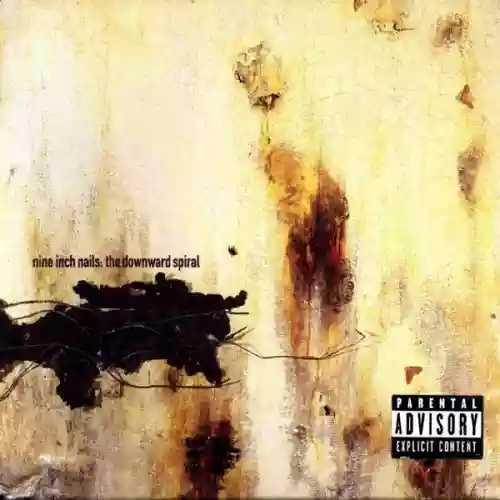
March 1994, a month like any other in a year like many... or maybe not, since one morning Trent Reznor got out of bed and wrote Closer. Why? What happened? Why, dear Trent, did you decide to create a piece that seems to have emerged from Area 51 and shows no signs of aging? There has been much talk about The Downward Spiral, a masterpiece that has indelibly defined Nine Inch Nails, but today it is finally possible to discuss it devoid of so many burdens, both adolescent and contextual. Without hormonal bombings or various emotional suggestions, I can analyze it in a detached way, just as the soul of the suicidal protagonist examines the "what ifs" in the concluding track, rightly consigning the album to history. In short, we already knew it was a masterpiece, that it would be so relevant 24 years later... not so much.
I wonder if Reznor was aware at the time that he had created an album with bulletproof glass against the harsh blows of time: I suspect that, given the prevailing obsessiveness of the work, he very much was. One of the most insidious traps of "rock" albums that make extensive use of electronics is precisely to expose the flank to obsolescence, and one needs to be very skilled to navigate a field that guarantees temporal immunity or even a legitimate retrospective recovery. We return to Closer, which, despite remaining the driving single and defining sound of the spiral, is today an unclassifiable beast that disturbs everyone: it is not dark and morbid enough to be an underground cult, too techno to be adored by rockers, but too putrid to be accepted by the Kraftwerk club, it doesn’t have the riffs to become a generational anthem, yet that text won’t leave your head. It is also shamelessly pop when you think about it, also demonstrating the musician's desire to please an easy listening subtext drowned in an aberrant context, between chilling screams, mechanical sounds, and continuous ingenious ideas. The album is a mad cauldron of sound resources that wink at antithetical worlds, apparently irreconcilable, a mistake. Electronic synths, psychotic riffs, drum machines, unexpected accelerations, ambient sessions worthy of a movie denote an unprecedented compositional sensitivity. In the same way, the vocals are free from every scheme, allowing the luxury of embracing ever-changing and kaleidoscopic stylistic formulas, from whispers to rhymed sessions. There are no rules (or maybe there are?).
Many, especially in industrial, have sought the ideal crossover between rock and electronic music, but almost no one had the intuition of The Downward Spiral in the process of contamination, namely the analysis of the implications and contrasts of the respective genres and their needs. This profound awareness and the willingness to go to the bottom of the convoluted issue are the main magic of the album, distancing it from any accusation of trend appropriation. To get into specifics: there is a dark side to the machine, a putrescent organic vein in the cleanliness of silicon, but at the same time, the human mind is increasingly alienated and mechanical. It is not irrelevant that The Downward Spiral is essentially a concept album, with recurring themes, even musical ones. Like the frequent emergence of a repeated note sequence in Closer, Heresy, and even the title track. An album that sounds like nothing else, the definitive manifesto of this wretched creature called humanity.
Loading comments slowly
Summary by Bot
The review praises The Downward Spiral as a timeless masterpiece, highlighting its ingenious blending of rock and electronic elements. It acknowledges Trent Reznor's meticulous craftsmanship and the album’s resistance to aging, especially focusing on the iconic track 'Closer.' Seen as an unprecedented concept album, it explores the alienation of humanity through complex musical and thematic layers.Tracklist Lyrics Videos
Nine Inch Nails
Nine Inch Nails is an American industrial rock project founded by Trent Reznor in 1988. Reznor is the primary creative force (songwriter, producer, multi-instrumentalist). The project is known for landmark albums such as The Downward Spiral and The Fragile.40 Reviews
Other reviews
By Vic Sorriso1
Self-destruction hides in what you most desire because it is what holds true power over you.
"Hurt" transcends personal pain and becomes an indictment of all modern society as an "empire of dirt."
By CycoCiccio
Trash of this nature, where technology is posed as genius, noise as sound, and personal neurosis as inspiration.
This monstrosity of disjointed cacophonies... struggling to listen to the whole thing again.
By alCOOL
I hear a reverberation in the hole where my head should be, a blow, like a hammer breaking my eardrums, and a voice that doesn’t belong to me… it is PAIN.
Making a “normal review” of “The Downward Spiral” would have been like enjoying a plate of pasta using a pitchfork.
By TheFragile
Never again has the genius of Trent Reznor reached the heights he achieved with "The Downward Spiral".
"Closer" is not simply a song: it is the fiery embrace of two lovers, it is irresistible lust in the atmosphere.
By Uomodimerda
It was calling me, offering me knowledge, pain, violence, the end.
Listen to this album only if you are in the mood to indulge in many, many mental jerks until you become blind to any emotion.
