
 •
Rating:
•
Rating:
THE REVIEW
On several occasions, you have been defined as the man who made industrial music listenable for the pop audience. Is it true, or do you consider it limiting?
«It’s a label that I was very proud of for a while. Of the many groups I grew up with, Cabaret Voltaire, Throbbing Gristle, Coil, Ministry, Skinnypuppy, Test Dept, the Neubaten, I appreciated the sound, the aggressiveness, and the fact that it wasn’t guitar rock music, like certain metal is. I didn’t set out to find a way to take those things and put them into a pop context. When I started writing music, I realized I had choruses inside me. As I began writing songs, I took the elements I liked from the music I preferred, but I also inherited a respect for melody and lyrical content. So what came out were pop songs arranged in a harder and more electronic way. I think this has generated a new wave of bands and record labels in America. For me, however, things like Throbbing Gristle can be defined as industrial, more experimental and noisy music. » Trent Reznor
In a hypothetical Hegelian dialectic where classical melody is the thesis and the deconstruction done by industrial is the antithesis, Trent Reznor would be the right synthesis (and for a correct interpretation of the term, should you need it, I refer you to the philosophy manual by Abbagnano\Fornero :D)... the music that emerges from this mind overcomes the conflict by reconciling the truth of both opposites at a higher level.
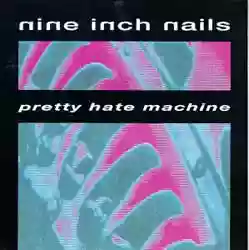
Becoming aware of what I’ve just said depends on the listener’s sensitivity, who might realize this in "Pretty Hate Machine" where the echoes of youthful listening are certainly more evident than in the latest halo where reflection is facilitated by the predominantly "meditative" sound.
The first four songs we encounter, if we exclude "Down In It", can be elected as a manifesto of what struck me most when listening to the NIN: the intelligent and highly personal style in interpreting typically industrial sounds and rhythms, the incredible ability to create extraordinarily emotional melodies without the slightest use of a guitar, the themes of the corruption of the human soul, the world, and in particular love. Love seen from above as in "Something I Can Never Have" where disdain and materialism are the main themes:
"I just want something. | I just want something I can never have | I just want something I can never have | think I know what you meant. | That night on my bed. | Still picking at this scab | I wish you were dead. | You sweet and perry ellis. | Just stains on my sheets" and love seen with impotence as in "Sanctified":
"Heaven's just a rumor she'll dispel | As she walks me through the nicest parts of hell. | I still dream of lips | Never should have never kissed. | Well she knows exactly what I can't resist | I'm just caught up in another of her spells. | She's turning me into someone else. | Everyday I hope and pray this will end. | But when I can I do it all again."
Almost the entire album revolves around this theme but the tones and lyrics become more painful, sick, and alienated. Alienation from God in whom "man" has placed (or to better say alienated) his entire self "Hey God, there's nothing left for me to hide. | I lost my ignorance, security and pride. | I'm all alone in a world you must despise. | Hey God, I believed that promises, your promises and lies" is the theme of "Terrible Lie", which is perhaps the song I love the most on this album.
Loading comments slowly
Summary by Bot
This review explores Nine Inch Nails' debut album, Pretty Hate Machine, highlighting Trent Reznor's innovative fusion of industrial sounds with pop melodies. It analyzes themes of love, alienation, and emotional depth in the lyrics, praising the album as a defining synthesis of industrial music for a broader audience. The reviewer appreciates the clever arrangement and meaningful content behind the aggressive electronic style.Tracklist Lyrics Videos
Nine Inch Nails
Nine Inch Nails is an American industrial rock project founded by Trent Reznor in 1988. Reznor is the primary creative force (songwriter, producer, multi-instrumentalist). The project is known for landmark albums such as The Downward Spiral and The Fragile.40 Reviews
Other reviews
By Loudmouth
If you don’t like Pretty Hate Machine, you probably just need to turn up the volume.
Pretty Hate Machine not only has something that until then was rarely heard on the charts, but even now... it’s hard to find albums with a similar sound.
