 •
Rating:
•
Rating:
THE REVIEW
"All of my songs can only be composed of the greatest of pains
Every single verse can only be born of the greatest of wishes
I wish I had one more night to live"
"All my songs can only be composed of the greatest of pains
Every single verse can only be born of the greatest of wishes
I wish I had one more night to live"
These verses perfectly encapsulate what is the fourth deeply felt work by Nightwish. Abandoned are the melodious and cheerful power sounds of previous albums, and this record gathers a palette of melancholic and tearful emotions, yet at the same time angry and dark. A visibly more mature work both from a compositional and instrumental point of view and from the lyrics’ standpoint.
The elements that characterized the previous albums, such as the keyboard virtuosos of co-founder and songwriter Tuomas Holopainen (for example, Gethsemane) or the operatic vocals of frontwoman Tarja Turunen (for example, Swanheart) no longer find their place in this latest work, visibly replaced by darker and more gothic sounds, characterized by the heavy presence of lower and more aggressive guitars, the more pronounced presence of bass lines. With this album, the group welcomes the new entry to the band, Marco Hietala (ex-Sinergy), replacing the former bassist Sami Vanska. On a vocal level, Tarja engages in lighter and less contrived and demanding performances (as in Oceanborn).
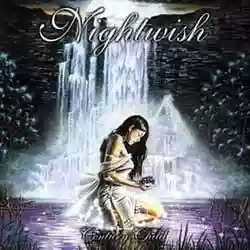
The cover artwork was created by Markus Mayer, who designed covers for other albums of the group such as Oceanborn and Wishmaster (even the cover of Once will be his work): it depicts a woman kneeling in a pond of water lilies while holding a black rose, while in the background towers a majestic waterfall set in a forest.
Let’s move on to the analysis of the ten tracks of the album:
"Bless the Child" is the opening track of the album, from which a video will also be made. The main theme of this song, as well as a bit of the whole album, is the return to childhood. A perfect blend of orchestral and choral music, all harmonized by the singer’s crystalline voice. A certain dark and gloomy atmosphere prevails throughout the track, occasionally broken by powerful guitar solos.
"End of All Hope" showcases the second face of the album. Its power and gritty sounds highlight anger and overwhelming power. The entire track is sonorously marked by the drummer Jukka’s double pedal, perfectly harmonized with the fast and rhythmic pace of the choirs. It represents the anger that accompanies resignation caused by a loss, the loss of a hope that permeates everything, even innocence itself. The only flaw of this track is that it does not translate well live, as it adopts the dual vocals technique, typical of Angels Fall First.
"Dead to the World" is a true duel between Tarja and the new bassist Marco, who makes his vocal debut with this song. It opens with a keyboard solo, which intertwines with the guitar throughout the song. The song's title is taken from an Edgar Allen Poe story, "William Wilson," which contains the phrase "Yet henceforward art thou also dead-dead to the world, to heaven, to hope". A technique often used by Nightwish is the interval throughout the song with a sweet and calm section, making the song's end even more effective.
We arrive at one of Nightwish's flagship pieces, "Ever Dream". A unique ballad, a single in Finland. It’s a masterful blend of symphonic and heavy, although it is quite a simple and linear song per se. Perhaps precisely for this reason, it is so catchy and immediate. "All I ever craved were the two dreams /I shared with you. /
One I now have, will the other one ever dream remain. / For yours I truly wish to be." It is evident that the theme of the song is the hope for an upcoming change.
After the dreamlike and surreal atmosphere of Ever Dream, taking fifth place on the list is the powerful "Slaying the Dreamer". Truly a gem of the album, its heavy melodies accompanied by the powerful guitars and bass line make it one of the strongest pieces of the album, at times compared to a work by Pantera. The lyrics were inspired by the moment when the band started to gain success, and Tuomas began to feel the pressure of the whole affair "You bastards tainted my tool / Raped my words, played me a fool".
Following the power of this track is an "honest and innocent ballad", as defined by Tuomas, "Forever Yours". The melody is quite simple, consisting of a very calm orchestra of violins accompanying Tarja's voice and a very gentle flute. At times, it may remind of the previous "Two For a Tragedy", but it is certainly more harmonious and subtle.
We now reach one of the group's signature songs, "Ocean Soul". It is a very emotional and heartfelt song by Tuomas, as he has repeatedly stated that he feels one with the ocean waves, the waves’ undulating breath. Undulating like the song's chorus, a very engaging melody, although not the absolute best of the previous songs musically but not textually, as it’s a song that Tuomas feels is very his, it is touching and very personal.
"Feel For You" is another ballad from Century Child, very simple and calm in itself, but differs from Forever Yours with its rhythmic and pressing rhythm, although it certainly isn't one of the album's strong points.
"The Phantom of the Opera" is a cover of the famous theme from Andrew Lloyd Webber's namesake film. One of the group's most distinctive covers, it is also a gem of the entire Nightwish production. This metal rendition of the cover differs from the original in the female voice's register. Tuomas preferred that Tarja adopt a lower register, not appreciating the original track's high notes. The vocalist's final vocalizations are masterful, leaving room for a final free interpretation of the song.
The album concludes with "The Beauty of the Beast". An ambitious and deeply felt project, encompassing all of Nightwish's music within its 10 minutes. It is composed of three different parts: "Long Lost Love," "One More Night to Live," and "Christabel." Each of these parts represents a different style of the group: its melancholic and romantic side, but also its powerful and heavier side, which fades until the finale. The first, more tranquil and calm, is characterized by a cold and nostalgic atmosphere, in a majestic crescendo typical of a soundtrack structure, then culminating in the more pressing and powerful rhythm of "One More Night to Live," Tarja's voice rises powerful and crystalline over the chorus and orchestra. The piece concludes with these words:
"Oh, sweet Christabel. Share with me your poem.
For I know now, I'm a puppet on this silent stage
show.
I'm but a poet who failed his best play.
A Dead Boy, who failed to write an ending
To each of his poems."
I would conclude with these words from "Bless the Child":
"I dreamt all my future. Relived my past.
And witnessed the beauty of the beast"
"The Beauty of the Beast". Because that’s what it means to be an artist. Being able to redeem oneself, to surpass oneself, to see beyond what human eyes can see, to see the beauty, the purity, even in the beast, in the ruin; after darkness, the light.
Loading comments slowly
Summary by Bot
Nightwish's fourth album, Century Child, marks a mature evolution in the band's sound, emphasizing dark, melancholic, and gothic elements. The addition of Marco Hietala enriched vocal and instrumental dynamics, while Tarja Turunen's vocals became lighter and more refined. The album blends orchestral and heavy metal influences with emotionally charged lyrics. Highlights include 'Bless the Child,' 'Ever Dream,' and the ambitious finale 'The Beauty of the Beast.' The album is praised for its depth, complexity, and powerful themes.Tracklist Lyrics Videos
Nightwish
Nightwish is a Finnish symphonic metal band formed in 1996 by Tuomas Holopainen. The group is known for combining metal instrumentation with orchestral arrangements; early and highly praised releases include Oceanborn, Wishmaster, Century Child and Once. The band underwent a high-profile vocalist change (Tarja Turunen replaced by Anette Olzon) that is frequently discussed in reviews.31 Reviews
Other reviews
By shagrat
Tarja whispers. With a lot of sensuality and professionalism... but whispering.
The interpretation of The Phantom of the Opera compared to the original sounds like the pre-mortal cry of a cat on Frankenstein’s operating table.
By Big D
"This album introduces some novelties: the guitars emerge forcefully, with heavy and distorted sounds."
"'Beauty Of The Beast,' my favorite Nightwish track, unfolds in three different moments, all very beautiful and evocative."
