
 •
Rating:
•
Rating:
THE REVIEW
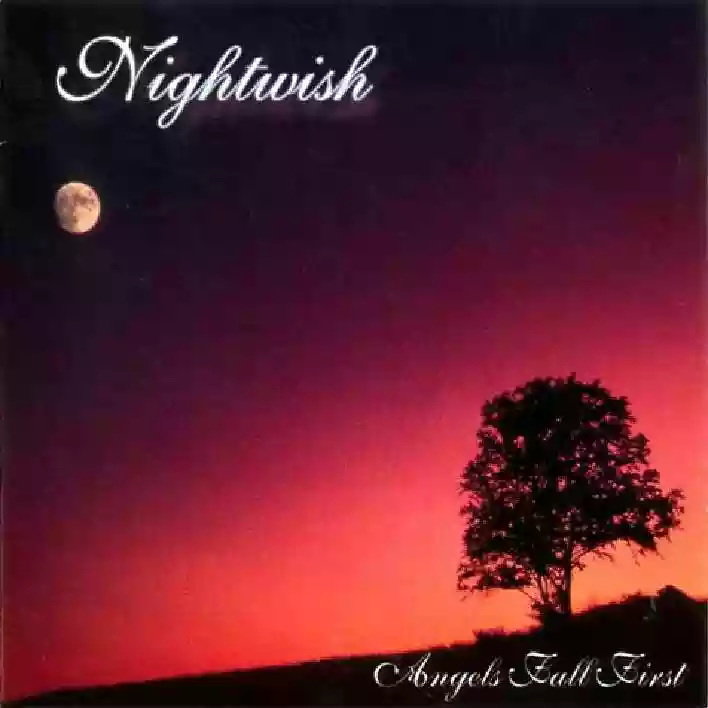
There are groups that, for better or worse, manage to make headlines with each new release, and the Nordic band Nightwish perfectly embodies this situation, always making some proclaim a miracle and others a complete musical "disgrace", so to speak; many years ago, when the group was still inexperienced and no one would have ever bet on them, Toumas, accompanied by the alluring mezzo-soprano Tarja, with the help of guitarist Empu, drummer Jukka, and the not so talented bassist Sami, created what would remain throughout their career the only album worthy of great attention.
Devoted to a power metal with distinct gothic nuances, these five inexperienced young people manage to create a decidedly good album, where industrial quantities of double bass, Tarja's warblings, and particularly easy-listening melodies reign. The album opens with the song "The Elvenpath", where the musicians demonstrate almost all possessing decent musical skills, with an honorable mention for keyboards and voice: the only criticism that can be made of the track is that it is not entirely original, very closely resembling sounds dear to bands like 'Stratovarius'. It continues with one of the most beautiful compositions of the group: "Beauty Of The Beast", which once again relies on speed power sounds with a gothic aftertaste, where the beautiful sung dialogue stands out between the beauty, naturally played by a masterful Tarja, and the beast, whose voice is provided by the keyboardist who, unfortunately, must pay for a voice that pales in comparison to his colleague. In this track, emotions ooze from every note, and a truly chilling vocal performance by the singer is highlighted, complemented by a melodically tasteful section.
It proceeds with the gothic "The Carpenter", a rather atypical song, where a pulsating bass and a fairly repetitive guitar riff weave a sad and vaguely decadent song; the verses interpreted once again by the keyboardist further emphasize the flatness of the piece, which manages to recover thanks to the singer's contribution in the chorus. The only strong point of the track is the splendid lyrics, truly wasted for such a song. They return to power territories with one of the album's highest points: "Astral Romance", a song in which industrial quantities of eighth notes, pompous keyboard parts, and a rich guitar riff create an excellently conducted melodic base crowned by Tarja’s indispensable voice.
The following track, "Angels Fall First", takes us on a splendid acoustic journey, in which, in addition to the mezzo-soprano's crystalline voice, the musical base orchestrated almost entirely by Empu's guitar stands out, occasionally accompanied by instruments like the flute: a great track that elevates to a masterpiece. After so much good, it unfortunately moves on to what is the album's actual weakness; I'm talking about the oriental "Tutankhamen", a dreadful speed-track that turns out to be excessively forced in the melodic part, which instead of being original comes across as a poorly executed experiment. They get back to more congenial territories with "Nymphomaniac Fantasia", a melodic power piece, featuring a long and impactful intro, followed by a musical discussion entirely played on a fine use of keyboards. The rhythmic part also turns out to be decent, while the guitars seem relegated to the background. "Know Why The Nightingale Sings?" falls into anonymity, reminding a bit too closely of typical compositions of northern European power. A separate discussion should be made regarding the last track, a true MASTERPIECE, "Lappi (Lapland)", a track divided into 4 episodes, all different from each other, exploring various musical fields, from symphonic parts to more electronic and distorted ones. The album closes this way, presenting the virtues and flaws of one of the world’s most important and famous power/melodic metal bands.
To conclude, I would like to say a few words about the more technical aspects:
1) The album absolutely did not benefit from an adequate production
2) At times, technical deficiencies from the group members are noticeable, but it must also be said, in their defense, that the average age was relatively very low, and this also explains the great effort behind this good album, which unfortunately won't be followed by a worthy successor.
Loading comments slowly
Summary by Bot
Nightwish's debut album Angels Fall First blends power metal with gothic elements, showcasing Tarja Turunen's captivating mezzo-soprano voice. Despite evident inexperience and some technical flaws, the album delivers memorable tracks like "Beauty Of The Beast" and the epic "Lappi (Lapland)." Production quality and certain songs reveal weaknesses, but overall this early work remains an important milestone for the band. It highlights both their potential and the raw energy of young musicians starting their journey.Tracklist Lyrics Videos
Nightwish
Nightwish is a Finnish symphonic metal band formed in 1996 by Tuomas Holopainen. The group is known for combining metal instrumentation with orchestral arrangements; early and highly praised releases include Oceanborn, Wishmaster, Century Child and Once. The band underwent a high-profile vocalist change (Tarja Turunen replaced by Anette Olzon) that is frequently discussed in reviews.31 Reviews
Other reviews
By sly1
‘The Beauty and the Beast’ is the best piece of the lot and one of Nightwish’s best.
Within its limits, it is an exciting and pleasant album.
