
 •
Rating:
•
Rating:
THE REVIEW
"I stopped by the shore and peeled off some large gray slugs from my skin. I was impressed by how their large rough foot clung to me tenaciously. As they released their grip, they made a sweet popping sound. Is this what a kiss is like?"
Before starting, I wondered what would be the right thing to do in such a case. Faced with such a self-sufficient work, which pulses with its own blood, smells of death, and yet is so wonderfully removed from genuflecting to the artist who created it, so wonderfully a "work." Would it be right, for the work’s sake, to attempt rational considerations? To verify how naturalistic it is? Perhaps clumsily and cynically figuring out how much these approximately four hundred pages owe to the concept of the great "Southern Gothic"?... obviously not, it would be a horrible, mediocre lack of taste towards the novel on which I am about to reflect.
I recall a writer claiming that whenever you want to write a novel in the first person, you must first ensure that the narrator is an irresistible character...
Disturbing, pornographic, naturalistic, sentimental.
Everything is so terribly vehement, stupid, and stubborn in the journey. Everything, in the most meticulous and desperate description, exudes blood and wickedness. A man is initiated into life. He is a larva, his eyes not yet open, his breath muffled by a thick layer of gel; he loses what he loves without even knowing it. From that moment he begins to die without realizing it. Once he starts wearing pants and walking on his own, he inevitably clashes in a boulevard of grimaces and spits - rapes and brawls - waste and lack of enthusiasm - malformation; he can't find any explanation for this fact. He looks at his body and sees the wrinkled carpet of his milky skin. Then he sees the dunes of his bones under his sickly skin mantle, the cadaverous chain of his ribs - he understands that people are evil. His eyes begin to burn, and he senses from afar the call of blood - they want his blood. He stumbles, is violated, begins to smell of waste, shit, and piss, he has wounds everywhere. His body grows deformed, he loses interest in grappling with why there is so much hatred towards him and becomes the martyr of the dense and relentless community that disgusts him.
As he sinks into the slime where he laments to the sky his desperate laments, Euchrid takes us on the hallucinatory journey of his life. When you start reading these pages, it will be more than likely that most readers will run their hands through their hair, unable to conceive the cruelty that pervades the entire plot. You are horrified at how there is no hope in the faces of the inhabitants of Ukulore Valley and how stubbornly their lives seem to orbit without any resentment around inhumanity. An alcoholic and violent mother; a father who makes horrific traps and snares for wild dogs with the intent of throwing them into a cistern while still alive to see them tear each other apart; a community divided into savage beaters, rapists, filthy, hypocrites, deformed, God-fearing; a divine prostitute; innocent animals; excrement; fear; missing pity; orgies; cathedrals; the donkey.
And finally, the angel (Beth), so sudden, so pure and protected by the very cruelty she hates. The pity, the love for the martyr of the valley (Euchrid). I need to collect myself, excuse me.
The problem is, it's damn hard to find a way to explain everything rationally. Yes, one might agree that whenever you encounter a fleeting, rare, moment of grace, it is destined to die shortly after, plunging you back into the filth and endless cruelty that envelops Euchrid's entire story. If anything, it is heartbreaking to try and glimpse the biblical references that dot the story. Through sacred quotations, one inevitably confronts the story of a deformed martyr, a desperate angel, and a community unimaginably distant from everything that is humanity and mercy. Every chapter, every part of the book, has its own voice and tells of an abomination in constant evolution, describing gruesome anecdotes beyond endurance through the weary eyes of Euchrid the child - helpless, Euchrid the boy - initiated into drama, Euchrid the adult - deformed.
When everything then culminates in a tragic and bloody finale, one realizes how the entire parabola is endowed with its own identity. "And the Ass Saw the Angel" lives for the blood that pulses through the pages that compose it, never feeling the need to waste itself in redundant odes to the great author who penned them, empathizing like never before with the character of Euchrid, who recounts the horrible events he faces in every episode, breathing the unhealthy smell of the valley, the anguish, and the premonition of death every time an inhabitant’s face appears as a deformed silhouette through the reeds, painfully moved by the dream of redemption and the desperate love of a wretch for life.
Loading comments slowly
Summary by Bot
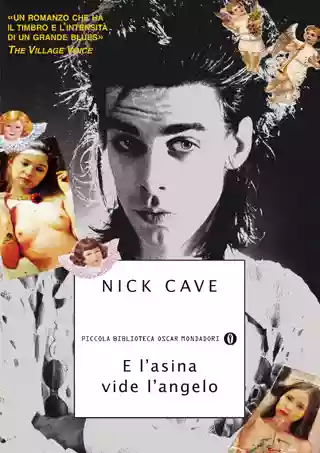
This review praises Nick Cave's novel 'And the Ass Saw the Angel' as a raw and disturbing Southern Gothic masterpiece. The brutal life journey of Euchrid, the protagonist, is depicted with unflinching naturalism and emotional depth. The story is filled with cruelty, biblical symbolism, and fleeting moments of grace, culminating in a tragic finale. The reviewer highlights the novel's unique voice and its unavoidable impact on the reader.Tracklist Lyrics Videos
04 Animal Static (04:11)
05 Sleepy River Piano (01:50)
06 Doghead (04:12)
07 Pa's Traps (02:37)
08 Cosey's Lullaby (02:46)
09 Sanctum (03:38)
10 The Hobo Church (01:48)
11 Sleepy River Swoon (02:21)
12 God (02:33)
13 Euchrid on the Run (01:50)
14 Beth's Sleepy River (02:50)
15 Doghead Revisited (03:13)
16 Angels (01:16)
Nick Cave
Nick Cave is an Australian singer-songwriter, author, screenwriter, and composer. He fronted The Birthday Party and then Nick Cave and the Bad Seeds, wrote the novels And the Ass Saw the Angel (1989) and The Death of Bunny Munro (2009), and, with Warren Ellis, composed acclaimed film scores including The Proposition, The Assassination of Jesse James by the Coward Robert Ford, and The Road. He also collaborated with Kylie Minogue on Where the Wild Roses Grow.07 Reviews
