
 •
Rating:
•
Rating:
THE REVIEW
1990. Brazil. It rains again on the martyr who has just laid down the crown. The sky sheds tears again, haunting the newly converted son. A contradiction. One of many.
The line that separates the sacred from its opposite is elusive. Nick Cave knows this well, singer-songwriter and lyricist, sinner and mystic, dweller of the underground and climber of the sky. What is the opposite of the sacred called? Look for the word: you won't find it. Perhaps you can adapt terms that are not the opposite of the sacred, but instead presuppose it: blasphemous, or secular, profane... The sacred has no opposite. It is already in itself a line of separation, an ambiguous and precarious boundary that separates and unites two opposites: disorder and order, nothing and everything, diabolical and divine.
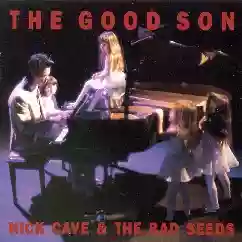
The album hovers on that boundary: the most uncompromising fans of the time will snub it for its too relaxed and clean sound, accustomed to the noisy forays into the infernos of previous albums (tender prey above all), only to later exhume this work over the years like an old skeleton out of the closet. But it is the Australian author who has changed here: he has just detoxed from heroin, and after the orgy of negative realities, the religious need for redemption or the desire to clearly pronounce the lofty words of pain is tangible.
The Bad Seeds thus ferry the "ink king" into a purgatory of poignant repentance, absorbed in the desperate attempt to recover fragments of meaning that a work of art must have and that often cannot be grasped. They accompany him with majestic and grandiose arrangements, like a prodigal son who was lost in ancestral abysses, but now returns on his knees among majestic hymns and moving choirs that open his personal Calvary among the ghosts that haunt him. The ceremony continues amid arcane dances and poignant, solemn laments, to conclude with a blessing that has the taste of love, but plunges the knife into the wound like a universal judgment from which there is no escape.
Amen.
The divine and the diabolical plummet, existing within each other: each must function as a mirror on whose surface the other is reflected. Instead, an impossible desire for unity, for redemption, must be reflected. A desire supported by a consciousness of guilt darker and more deathly than ever before, drowning in the twilight of an absolution to be pursued.
An album with not exceptional longevity, perhaps because there is a morbid need to consume it quickly: the seductive temptation in front of a perfect work; perhaps too perfect.
Loading comments slowly
Summary by Bot
Nick Cave and The Bad Seeds' 1990 album The Good Son marks a pivotal moment of redemption after the artist's heroin detox. The album blends sacred and profane themes with majestic arrangements. Despite some fans' initial rejection due to its cleaner sound, it stands as a deeply emotional and profound work exploring guilt, spirituality, and transformation.
Nick Cave & The Bad Seeds
Australian rock group led by singer-songwriter Nick Cave, formed in 1983; known for dark, literary songwriting that spans blues, post-punk, gospel and experimental sounds.44 Reviews
Other reviews
By Bleach
"The Good Son is in every way the album of Christian rebirth, a unique album in his production, which breaks with the past and opens a new door of light and hope."
"It is an absolute must-have in the collection of a music enthusiast, one of the greatest albums in history."
