
 •
Rating:
•
Rating:
THE REVIEW
Fever is the first word that comes to mind every time I listen to this record. Why does the Ink King have a fever and no one cures him? Why does he go to Berlin instead of Rio (it will take years before he decides to revisit the sun). Anita doesn't help him (you'll understand, at one point she even stabbed him).
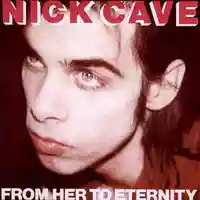
Our hero is twenty-seven and he's not doing well at all. The clues are many. The bats have been unleashed. And the cover would be enough (to tell the truth, the back, not even the pictures of Mick and Blixa reassure us about the band's health). Then, when you start listening to the album, the clues turn into overwhelming evidence. Nicola is truly sick. Or crazy. By the time you reach the end, the conviction is absolute. Who spends almost ten minutes singing, wondering who built Black Paul's coffin?
The singer from Warracknabeal always has a fever, like the protagonist of "The Magic Mountain". Instead of spending a few years, like Hans Castorp, in a sanatorium in Davos, after the dissolution of the Birthday Party, he goes to Berlin. The fever obviously increases. The Berlin tetralogy following "From Her To Eternity" will be further confirmation.
Is there an association between blues and illness? A connection between being addicted and this record?
A track by track analysis is completely useless. One could spend hours talking about the individual songs. What still surprises me, after so many years, or what I remember. In "Wings of Desire" Cave, before starting to sing "From Her To Eternity", thinks: "I won't tell them it's about a girl" and then says: "I wanna tell ya 'bout a girl".
John Lurie recounted that he was enthusiastic about Arto Lindsay because the sound of his guitar resembled that of a washing machine (the sound of Blixa Bargeld, what other household appliance does it remind you of?).
Paradoxically, my favorite piece is "Well Of Misery", which philologists would say is a sea shanty, that is, a sailors' work song.
One of the things about modern times that disgusts me is the misuse of the word artist.
Nick Cave, for a few years, when he was sick, was one of the few true artists in songwriting.
He gave new life to a genre, the blues, which seemed dead for decades.
He recounted, like almost no one else, that part of evil that resides in each of us.
Without controversy, I would have given this album four stars because a couple of his later works are superior. But if now any banality gets four, I'm forced to give it five. And if it were possible, in comparison to much uselessness, eighteen.
Loading comments slowly
Summary by Bot
This review captures the intense, feverish atmosphere of Nick Cave And The Bad Seeds' debut album. It highlights Cave's artistic brilliance amid personal turmoil and his role in revitalizing blues music. The narrative connects thematic illness with the album’s dark, evocative sound. Though later works might surpass it, this debut remains a vital, powerful record deserving top marks.Tracklist Lyrics Videos
Nick Cave & The Bad Seeds
Australian rock group led by singer-songwriter Nick Cave, formed in 1983; known for dark, literary songwriting that spans blues, post-punk, gospel and experimental sounds.44 Reviews
Other reviews
By ajejebrazorf
"It's like looking straight into the eyes of a serial killer just before being killed."
"An incredibly dark, hallucinatory album that manages to marry the gothic with the most sickly and creeping blues."
By CosmicJocker
Nick sitting by the edge of a sidewalk, swollen and bruised, speaking to us of his solitude amidst psychotic roars, guttural grunts, and inhuman screams.
The Bad Seeds? Their vitriolic dissonances, essential and with the specific weight of a ton, are scalpels that Nick uses to rip open his belly and show us his guts.
