
 •
Rating:
•
Rating: THE REVIEW
The essence of New Order is here, along with the origins of much of the music produced in recent years. When you say new wave, disco, synthpop, eighties, and also Joy Division, and also contaminations between post-punk and electronic, and so on. Nomen omen: the essence.
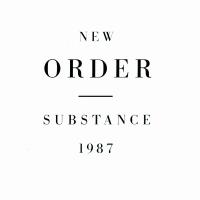
"Substance", released in 1987, is composed of two CDs: the first collects the most successful singles from the four previous albums and scattered EPs, along with some throwbacks that touch on the Joy Division era ("Ceremony", just to non-randomly name one) and along with a previously unreleased track ("True Faith"), produced together with Stephen Hague, which would launch Sumner and company into the musical Eden of the late eighties. The second disc brings together rare tracks, instrumental versions, and some other hidden unreleased tracks that lay the groundwork for future New Order ("Technique").
One of the many surprising things about "Substance" is how it manages to capture the essence of the Manchester band, revealing with disarmingly clear clarity what the band was before it was born (even "In A Lonely Place" is an absolutely Joy Division-like track, even though here, unlike in "Movement", Curtis's voice does not appear), what it has been in its first seven years of life, and what it will be in the following decades - just listen, in the second CD, to a track like "Lonesome Tonight", where you can even hear a germ of their more recent façade (and I mean "Run Wild" from "Get Ready", or the best points of the last not-so-happy work). Despite the fact that three retrospective collections were released in the following years (1994, 2002, 2005), and even though "Substance" cannot gather all the good (and there is plenty) New Order has done since 1987, "Substance" is and remains the true essential album. Because, more than summarizing, it embodies.
The fact is that "Substance", besides showing the surface of New Order, their striking blue and powerful liveliness, also gives their depth and substance, not only through the darker and more complex explorations collected in the second disc ("Procession", "Hurt", "Murder"), that really overturn the face of ours, almost testifying to the post-Curtis climbing arc (through a dark, but sure, descent), but also with the parallel unfolding of counterpoints between the first and second CD, between canonical versions and instrumental remixes, with upheavals and misdirections that are reflected even in the song titles. Thus the New Order quintessence of "Perfect Kiss" becomes "Kiss Of Death", thus the electropop "State of the Nation" becomes "Shame Of The Nation", while answering the milestone that is "Blue Monday" there's "The Beach" (already in "Power Corruption & Lies").
In the first CD, the electronic journey of "Everything's Gone Green" stands out (unexpectedly revived live last year in Turin) and the overwhelming brightness of "Temptation", where perhaps better than elsewhere we read and understand the signature of New Order, the maturation and acquisition of an identity that has miraculously managed to emerge from the larval post-Joy Division phase, without losing the essence of that experience, but without being fatally crushed by it. And the emergence into the light passes through these long tracks in which the previous instrumentation is joined by a refined, clean, and original use of electronics (see "Subculture", which also has a more sub-electronic, metropolitan rendering, or the more well-known and healthier classics, from "Thieves Like Us" to "Bizarre Love Triangle"). In the second disc there is the geological stratigraphy: "In a Lonely Place" takes us back to "Movement", in "Procession" we feel the unleashing of the Hook of great occasions, with "Mesh" we rediscover where much of today's music is born, "1963" anticipates the more disco and melodic moves of "Technique", and makes it clear that "Substance" is not meant to make an overview that anticipates a descent, but to give a push that precedes an ascent - perhaps, I would dare say, the apex. And then no one will be surprised if in 2001, after "Republic" and a long pause, a remarkable album like "Get Ready" arrives.
And no one, listening and re-listening to "Substance", can be surprised if New Order is a reference that must be crossed to go just about anywhere. Almost twenty years ago, an album on one side and the other perpendicular, the intersection, New Order, had already marked it.
Loading comments slowly
Summary by Bot
Substance (1987) perfectly captures New Order's essence, combining successful singles with rare tracks that trace their roots from Joy Division to future directions. The double album balances electronic innovations and post-punk history, showcasing the band's defining moments and evolution. It remains the essential New Order collection despite later compilations. Substance embodies the band's depth and liveliness and solidifies their enduring influence on modern music.Tracklist Lyrics Videos
New Order
New Order are an English band formed in Manchester in 1980 by Bernard Sumner, Peter Hook and Stephen Morris after the end of Joy Division; Gillian Gilbert later joined. They became influential for merging post-punk with electronic and dance music, with classics such as “Blue Monday.”26 Reviews
