 •
Rating:
•
Rating: THE REVIEW
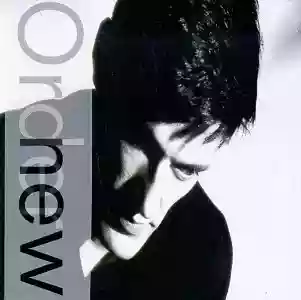
New Order (Bernard Sumner, guitar and vocals; Peter Hook, bass; Steve Morris, drums; Gillian Gilbert, keyboards), 1985. After the international success of “Blue Monday” (the hit that radically changed the career of a band that, rising from the ashes of the tragic end of Joy Division, until then had shown itself to be still too tied to the sound and themes of its glorious past), it seemed that part of the early fans felt “betrayed” by a shift towards musical territories quite distant from the expectations placed on musicians who had signed, at the end of the '70s, true masterpieces of rock alongside their leader Ian Curtis.
In reality, the boom of that single had the main merit of truly realizing the “pact” that the four Joy Division members made at the height of their fame: “if one of us should die, the band will change its name and style, but will not dissolve”, and the fruits of this work of "re-appropriation" of an artistic identity left to itself until “Power, Corruption & Lies” (1983) can be best enjoyed in this "Low Life," in my opinion the best New Order album and one of the most significant of the entire British music scene of the '80s.
Fundamentally, the existential anguish and introspective themes of Ian Curtis are not abandoned by the band, but simply re-proposed in an absolutely original and seemingly jarring form, that of a minimalist and perversely melodic technopop, with particular attention given to combining cynical and elegant sounds with Bernard Sumner's singing, which in this occasion renders virtuous his vocal limitations, adding with his cold and apathetic voice a metropolitan touch that paradoxically ends up being moving.
This is the case with the opening “Love Vigilantes,” a shaky melody arranged with clear references to the Cure of those years, in which Sumner seems to somewhat emulate the memorable crooner performance of Curtis in “Love Will Tear Us Apart.” The neurotic “The Perfect Kiss” was the hit that pushed the album towards the top of the charts, and it can be considered the formal pinnacle of New Order's “dark disco” phase, which later led to the sophisticated pop of “True Faith” a few years later; with “This Time Of Night,” we enter decidedly darker and more haunting atmospheres, with a Sumner still starring in a painfully monotonous performance over a backdrop of icy keyboards; the electric “Sunrise” instead features one of the most classic and representative riffs of the New Order repertoire, enhanced by a frantic acceleration that makes this track one of the most memorable of “Low Life” and perhaps the one that pays the greatest tribute to the Joy Division era.
The B-side opens with the horror instrumental of “Elegia” that transports the album's mood from a metropolitan context to an unreal journey through the deepest nightmares (it is said that at that time the band made extensive use of drugs). The tension is however broken by the reassuring keyboards of “Sooner Than You Think,” probably the album’s most “light” track and which in its ostentatious neglect proves to be the most catchy, but it is only a prologue to what in my opinion is one of the group's greatest masterpieces, “Sub-Culture,” with its epic, fatalistic progression and the blend between the dramatic notes played by Gilbert (the real “engine,” in my opinion, of the New Order sound) and the obsessive New York rhythms certainly “suggested” by Arthur Baker's production. The song's lyrics, perfectly integrated into a sort of paranoid nursery rhyme with Sumner's indifferent and “smothered” interpretation, hide in their simplicity a terrible and disillusioned vision, yet not without a distant glimmer of hope, regarding the universal solitude of modern man and the difficulty of human relationships (it should be noted that it was the middle of the Reagan and Thatcher '80s):
“What do I get out of this?
I always try, I always miss
One of these days you’ll go back to your home
You won’t even notice that you are alone
One of these days when you sit by
Loading comments slowly
Summary by Bot
The review praises New Order's 1985 album Low Life as a landmark synth-pop record that balances the band’s Joy Division roots with innovative electronic sounds. It highlights the album’s emotional depth, standout tracks like The Perfect Kiss and Sub-Culture, and Bernard Sumner's distinctive vocal style. The review positions Low Life as one of the best works of the British 1980s music scene.Tracklist Lyrics Videos
New Order
New Order are an English band formed in Manchester in 1980 by Bernard Sumner, Peter Hook and Stephen Morris after the end of Joy Division; Gillian Gilbert later joined. They became influential for merging post-punk with electronic and dance music, with classics such as “Blue Monday.”26 Reviews
Other reviews
By Ghemison
Low Life is an astonishing album: completely unruly ... at times brilliant, sometimes very sweet, other times cathartic.
"this world sucks and I want to dance over it!"
By Ale87
Low Life is the album that best represents the soul of New Order, confused, disordered, without a guiding line.
This Time of Night is not only the best of the album but of their entire discography.
