
 •
Rating:
•
Rating:
THE REVIEW
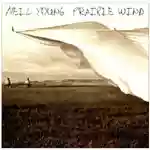
By now, old Neil out of habit churns out a technically perfect album every 4-6 years... With this "Prairie Wind", the mission is to mend a hypothetical relationship with "Harvest" and its sequel "Harvest Moon"... in these few lines I wonder if, as many claim, this album marks the end of the trilogy, or rather represents a building block for a tetralogy-pentalogy.
Having left the exquisitely country register of "Silver&Gold", Neil in his most unfortunate year still seeks peace and comfort in the bucolic backdrop. "Prairie Wind" gathers ten pieces that don't present many novelties and precisely for this reason are of the highest level. Young, in fact, belongs to that elite of authors who has the license for refined self-citation, so I like to define those who, having produced a style, holding the paternity of an idea, having reached an unparalleled level, can constantly refer in time to that idea by reworking and reproposing it with subsequent taste. The difference in these cases is made by the taste and elegance with which these authors call themselves into question; in Neil Young's case, self-citation is constantly elegant, left to the nuances both in the lyrics and the sounds.
Let's take a closer look at the trilogy starting from the founder:
"Harvest" is a milestone, it has a charm dictated by time. The almost vinyl sound, the imperfect, analog recording, the heavy arrangements by Jack Nietschze, make it incomparable... One of the ten best albums in the history of Rock according to some. The charm of the work can't certainly be reduced to age alone, 30 years are necessary but not sufficient to render the sense of distance and thus the charm, much must be recognized to the cryptic nature that characterized the lyrics of "Harvest", they were closed, enigmatic and contributed to the construction of vague and captivating images that made the work's fortune. In his bucolic albums, Neil has gradually used more relaxed lyrics, wanting to be simpler and more suited to the scenarios they narrate, partially losing that contrast and that gloomy charm, which allowed that record to enchant us.
Ultimately, by stitching together these brief notes, one has a yardstick and measure to better define this new "Prairie Wind", which is still too close to express charm despite collecting the simple complexity, talent, and free inspiration that over the years have become the emblem of ours.
Speaking of the second part of the trilogy, the lovely "Harvest Moon", the differences with "Prairie Wind" lie all in the setting, leaving behind the nocturnal and polished sounds (perhaps too much..), the lunar reflections, the crickets, and the fireflies, to run in the wind-swept prairie, re-encountering the western hues and tones à la "Harvest" (as in "No Wonder", "Prairie Wind", "Far from Home"), hearing after many years male and female choirs together adorned by the Steel guitar of "Ben Keith" (too much?).
The album opens with "The Painter", a song tinged with Soul (Soul also fades into other tracks on the album until becoming Gospel in the concluding "When God Made Me"), a song that associates music with a different form of art such as painting in which Young seems to transpose his life and work into that of the painter narrated… one fixes sensations in colors, the other emotions in his own notes; almost autobiographically, the painter Neil describes "works for two, with passion, falls and rises again, following her own inspiration..". This melody, along with the words, "green to green…yellow to yellow in the light, black to black when the evenings come, blue to blue through the night..." accompany us at dusk, romantically laden with pathos and at the same time light in idyllic comfort.
The second track is "No Wonder", where the prairie wind brings Young's mind back to the days of September 11th, a reflection left halfway on the album "Are You Passionate?". Speaking of cultured citations, in this song the most astute listeners will have detected many Youngian references to previous works. The mischievous citation contained in "This Old Guitar" instead echoes not too subtly the very riff of "Harvest Moon".
The album then contains some sweet and intimate ballads and some tributes to memory including "He Was The King" (to Elvis) and the already mentioned "This Old Guitar" (to Hank Williams). This is the leitmotif of the album, the red thread that mends each footprint on the path: each track seems an attempt to capture something of life, the fleeting emotions or feelings.
Each Neil Young album is somehow centered around a dominant idea; in Young's vast geography only "Greendale" is a true concept-album, but undeniably, producing an extensive interpretation, so are "Tonight Is The Night", where every piece revolves around the theme of suffering, "Zuma" and "Broken Arrow", which recount the culture and atmospheres of Native Americans, "Old Ways", a picture of a countryside that imitates itself, and finally "Sleep with Angels", which traces the theme of losses and love.
Personally, I believe that "Prairie Wind" is also an album deeply linked to the oft-depicted concept of the transience of feelings and life's things. Emblematic are the words "it's a dream only a dream and it's fadin' now, fadin' away" that Young addresses to the ephemeral landscapes of his childhood, almost as if the scenes, usually slow in their change, today no longer render that sweet sense of cathartic staticity that has always enchanted poets and offered comfort to the most sensitive souls.
Loading comments slowly
Summary by Bot
Neil Young’s Prairie Wind is a technically refined and nostalgic album that revisits themes and styles from his classic works Harvest and Harvest Moon. The album embraces elegant self-citation and heartfelt reflections on life, memory, and the passage of time. Though not groundbreaking, it offers high-quality songwriting and evocative instrumentation with touches of soul and gospel. Prairie Wind feels like a continuation of a meaningful trilogy, marked by gentle introspection and sincere emotion.Tracklist Lyrics Videos
Neil Young
Neil Young (born 1945) is a Canadian singer-songwriter and musician, active since the 1960s. He gained prominence with Buffalo Springfield, later collaborated with Crosby, Stills, Nash & Young, and has released influential solo albums and records with Crazy Horse across folk, country and electric rock.67 Reviews
Other reviews
By AR (Anonima Recensori)
This album reminds me of Dylan’s "Nashville Skyline."
An honest and skillful album.
By MAR1973
The album conveys an extraordinary sense of peace and relaxation.
"Prairie Wind" is a warm, lulling record, to be listened to over and over.
