
 •
Rating:
•
Rating:
THE REVIEW
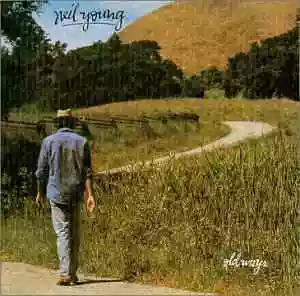
Opening 'Old Ways' (1983) always means encountering a certain amazement, a certain bewilderment, a contrast, like when, as oblivious children, we were dragged into the midst of village fairs, among the clamor of people, the cries of merchants, and the carousel rides.
Accustomed to Neil Young's cautious simplicity, it's not easy for every listener to relate to this album, with its Sicilian walking sticks, voices, and stereotypes it contains. As is well known, the '80s were challenging years for singer-songwriters, and they were equally tough for Neil Young, initially due to adverse personal circumstances and later undermined by a rather insolent new record label (Geffen/Universal). Accustomed to Young's stylistic composure, many followers and supporters were initially stunned by the negligence and crass patriotism manifested in this and the other recent albums of the Canadian artist: "Old Ways," played with the International Harvesters, is a didactic, conservative country record, made even more unbearable by reactionary lyrics that praise the 'good American,' truck drivers, hitchhikers, etc.; practically a catalog of the finest nostalgic clichés and commonplaces, light-years away from the poetic and clever verses that fans were accustomed to.
An album that sounds empty, sounding like "Country" only inside a souvenir shop, which returns the most stereotypical and fake side of the American countryside, and it's worth mentioning that it is the worst synthesis, contrary to what one might think, of an inspired compositional period. Cowboys collaborating for a better and fairer campaign, romantic truck drivers traveling long and desolate highways, plastic sounds, 50s falsettos, populate the rustic pages of this album, and Neil's voice, usually so fragile and participatory, in these tracks, seems shrill and completely detached from his singing. For an accomplished songwriter used to transposing the seasons of his life into music, Old Ways, thus sounds like an exception that, in its tones, does not reflect that difficult moment at all, offering us a detached and brash Neil. One needs to go a little further, delving into the behind-the-scenes, and it soon becomes clear that this album, too, has its own story and purpose within the long Youngian artistic career, and like other works from that period, it should be investigated in its most intimate substance before being fed to the listeners' comments.
Not everyone may know that Neil, at the end of the glorious '70s, after having closed that era with forefront works, changed his record label from Warner to the aforementioned Geffen, marking the beginning of a decade of works very different from the past and different from each other. After a series of mishaps like 'Hawks & Doves', 'Reactor', 'Trans', in the early '80s, Neil seemed to work with inspiration on the 'Old Ways' project. The album quickly took shape, with a rather defined character, lacking only a certain stylistic completeness. Reliable sources testify to the remarkable quality of the early recordings and equally valid material excluded from the album and set aside by Young himself. (In the years and subsequent albums, some tracks from that generous period indeed make an appearance under false pretenses, Razor Love and Silver & Gold in the eponymous album, Country Home in Ragged Glory, etc.).
After presenting a first draft of the album, following repeated pressures from Geffen, the label itself accused Neil, exceptionally, of not writing "Neil Young-like" things and not serving the ongoing production's interests. Young, evidently annoyed by the incident, decided to dismantle the fine project and rebuild an album that would substantiate the accusations made against him. He did everything possible from a compositional and arrangement perspective, setting aside much of his proverbial fussiness, inserting a couple of tracks written in 10 minutes, and recording the album hastily with a few friends, as if it were an irreverent joke. Critics destroyed the album upon its release, and the hope of hearing the old Young again seemed increasingly remote and unlikely. These predictions were confirmed in 1986 when the "gallery of horrors" was enriched with its most important piece, 'Landing On The Water,' a bad record, drowned by synthesizers and vocoders, which was intended to mark the return to rock, announced by Neil as a new 'Tonight is the night', but ultimately was just a return to the most obnoxious synth-pop.
Perhaps it is precisely irreverence that is the key to understanding this chapter in Neil Young's artistic journey. 'Old Ways' is a coldly consumed vendetta, an irreverent prank against the record label and, perhaps, more generally, the American music industry of that time. I believe the differences that make this work unique compared to Neil Young's past and future artistry are quite evident to anyone familiar with his style and elegance: reckless voices, terrible arrangements, insignificant themes, absent emotional involvement. Listening to the album again, even after gathering further information, does not remove the sense of anguish in front of some useless, sometimes monstrous tracks. But not everything is to be discarded. Neil still wanted to abandon some pleasant nuances to this album, which probably belonged to the original project; Misfits, a nocturnal ballad rich in suggestions, and especially My Boy, dedicated to his son, are pearls of rare enchantment, which Young seems to leave as traces of an inspired creative vein, but deliberately restrained.
If you're looking for auteur country music, don't look for it in this work; if you're looking for Mr. Neil Young's country music, visit other better-equipped shores such as American Stars & Bars, Silver & Gold, Comes a Time, or one of the many other albums of the so-called "bucolic" genre. However, if you are attached to this man and his human and artistic saga, you cannot refrain from listening to this unusual musical episode, with its meanings and its carefully crafted contradictions, perhaps discovering a vein of gold beneath the dust.
Loading comments slowly
Summary by Bot
Neil Young's 1983 album Old Ways is a divisive country record that surprised fans with its clichés and reactionary themes. Created partly as a prank against his label Geffen, it features hastily recorded tracks and has been critically panned. Despite this, some songs like 'Misfits' and 'My Boy' reveal moments of genuine inspiration. The album reflects a turbulent period in Young's career but remains a unique and revealing episode for dedicated followers.Tracklist Lyrics Videos
Neil Young
Neil Young (born 1945) is a Canadian singer-songwriter and musician, active since the 1960s. He gained prominence with Buffalo Springfield, later collaborated with Crosby, Stills, Nash & Young, and has released influential solo albums and records with Crazy Horse across folk, country and electric rock.67 Reviews
